

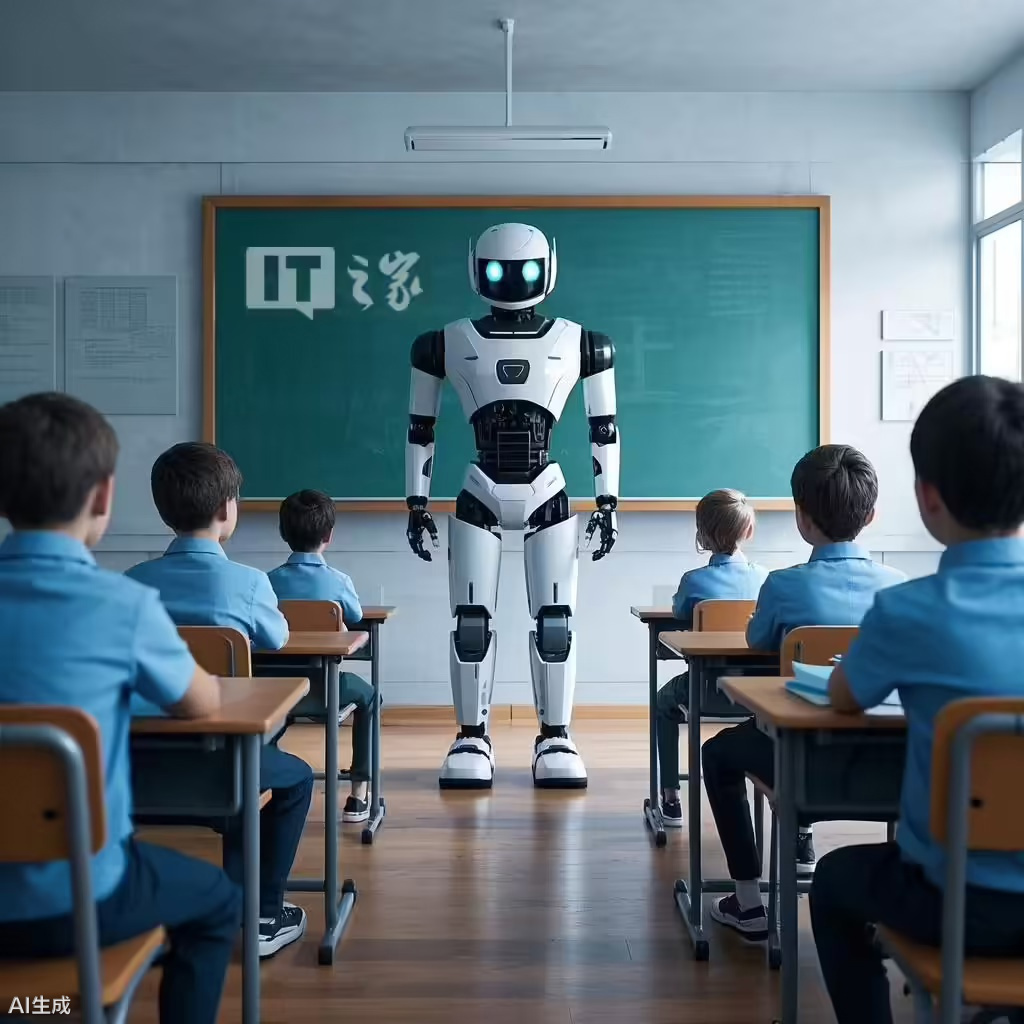
According to a report published today (the 11th) by Business Insider, Fei-Fei Li, a Stanford University computer science professor known as the “AI godmother” and co-founder of World Labs, believes that the greatest danger of AI entering schools is not that students will use AI to cheat, but that AI will weaken their ability to learn.
Fei-Fei Li believes the worst outcome would be for the younger generation’s autonomy, as well as their motivation to learn and live as human beings, to be taken away by tools. “Neither humans nor machines should take that away.”
If AI is used improperly, future generations may grow up with “underdeveloped brains.” At the same time, she warned against completely resisting AI or banning students from using these tools. “Both scenarios concern me: refusing to use the tools, or taking away autonomy and motivation.”
Fei-Fei Li also pointed out that if students are already committed to learning and need help only when they encounter difficulties, AI can become a powerful learning partner.
She recalled that when she was a pre-medical student, she struggled with organic chemistry. At the time, teaching assistants had limited office hours, and professors also had limited time to answer questions.
Li admitted that if AI tools had been available then, she would have asked many more questions. “I knew exactly where I was stuck. I had the motivation to learn. I just needed guidance.”
Li said schools should use this distinction as a basis when considering how to use AI. Educators should not view AI solely as a cheating risk; they should help students use AI to learn subjects more deeply while preserving their own curiosity and effort.
“We need to find a way to preserve children’s and students’ motivation and autonomy, while enabling them to use these tools in the right way. If used properly, AI could make future students much smarter than us because they will have powerful capabilities augmenting them.”
A report released by Oxford University Press last year warned that while AI has increased the speed at which students learn, the depth of their thinking has shown a downward trend.
Another small-scale study conducted by MIT researcher Natalia Kosmina found that people who were allowed to use generative AI when writing essays performed worse over time than those who used Google or no assistance at all.
In another experiment, Vivien Ming, chief scientist at the metascience research organization Possibility Institute, found that most users employ AI to reduce the amount of thinking they do.