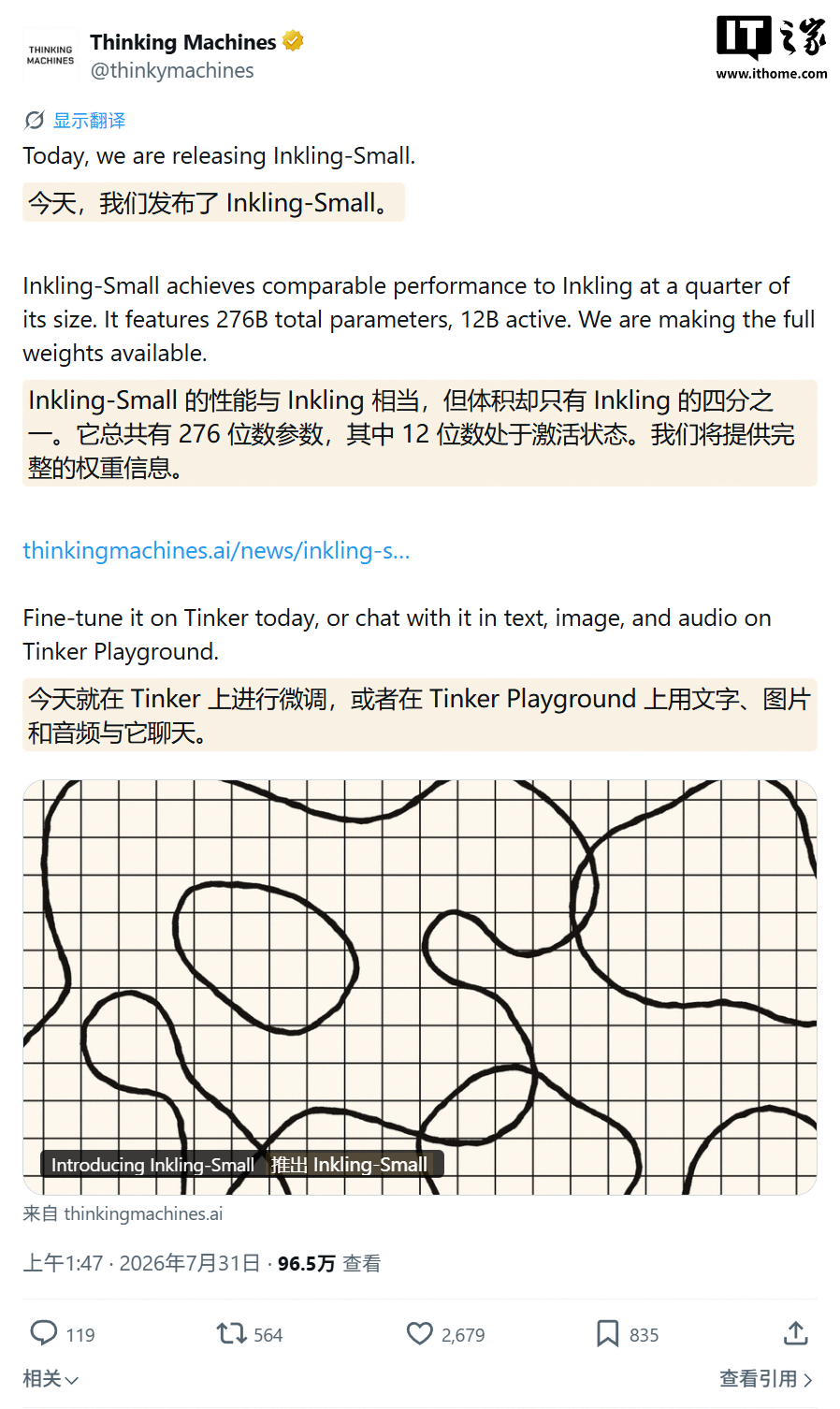
Thinking Machines Lab published a blog post yesterday (July 30) announcing the Inkling-Small model, whose performance is comparable to Inkling while its size is reduced to about one-quarter.
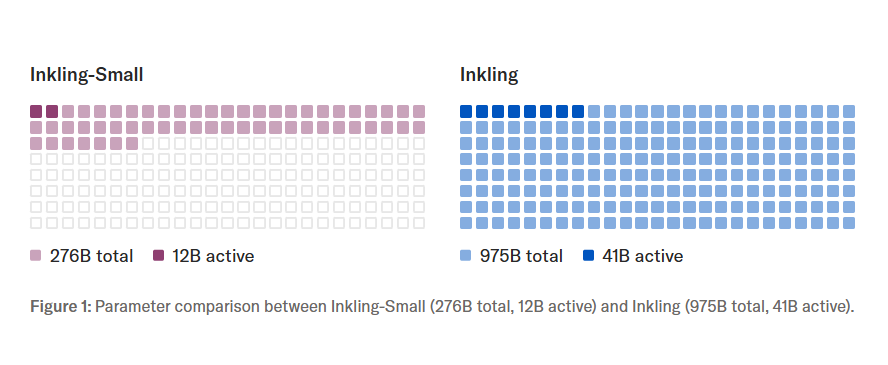
Inkling is touted as “America’s most powerful open-source AI model.” It uses a mixture-of-experts (MoE) architecture, with 975B total parameters, 41B active parameters, and a maximum context length of 1M tokens.
The newly released Inkling-Small model also uses a mixture-of-experts (MoE) architecture, with 276B total parameters and 12B active parameters. Its size is approximately 1/4 that of Inkling, and it was trained on the NVIDIA GB300 NVL72 system.
Like Inkling, Inkling-Small supports native audio and image reasoning, variable thinking intensity, and a context window of up to 1M tokens, while maintaining a relatively balanced performance across multiple benchmarks.
Thinking Machines has released the complete weights for Inkling-Small, integrated it into the Tinker fine-tuning service, and provides text, image, and audio chat experiences through Tinker Playground.
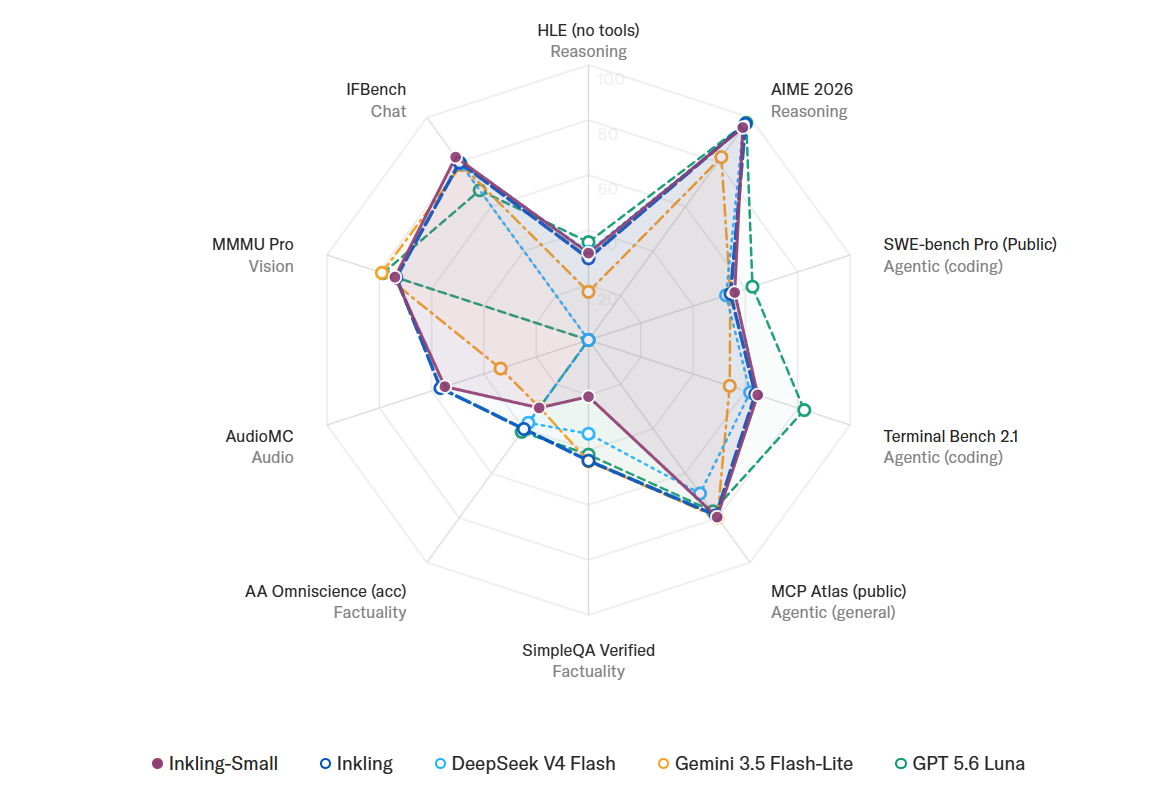
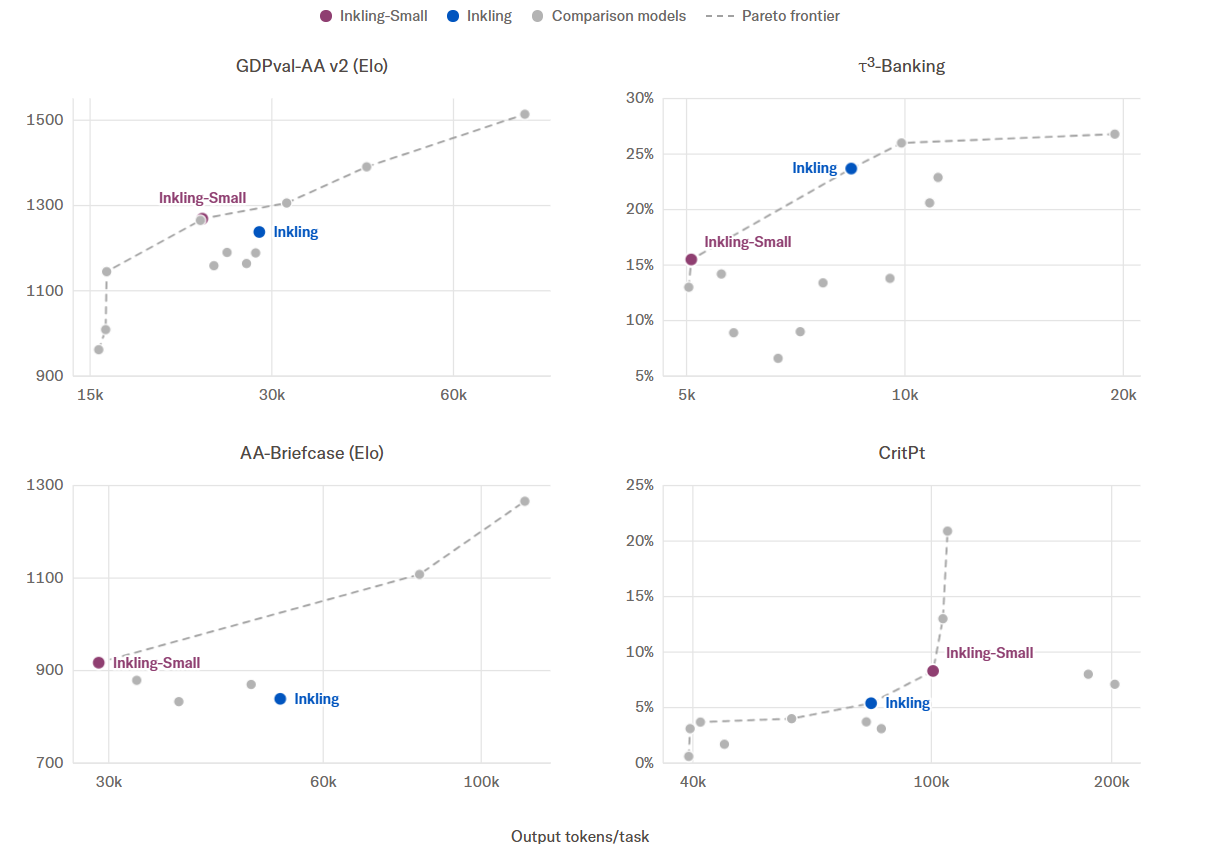
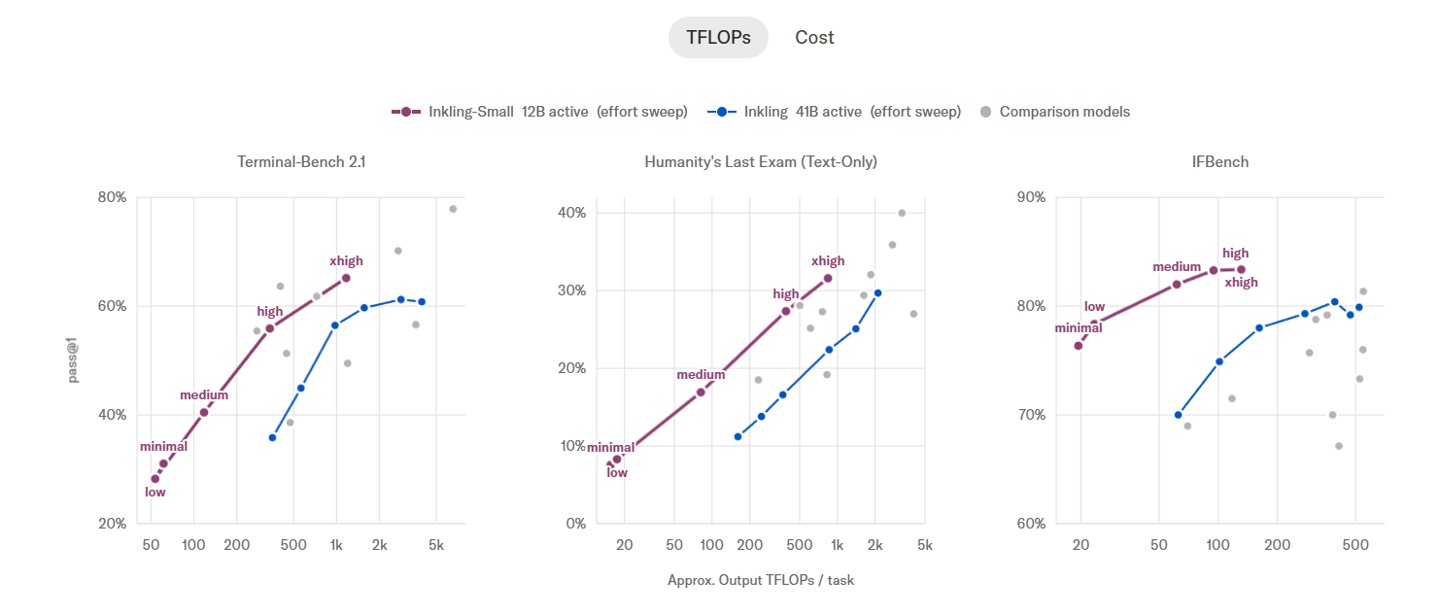
Thinking Machines said that Inkling-Small achieves performance close to Inkling with lower computational requirements. In tests of agent tool use, reasoning, and instruction following, Inkling-Small is more efficient than Inkling and can compete with other models in the same weight class.
On reasoning and agent tasks, Inkling-Small matches or exceeds Inkling. In the Humanity’s Last Exam test, Inkling-Small scored 31.6%, higher than Inkling’s 29.7%. Thinking Machines said that, at every thinking budget, Inkling-Small’s test-time compute scaling curve is higher than Inkling’s.