

Google announced today that it has introduced agentic video understanding in its latest Gemini 3.7 Flash, 3.6 Flash, and 3.5 Flash-Lite models. The new feature improves video analysis accuracy while significantly reducing Token usage and costs during video analysis.
The feature uses standard Gemini API Token pricing, with no additional feature fees.
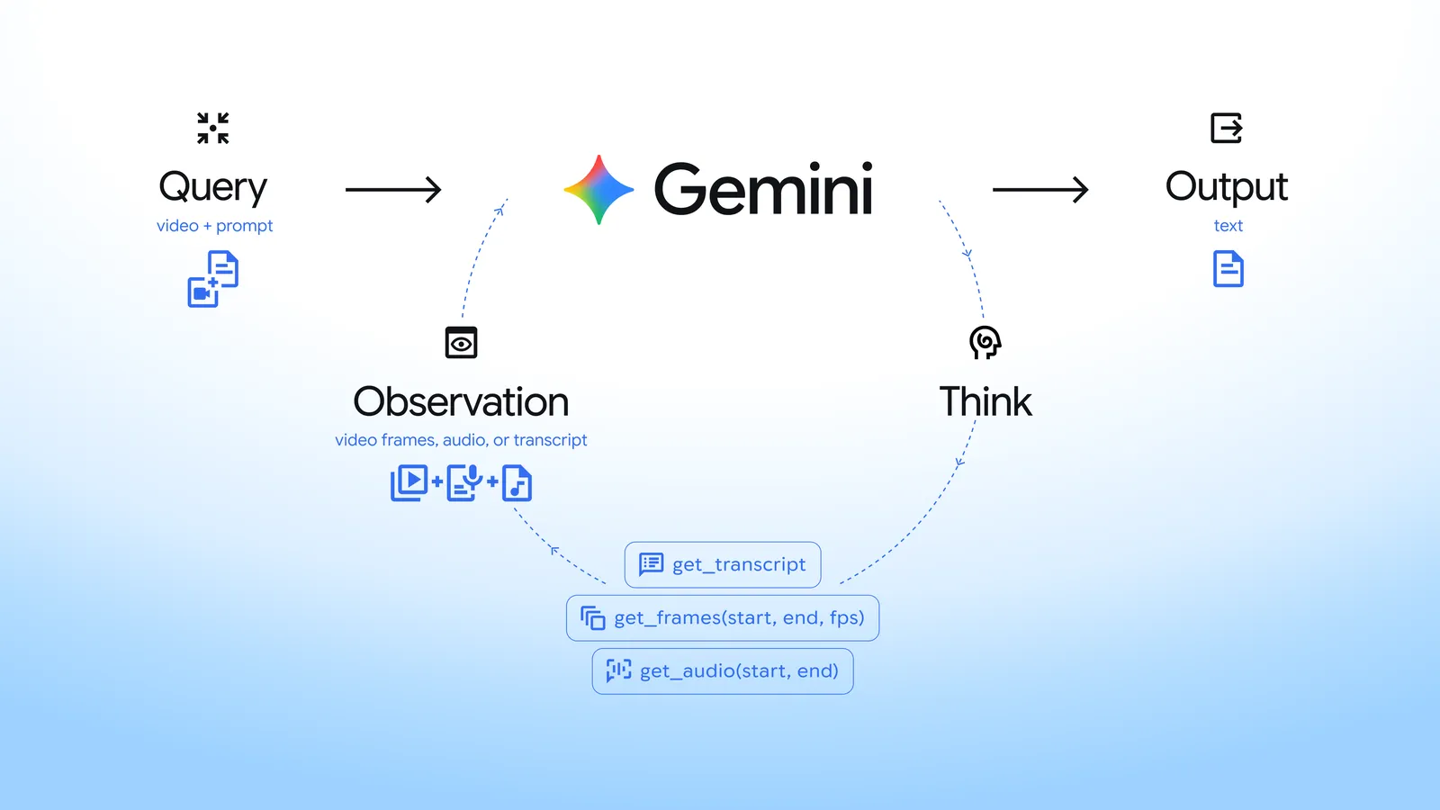
Unlike the existing “static” approach, in which the model reads video at a fixed frame rate, defaulting to 1 FPS and adjustable through the API, agentic video understanding combines the model’s core reasoning with native video tools to dynamically search, scan, and inspect target video segments across visual frames, audio, and transcript text.
In standard video analysis benchmarks, Gemini models with agentic video understanding can reduce analysis costs by up to 66% and Token usage by up to 88%, while improving accuracy by up to 7%. These efficiency gains are especially evident with long videos, where static processing traditionally forces developers to choose between high Token costs and losing key details.
Google says Gemini 3.7 Flash with agentic video understanding delivers the best overall quality, while achieving the optimal balance between quality and cost efficiency and reaching the Pareto-optimal frontier of accuracy and cost for video understanding tasks.
Unlike static processing, where the model reads a media stream at a fixed frame rate, agentic video understanding allows Gemini to actively and purposefully decide what to watch, how quickly to watch it, and which modality, frames, audio, or transcript text, to use for information. It extracts only the necessary segments and signals. Developers previously had to perform these operations manually. With agentic video understanding, Gemini can complete them through an intelligent loop that calls internal tools to load relevant parts of a video, substantially reducing development effort.
ITHome understands that the feature brings developers a range of new capabilities for processing long-form video content.
Sub-second moment retrieval: Precisely locate fleeting state changes and tightly edited boundaries that are easy to miss at 1 FPS, enabling highly accurate automated video editing.
Long-video “needle in a haystack” search: Answer complex queries across videos lasting several hours without consuming millions of Tokens.
Anomaly detection: Resample windows of interest at higher frame rates to inspect fast motion and subtle visual artifacts.
Action and object counting: Accurately track repeated physical actions and different objects over time.
The feature is now available through the Gemini API in Google AI Studio and the Gemini Enterprise Agent Platform, with support for video uploads and YouTube video analysis. Developers only need to set the processing mode to “agentic” in the API configuration to enable it.
Google also plans to bring this capability to more of its consumer-facing products. It will soon roll out to users of all Flash and Flash-Lite models in the Gemini app. In the coming months, agentic video understanding will also power the “Ask YouTube” feature on YouTube video watch pages, using Gemini to provide higher-quality answers based on video content.