

Technology media outlet informationweek published a blog post yesterday (August 11), reporting that amid a wave of layoffs in the global technology industry caused by the impact of AI, some companies have begun rehiring employees they previously laid off.
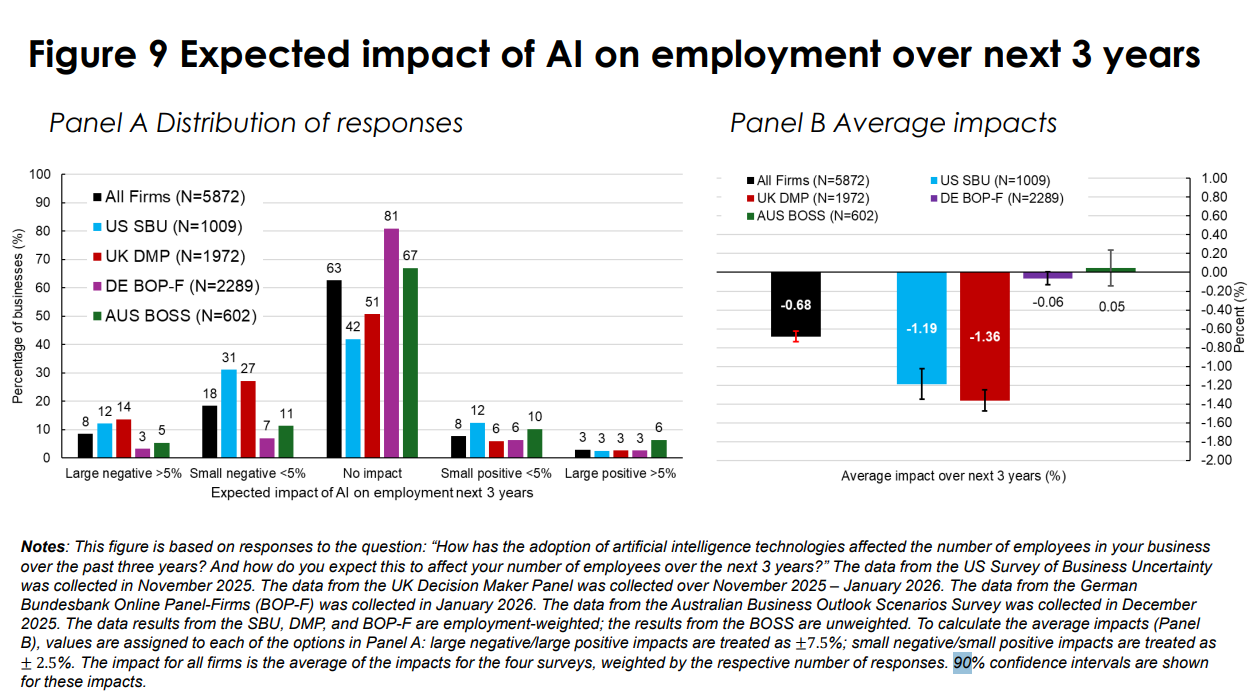
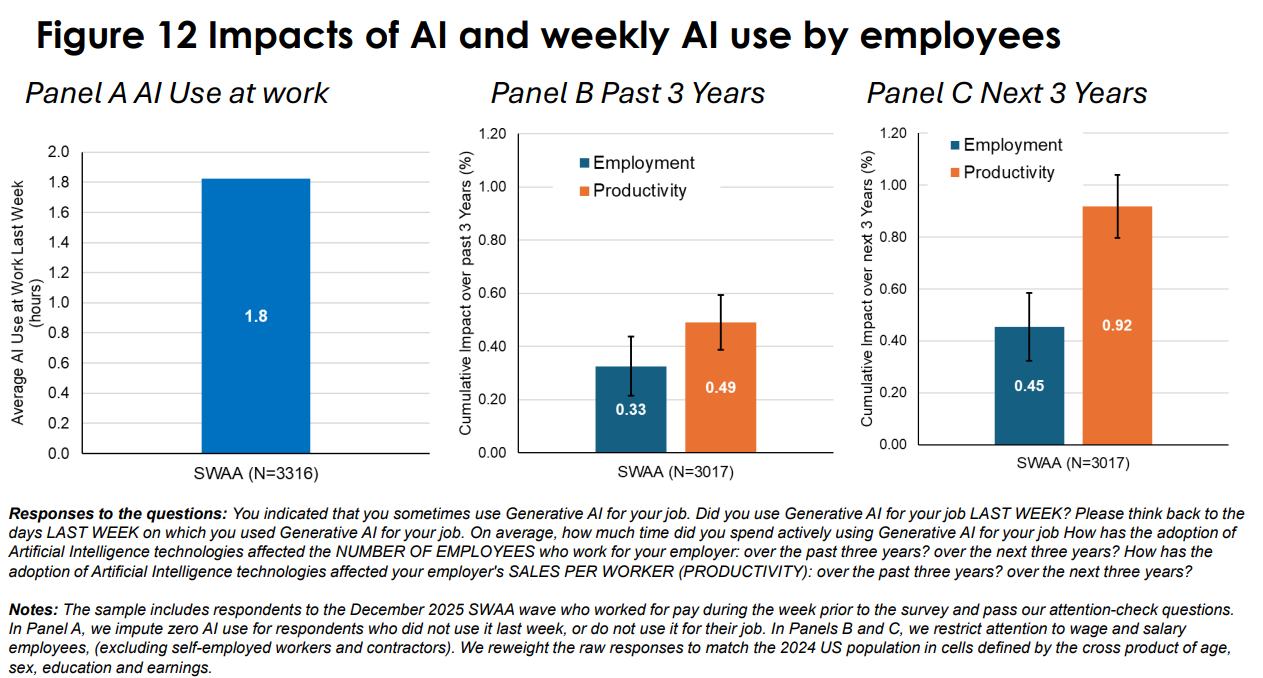
Regarding the impact of AI, a survey by the Federal Reserve Bank of Atlanta found that approximately 90% of corporate executives believe AI has not yet increased their companies' productivity. Relevant evidence also suggests that the factors driving increased corporate productivity since 2021 were not AI, but, to a greater extent, remote work during the pandemic. The relevant chart is shown below:
The survey report pointed out that the two main actions taken by corporate management to increase company value are layoffs and investment in AI technology. The underlying logic is that AI makes employees more efficient, allowing companies to reduce headcount for the same tasks.
The study cross-analyzed data from U.S.-listed companies over the past 5 years, including millions of job satisfaction reviews, thousands of corporate financial performance reports, hundreds of AI investment announcements, and layoff announcements. The results showed that as the frequency of AI investment announcements increased, AI-related layoff announcements also rose.
However, the market does not always approve. The survey found that after layoff announcements were released, average stock-market returns were close to 0. Although some companies, such as financial technology platform Block, saw their share prices rise after announcing layoffs attributed to AI, overall, more than half of the related events received negative or near-0 market reactions. This suggests that such decisions may carry significant hidden costs.
The study also focused on employee sentiment. The authors analyzed millions of employee reviews on Glassdoor.com (a workplace review website) and found that AI-related comments were significantly more negative than comments overall.
Negative sentiment mainly stemmed from 4 types of concerns: the risk of layoffs, insufficient training, limited opportunities to upgrade skills, poor corporate AI management, and doubts about whether AI can truly improve efficiency.
Concerns about job security were the strongest. Further testing showed that when companies announced AI-related layoffs, employee sentiment toward AI declined significantly.
Management stood in contrast to employees. The authors analyzed approximately 10,000 earnings-call transcripts and found that management's tone when discussing AI remained consistently optimistic, but this optimism had no significant relationship with productivity. What truly determines whether AI can improve efficiency is not management's optimistic statements, but, in many cases, whether employees are willing to integrate AI into their daily work.
For many employees, layoffs themselves have already caused a direct impact, while AI being cited as a reason for replacing workers has further intensified their sense of insecurity. Data from layoffs.fyi shows that more than 122,000 people in the technology industry were laid off in 2025, while another 126,000 people lost their jobs in 2026.
Against the backdrop of massive layoffs in the technology sector, some companies have experienced an “AI boomerang” and begun rehiring some of the employees they laid off. Some companies have found that even amid increased AI investment, experienced employees remain indispensable in certain scenarios.
However, the study showed that although companies rehire former employees out of practical necessity, trust between the two sides has already broken down. Even after returning employees resume participating in company operations, they cannot avoid worrying that they may be laid off in the next wave of layoffs. This breach of trust cannot be repaired with money.
Hiring new employees also entails costs for companies. Joe Coletta, CEO of 180 Engineering, said that bringing a new hire up to speed usually costs approximately 1 to 2 times the former employee's annual salary. New hires also lack sufficient experience, team coordination still needs to be developed, and they cannot replace knowledge of “implicit tasks.”
For senior or specialized positions, the hiring cycle typically takes 3 to 6 months. More troublingly, many companies have already dismantled their junior talent pipelines, leaving no one to fill mid-level roles.
Jack Mellor, CEO of Personnel Checks, also noted that replacing an experienced employee often costs “thousands of pounds,” and the cost is even higher if the former employee possessed critical organizational knowledge.