

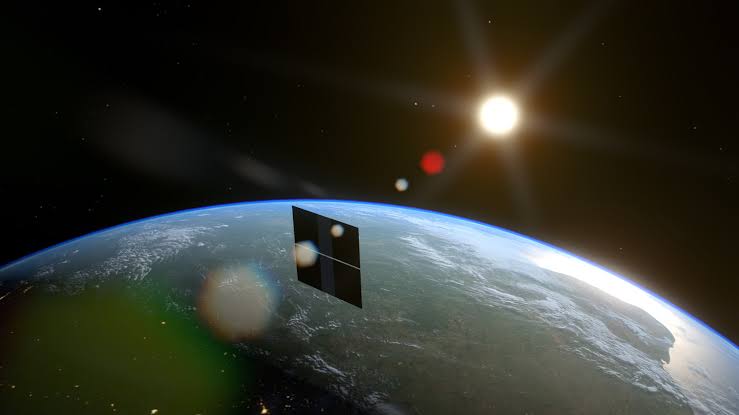
According to a report today by Interesting Engineering, U.S. startup Starcloud has completed a $250 million Series A extension round (approximately RMB 1.686 billion at the current exchange rate), bringing its valuation to $2.3 billion (approximately RMB 15.509 billion at the current exchange rate). The new funding will be used to develop satellites equipped with high-performance GPUs to provide computing power for AI.
According to reports, the round was led by Manhattan West, with new investors including Nvidia and Cisco. Existing investors include Benchmark and EQT.
Starcloud plans to move data centers from Earth into space. Last November, the company sent its Starcloud-1 satellite, equipped with an Nvidia H100, into space, demonstrating that data center hardware can operate fully in orbit.
Starcloud later trained AI models in space, successfully ran Google's Gemini model on a satellite, and completed AI inference and fine-tuning tasks. The company is working with Nvidia to develop the Space-1 Vera Rubin module, designed specifically for the space environment.
Unlike terrestrial data centers, space data centers cannot use conventional air-cooling solutions. The heat generated by chips must be transferred through other means, and space radiation must also be taken into account.
Looking ahead, Starcloud plans to build a cluster of 88,000 satellites, providing orbital computing capacity at the 20 GW scale. The company believes space data centers will become a new solution for the post-AI era.