

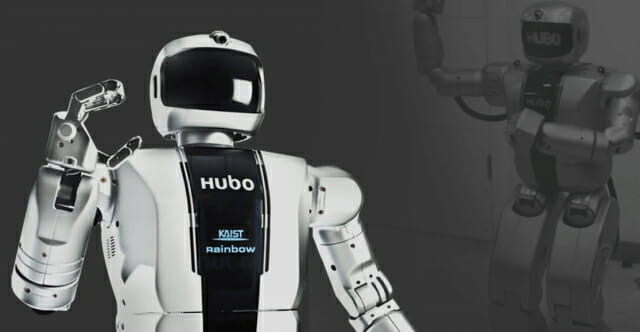
South Korean media outlet ZDNet Korea reported on the 5th that Samsung Electronics is rallying the entire company to accelerate humanoid robot development. As its manufacturing technology, production-site data, software, funding, and semiconductor capabilities come together, industry expectations for Samsung's independently developed humanoid robot continue to rise.
According to the report, in addition to its subsidiary Rainbow Robotics, Samsung Electronics is also independently developing its own humanoid robot, and the research and development has already reached a fairly advanced level.
A robotics industry insider said: “The humanoid robot developed by Samsung Electronics itself may already surpass the major comparable products in South Korea. Samsung has numerous manufacturing sites, including home appliance facilities, so it already possesses hardware production capabilities and extensive production data. Combined with its strong financial resources, as long as it finds the right direction, it would be difficult for Samsung not to make a good humanoid robot.”
An executive at a South Korean robotics components company said: “Samsung actually began developing humanoid robots independently quite early on and has always had the technology; it simply has not made it public. Samsung has accumulated a great deal of outstanding technology.”
In terms of data, Samsung can obtain real-world manufacturing-site data from numerous production facilities for home appliances, mobile devices, semiconductors, and display panels. For AI models, it has its independently developed Samsung Gauss.
Another robotics industry insider revealed that Samsung is also developing a world model. A world model learns the laws of physics through video data, enabling a robot to predict and simulate the possible results of an action before actually carrying it out.
The actuators required for humanoid robots are also being developed independently by Samsung, and are expected to incorporate its home appliance motor technology accumulated over many years. Actuators function as a robot's joints and mainly consist of components such as motors, controllers, and reducers.
Last month, Samsung Electronics established the RX (Robotics eXperience) Business Promotion Office, which reports directly to CEO Roh Tae-moon. The industry views this as a signal that Samsung is making a full-scale push into the humanoid robot business.
The new organization will bring together Samsung's capabilities accumulated over many years to form an integrated system covering strategy formulation, hardware and AI software development, and product planning.
Samsung also plans to build a data factory at its Gumi facility to further strengthen data utilization. To bring robots into actual manufacturing environments, it is necessary to simulate in advance the various situations that may arise during operations. Samsung plans to use process data from the existing production lines in Gumi to train robots and establish a system to help them learn.
Core talent and external experts are also being brought on board. Last month, Samsung Electronics appointed Lee Dong-geon, vice president of the Planning Group, as head of the Robotics Strategy Group. Lee Dong-geon previously led robotics strategy at Hyundai Motor and was also responsible for directing the operations of Boston Dynamics. In the future, he will be responsible for formulating Samsung's medium- and long-term robotics business blueprint.