

Loneliness in old age is more than an emotional burden. Researchers estimate that 17% to 47% of people aged 60 and above in Singapore are socially isolated, while nearly 8% feel lonely. Worryingly, the health risks associated with these conditions are considered comparable to smoking 15 cigarettes a day.
As artificial intelligence (AI) chatbots become increasingly intelligent and more capable of conversation, they are being considered a scalable, low-cost form of companionship that can supplement human relationships. So how willing are older adults to accept AI chatbots?
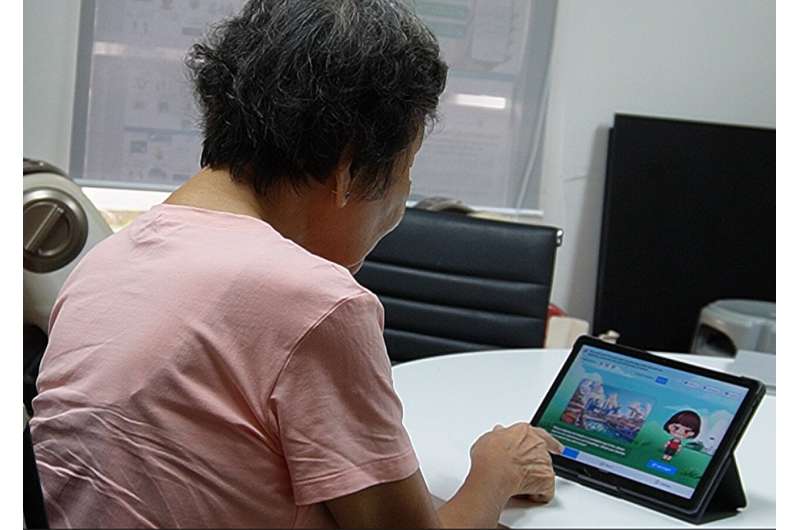
To answer this question, researchers from the Singapore University of Technology and Design (SUTD) invited 140 community-dwelling older adults aged 60 to 89 to interact with Ami Chat, a social chatbot developed by the research team. The researchers then surveyed participants’ attitudes toward and willingness to use social chatbots in daily life.
The study, titled “Factors Influencing Older Adults’ Willingness to Use Social Chatbots: Examining Technology Acceptance, Anthropomorphism, Authenticity, and AI Social Interaction,” was published in the journal Innovation in Aging. It focused on the application of design, AI, and technology in this field.
Professor Yow Wei Quin, who led the research team, said: “We noticed that more and more older adults are beginning to use AI chatbots, but there is still limited empirical research on the factors that encourage this group to adopt the technology, particularly as a companionship tool.”
“We developed Ami Chat to better meet older adults’ needs, make it easier for them to operate, and better reflect the living environment of local users in Singapore.”
Ami Chat is powered by a large language model. Users can communicate with it by voice without having to type. Large buttons and simple gesture controls lower the barrier to use, while its cartoon avatar is a warm and friendly Singaporean woman. Its responses are generally brief and conversational.
In the study, the researchers expanded on the Senior Technology Acceptance Model (STAM), which proposes that users’ willingness to adopt new technology is related to factors such as perceived ease of use and health status. The research team added three indicators related to social relationships: anthropomorphism, or how human-like the chatbot appears; authenticity, or whether it feels sincere and responds naturally; and AI social interaction intensity (AISI), which measures the extent to which interaction between a person and AI resembles chatting with a friend.
The results showed that factors in STAM explained 26% of the variation in older adults’ willingness to use chatbots, while the three social-relationship indicators explained an additional 27%.
Participants were more willing to use Ami Chat when they felt capable of using the technology and had sufficient support; when the chatbot felt more authentic; and when their interactions involved greater reciprocity and closer communication.
However, whether the chatbot seemed human produced a different result.
After the closeness of the interaction was taken into account, participants who thought the chatbot was more like a real person actually showed lower willingness to use it.
Yow Wei Quin said: “Being good at social interaction does not necessarily mean having to be like a real person. People may want a chatbot to communicate well with them, but they may not want it to pretend to be a person.”
Health status also had an unexpected effect on whether older adults were willing to use chatbots.
Older adults who rated their own health more poorly showed stronger willingness to use them. This pattern was mainly associated with difficulty concentrating and lower life satisfaction.
She said: “People who are less satisfied with their quality of life may be more willing to try new technologies that can provide communication or support.”
These findings also offer practical guidance for developers: chatbots should be able to remember previous conversations and adjust to users’ preferences; interfaces should be as simple as possible; and developers should not focus single-mindedly on making AI look increasingly human.
The researchers believe that an ideal system should communicate naturally and provide good responses while still making it clear to users that they are interacting with a chatbot.
How the technology is introduced and promoted to older adults is also important.
Yow Wei Quin said: “During the initial rollout, users should receive practical technical support, clear tutorials, and easy-to-understand, accessible guidance so they can feel confident in their ability to operate the technology.”
“These findings are critical to developing effective, scalable AI companionship tools. Such tools could help alleviate loneliness and improve the quality of life and well-being of aging populations.”
The research team also acknowledged that the study captured participants’ initial impressions after a single interaction in a controlled environment. “Willingness to use” can serve only as an indicator of potential long-term use and cannot prove that users will continue using such products.
After the study was published, Ami Chat was renamed Ami-Go. In the next phase, the research team will track older adults’ long-term use of Ami-Go in everyday living environments.
Ami-Go has also been integrated with Ami-Able, a bilingual cognitive training program developed by Yow Wei Quin’s lab, to form a new platform. The platform is currently nearing completion of its first phase of testing.