

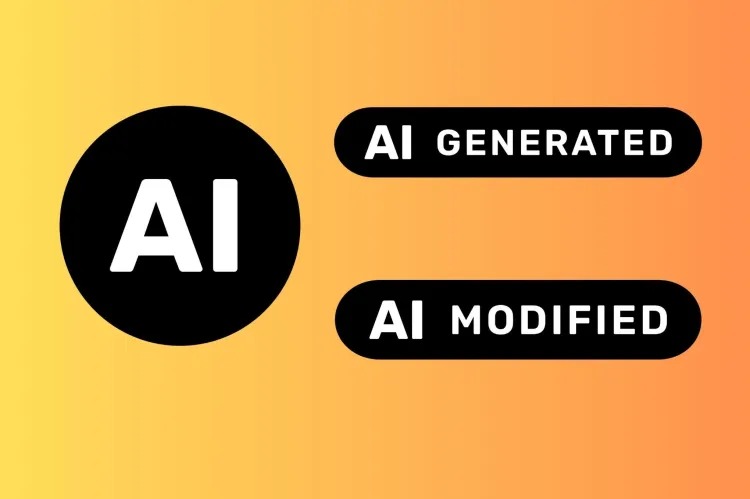
The European Union has introduced a series of new rules designed to help the public more easily identify chatbots and AI deepfake content online. The new transparency requirements, an important part of the EU Artificial Intelligence Act (AI Act), officially took effect on August 2. They require companies to disclose whether users are interacting with an AI model and whether related content was generated or modified by AI.
These transparency rules impose different requirements on different entities, including providers of AI systems (companies that develop and sell AI systems) and deployers (platforms and services that use these AI systems). However, some companies fall into both categories, such as Meta and SpaceXAI.
Providers must design AI systems to clearly notify users when they are interacting with an AI rather than a human, “unless this is obvious from the circumstances.” In addition, companies must add machine-readable markings to AI-generated audio, images, video, and text so that they can be detected as artificially generated or modified content.
Meanwhile, deployers must label AI-generated or modified image, audio, and video deepfakes intended to appear authentic.
The European Commission said in its transparency guidelines: “The rapid development of generative and interactive AI systems is making it increasingly difficult to distinguish between interaction with AI and AI-generated content, and authentic content created by humans.”
“People should know when they are interacting with AI or when they are being exposed to AI-generated content. This will help them make more informed decisions, adjust the level of trust and reliance they place in AI, and avoid being affected by misinformation or deception.”
The European Commission has also developed a set of AI content disclosure labels that technology platforms can adopt in accordance with the AI Act, along with examples of specific use cases.
These labels echo similar markers previously introduced by platforms such as TikTok, Instagram, and Facebook. The EU designed these standardized icons to prevent platforms from creating different labels independently. Although the example icons provided by the EU are not mandatory, the European Commission made clear that its AI content labeling requirements “are not optional.”
Companies that fail to comply with these new transparency rules may face fines of up to €15 million (note: approximately 117 million yuan at the current exchange rate) (approximately $17.2 million (approximately 116 million yuan at the current exchange rate)), or a penalty equivalent to 3% of their global annual turnover.
For new AI systems launched after August 2, these transparency rules take effect immediately. Models and services already online before August 2, however, have a 4-month transition period and must complete compliance adjustments by December 2.