

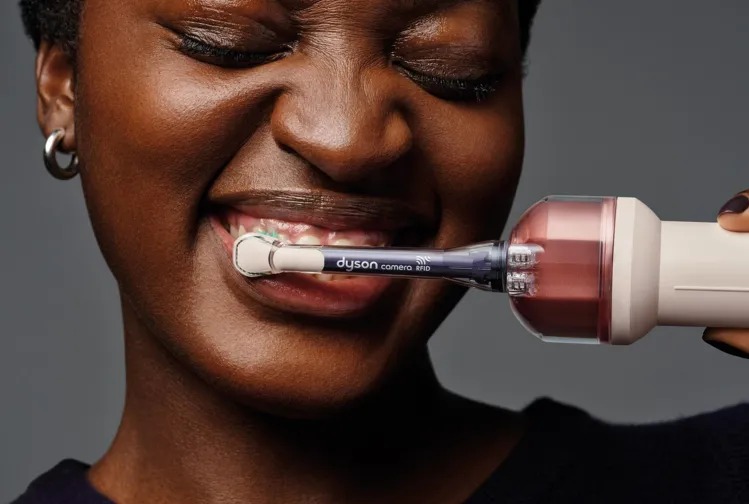
Dyson is expanding its personal care product line once again, but this time the focus is not hair, but teeth.
Priced at $499 (note: approximately 3,361 yuan at the current exchange rate), CameraJet is Dyson's first electric toothbrush with a camera built into its brush head. The product is available starting today in Ceramic Blue and Ceramic Pink. Users can connect via Wi-Fi to transmit real-time images of the inside of the mouth captured by the brush head's camera to a phone, allowing them to view the inside of their mouth.
However, the camera is not merely used to capture images. It also works with AI algorithms to identify gaps between teeth and spray mouthwash at those locations. As a result, CameraJet can perform a floss-like cleaning function while users brush their teeth.
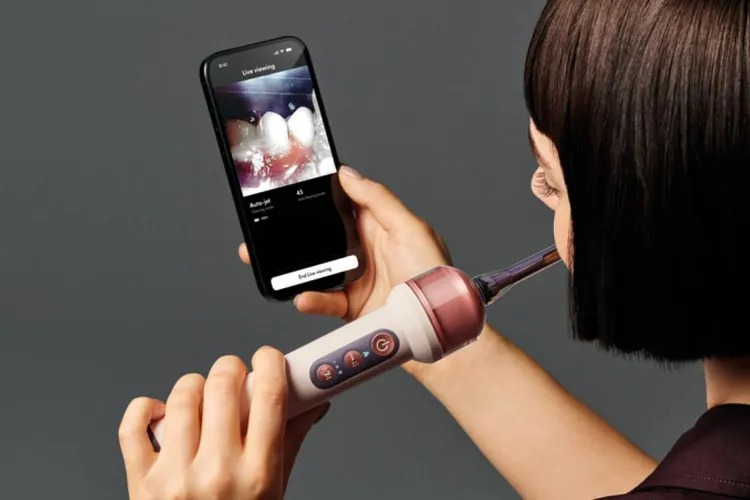
At $499 (approximately 3,361 yuan at the current exchange rate), the price is clearly not cheap. However, compared with other high-end smart electric toothbrushes, it is only somewhat more expensive, while those products do not offer the combination of camera and spray cleaning. For people who struggle to use dental floss consistently and do not want to face a dentist's disappointed expression at every appointment, this product may be worth considering.
Below CameraJet's brush head is a miniature camera with a resolution of 100,000 pixels, along with a strobe light. As part of what Dyson calls Gap Optical Targeting, the toothbrush's built-in AI analyzes 28 frames of real-time camera footage per second, but the images are not stored on the device or uploaded to the cloud.
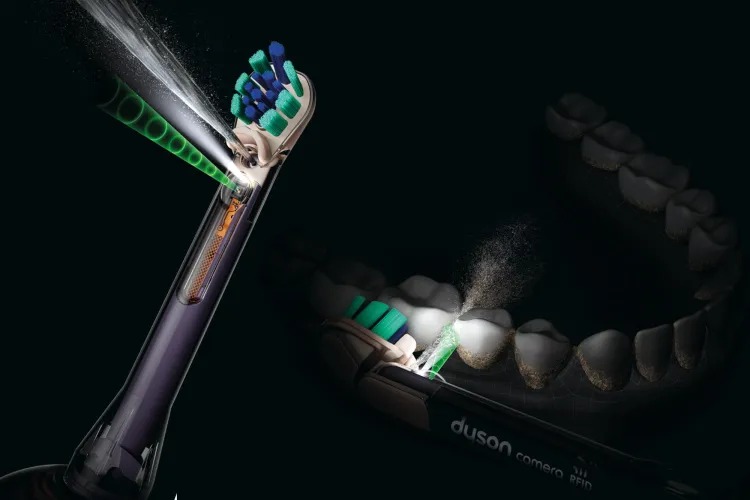
Once a gap between the teeth is detected, CameraJet sprays a cone-shaped stream of mouthwash at that location within 100 milliseconds to clean between the teeth.
Dyson uses a wider spray range than traditional oral irrigators, allowing plaque to be effectively removed at lower pressure and making this water-floss-like cleaning method gentler on tooth enamel and gums.
The toothbrush uses replaceable brush heads. The outer side of the brush head has softer bristles for safely cleaning areas near the gumline, while the inner side uses firmer bristles that are better suited to removing stains from the tooth surface.
The brush head can oscillate nearly 1,000 times per second, while its oscillation angle continuously changes to improve brushing efficiency.
Dyson has not yet announced the price of replacement brush heads. However, each brush head is equipped with an RFID tag, allowing CameraJet to track brush head usage and remind users when replacement is needed, approximately every three months.
To ensure that the internal mouthwash reservoir system works properly regardless of the angle at which CameraJet is used, even when inverted, Dyson did not use a traditional straw-based design. Instead, it added an air bladder inside the reservoir. The bladder gradually expands to fill the unused space in the reservoir, reduce air gaps, and maintain stable internal pressure, ensuring that the mouthwash can be sprayed properly.
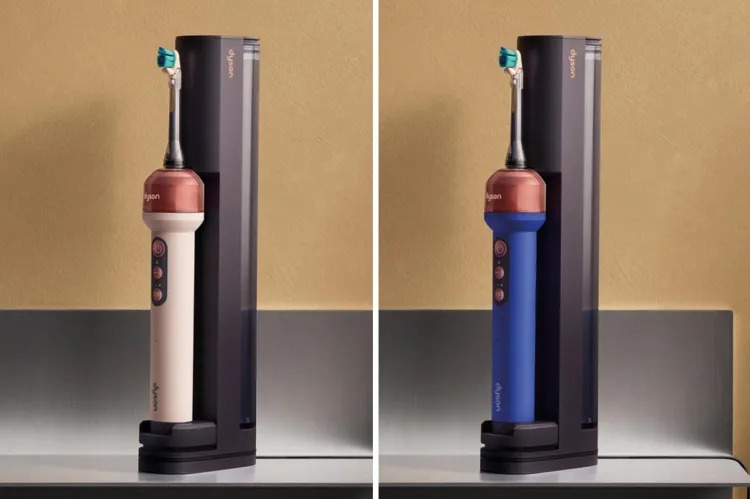
CameraJet also comes with a fairly complex base that can charge the toothbrush and automatically refill its built-in 12.5-milliliter mouthwash reservoir in just 3 seconds.
Although CameraJet can be used with the toothpaste and mouthwash users normally prefer, Dyson also plans to launch its own low-foaming toothpaste and mouthwash to reduce the impact of foam on the camera's field of view and allow it to observe the inside of the mouth more clearly.