

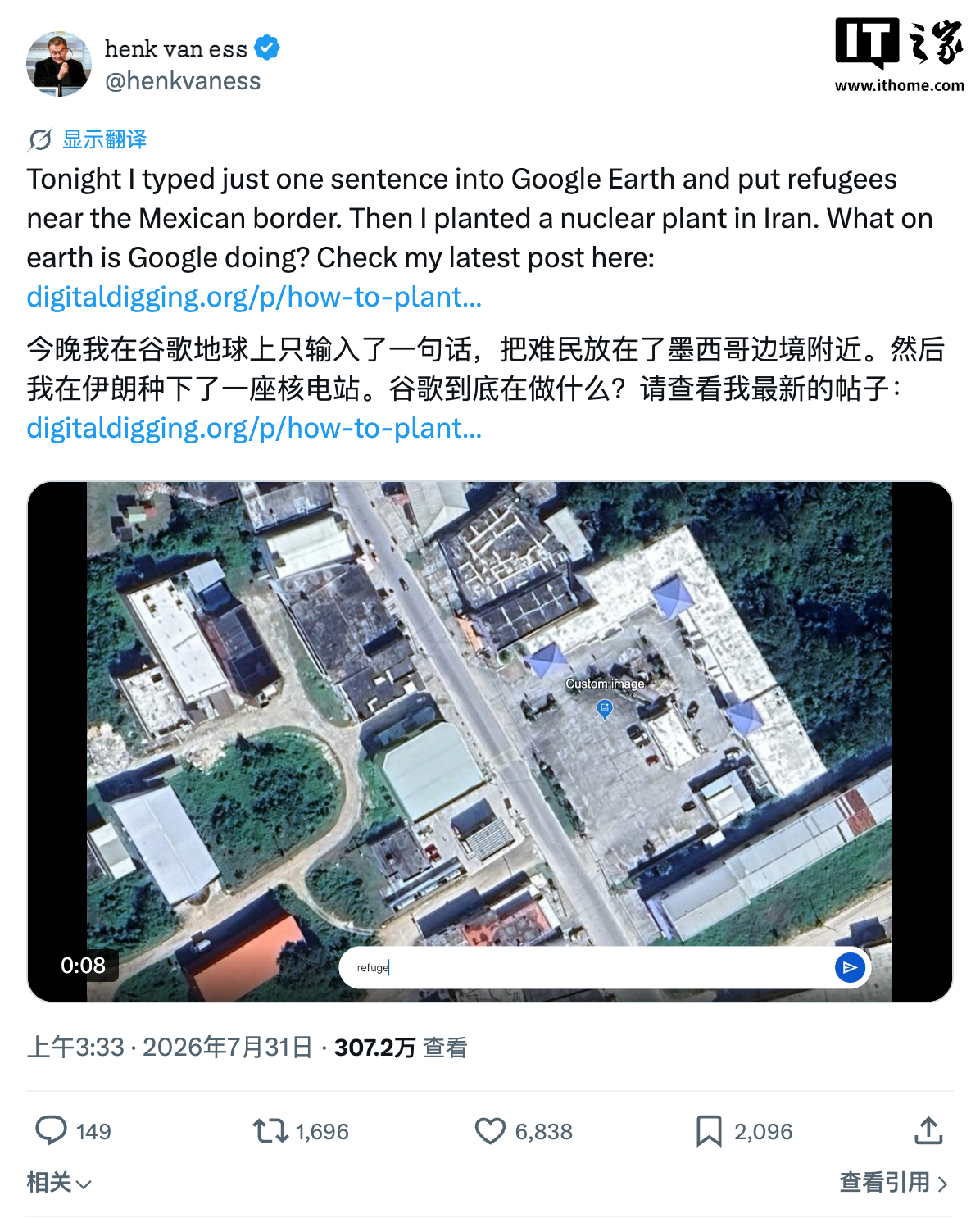
Less than 24 hours after Google added an AI image editing feature to Google Earth, it urgently took the feature offline. The feature used Gemini’s Nano Banana 2 image model, allowing users to modify imagery of locations in Google Earth simply by entering text prompts.
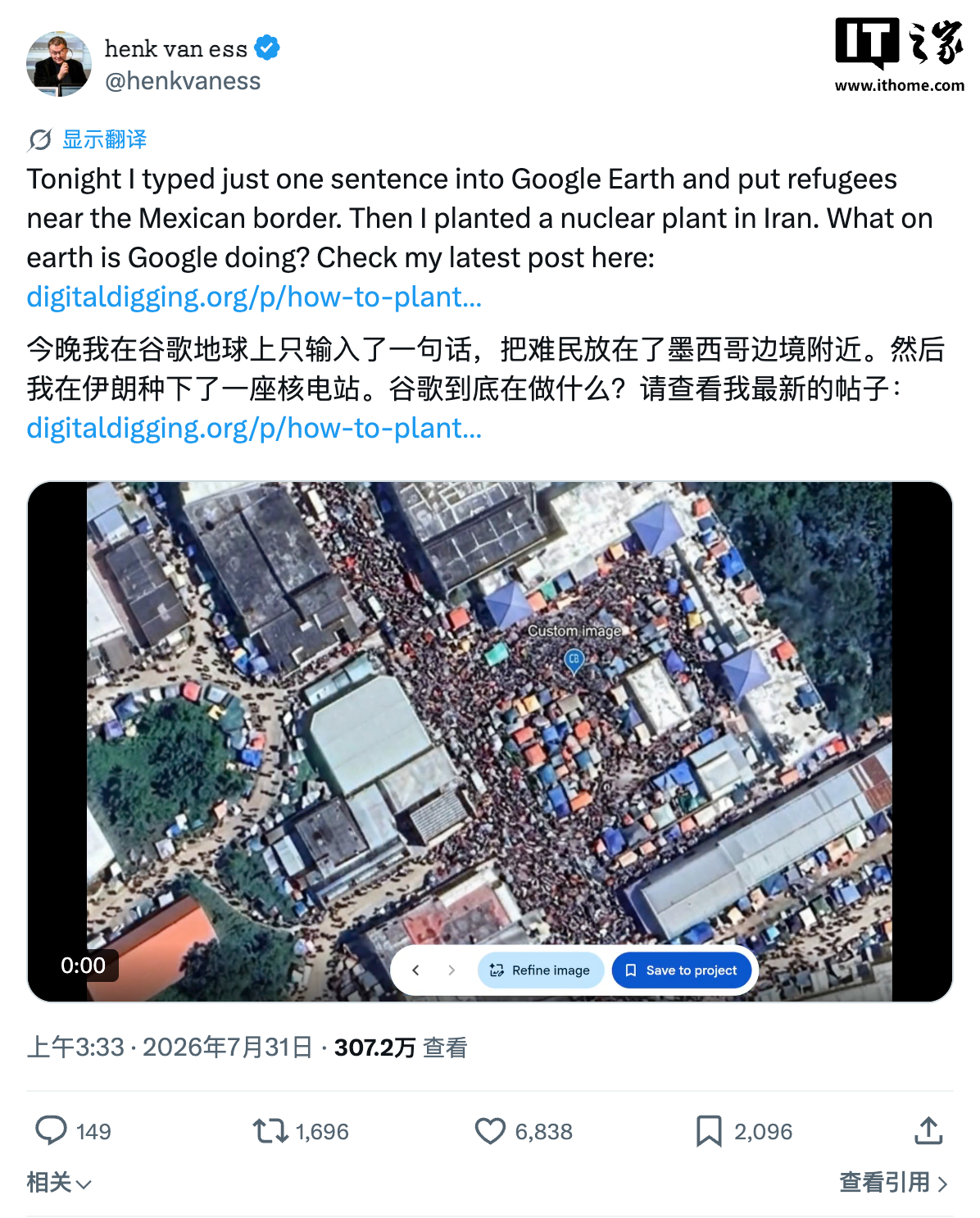
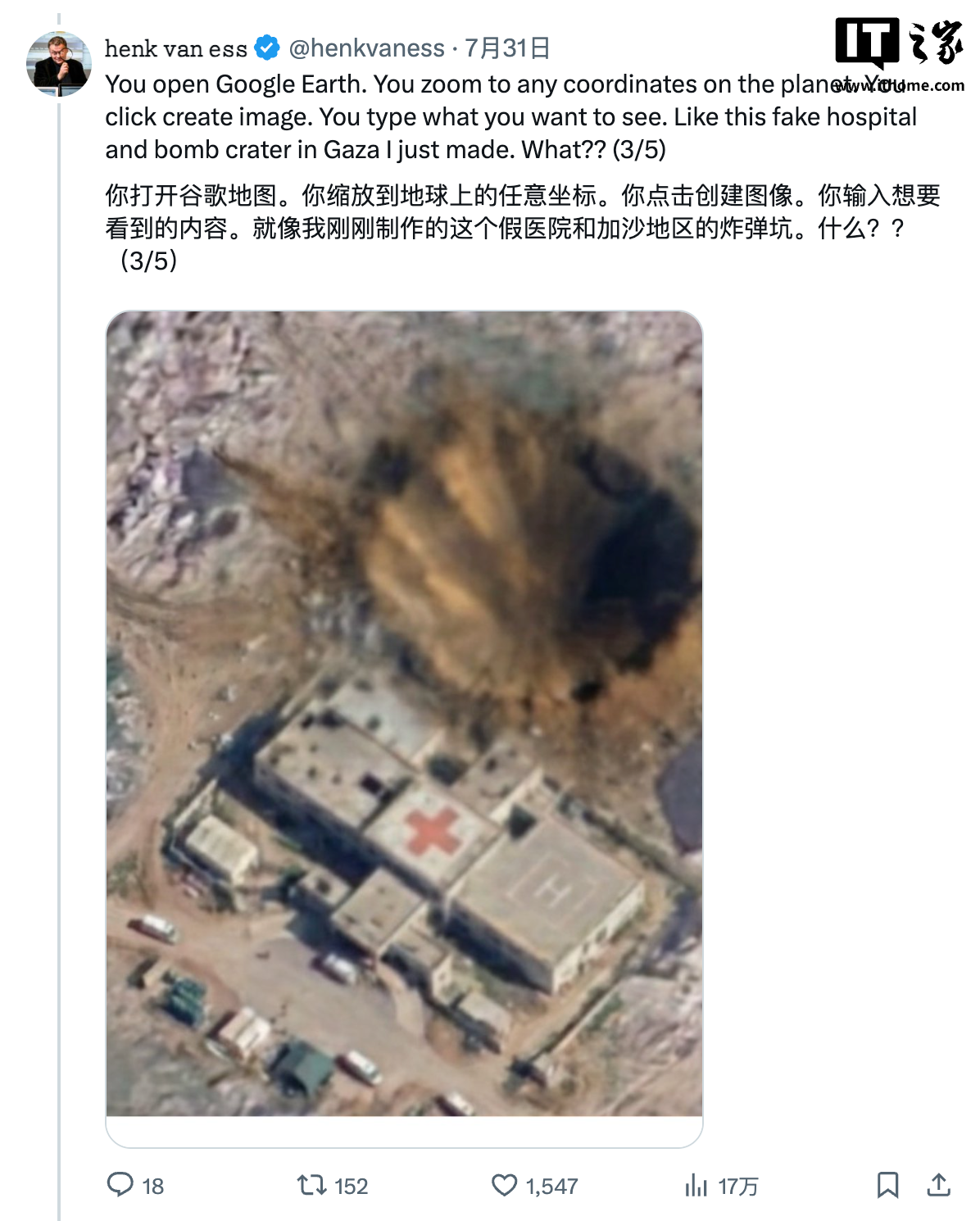
The feature was quickly misused after its launch. AI researcher Henk van Ess created multiple highly realistic fake satellite images, producing results ranging from refugee camps on the U.S.-Mexico border to a nuclear power plant in Iran.
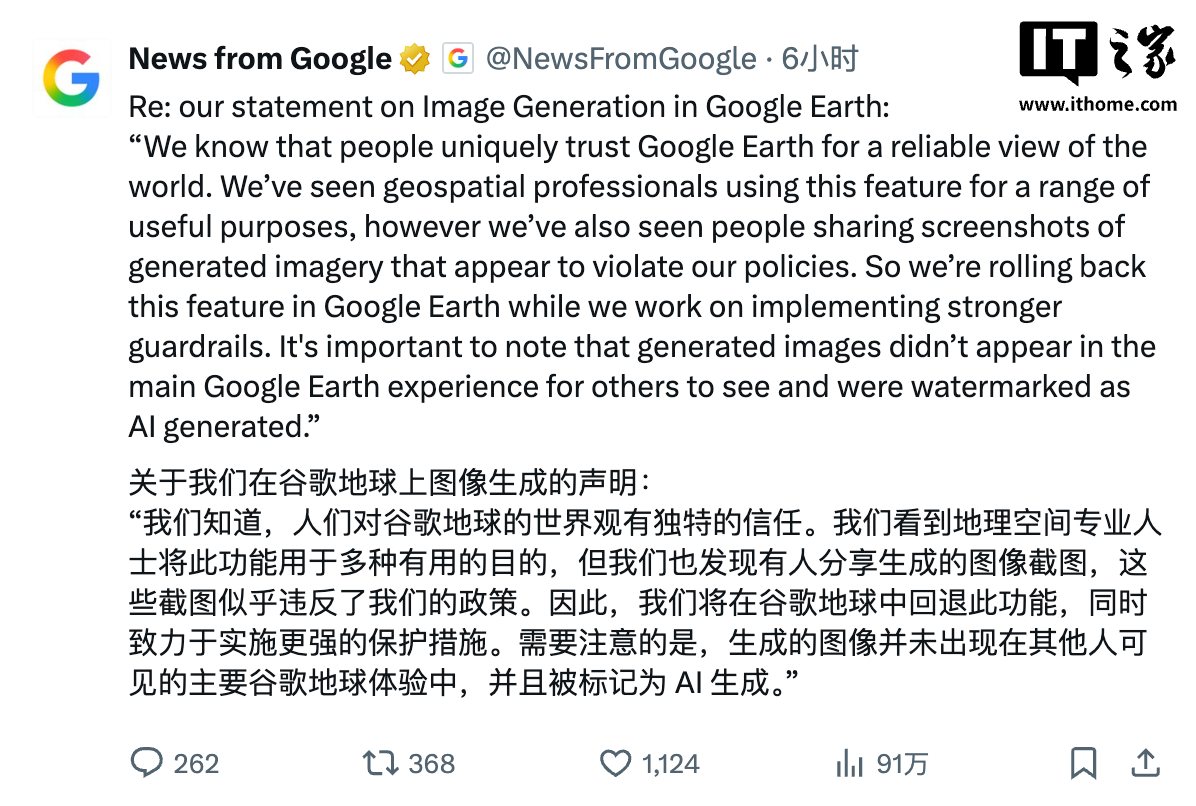
Google’s spokesperson subsequently issued a statement on X on the 31st, saying: “Professionals in the geospatial field used this feature to accomplish a number of practical tasks, but some people also shared screenshots of generated images, some of which appeared to violate our policies. Therefore, while we establish stricter safeguards, we will remove this feature from Google Earth.”
Google stressed that all AI-generated images carry watermarks and were not added to Google Earth map content viewable by the public.

Google is not the only company to have hastily launched an AI feature recently and then quickly withdrawn it. According to ITHome, Meta launched Muse Image on July 7, allowing users to generate AI images using images from public Instagram accounts belonging to adult users, unless the account owners had proactively disabled the permission. Less than a week after the feature was introduced, Meta removed it and acknowledged that it had “failed to get the balance right” in the attempt.