

INTERPOL said in a blog post published today that artificial intelligence is involved in 55% of cybercrime cases in Africa, enabling faster and larger-scale attacks while making them increasingly difficult for victims to prevent and trace.
Africa is accelerating its digital transformation, and the number of mobile network users in Africa exceeded 1.1 billion in 2025. However, cybercrime laws across the region remain relatively complex, leaving law enforcement agencies unable to effectively address AI-related crime.
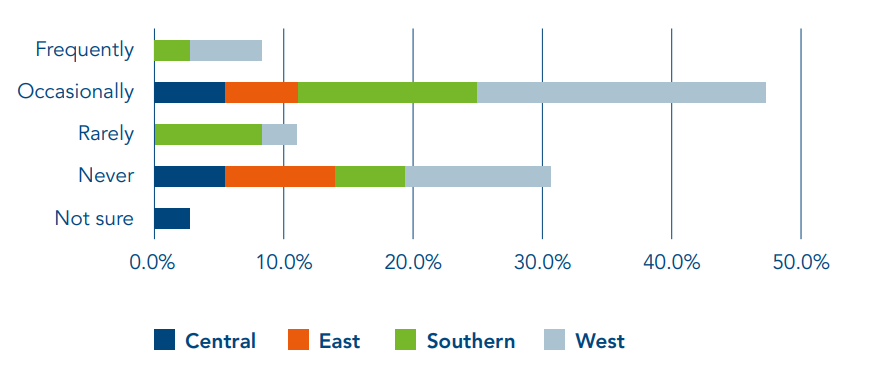
A survey of 36 African member countries shows that cybercrime has evolved from isolated incidents into an industrialized, transnational ecosystem. East Africa has become a center for mobile payment fraud and extortion attacks; business email compromise and “pig-butchering” scams frequently occur in Central and West Africa; and South Africa, with its relatively advanced internet infrastructure, has become a prime target for threat actors worldwide.
Since 2024, the economic losses caused by cybercrime in Africa have surged from $192 million (note: approximately 1.298 billion yuan at the current exchange rate) to $484 million (approximately 3.272 billion yuan at the current exchange rate). INTERPOL believes this increase has been driven mainly by AI and automation tools.
In 2025, online fraud remained the most frequently reported type of crime in Africa. Attackers used mobile payment platforms, AI technology, and social media to expand their reach and find more targets.
Alarmingly, 72% of the African countries surveyed had scam centers within their borders, particularly in South Africa and West Africa.
In addition, criminals are upgrading their fraudulent tactics. They use AI-generated content to fabricate videos from stolen photographs of real people, and use fake identities to open bank accounts, obtain SIM cards, and apply for loans.
However, African countries are joining forces to combat cybercrime. In 2025, 17 countries enacted or revised cybercrime laws, and Senegal launched an online reporting platform to combat cyber-related offenses involving children. INTERPOL has arrested more than 1,500 suspects in four operations, seized hundreds of electronic devices, and recovered more than $100 million (approximately 676 million yuan at the current exchange rate) in assets.