
Although OpenAI still trails Anthropic on a closely watched metric of enterprise AI adoption, the latest data offers a glimmer of hope for OpenAI, led by CEO Sam Altman.
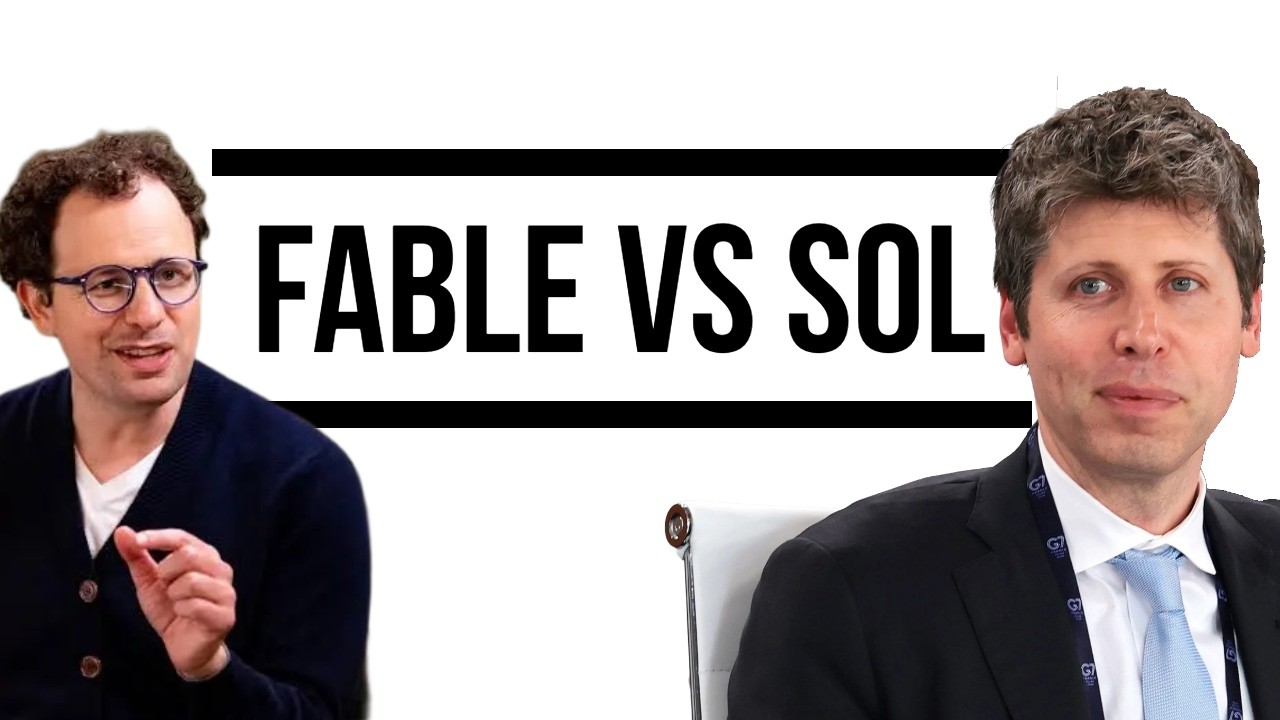
According to the latest AI Index data released by fintech company Ramp, OpenAI leads its rival's most expensive and advanced model on a key metric. The data shows that in July this year, U.S. businesses generated spending related to Anthropic's Fable 5 model equivalent to approximately 75% of spending on OpenAI GPT-5.6 Sol. This means Anthropic's flagship model was less popular among enterprises than OpenAI's corresponding product.
Although Anthropic continues to lead in enterprise adoption, weaker demand for top-tier AI models may send a worrying signal to the market: enterprise customers are controlling their AI spending.
Ramp is a fintech company that analyzes enterprise spending on AI tools and products by tracking billing and spending data from more than 70,000 U.S. business customers. Although Ramp's customers represent only a small portion of U.S. businesses and tend to be smaller companies overall, its AI Index can still help analysts and businesses understand the competitive landscape among AI providers.
Fable 5's launch was not smooth. The model was temporarily taken offline due to a government order, then restored on July 1, and its pricing was adjusted several times throughout July. Meanwhile, OpenAI's cheaper GPT-5.6 Sol is posing a threat to it.
On the eve of its IPO, Anthropic is staking the company's future on a core belief: users are willing to pay a premium for its most advanced AI technology rather than choose cheaper offerings from competitors.
Nevertheless, Anthropic's growth this year remains extremely rapid, and it continues to lead competitors in enterprise adoption.
Ramp's data shows that in July this year, 43.5% of U.S. businesses paying for Anthropic AI products, compared with 39.7% for OpenAI. Meanwhile, xAI's enterprise adoption rate rose to 4%, while Google's fell from 6.4% to 6.2%.
Ara Kharazian, an economist at Ramp, told Business Insider that Google's actual figures may be underestimated because some businesses use the relevant AI products through Google Workspace integrations.
Kharazian said the popularity of open-source AI models from China has also increased, but not yet to a level that would make him think OpenAI and Anthropic are “panicking.”
As more businesses gradually begin using products from OpenAI and Anthropic, Ramp has found that their AI spending is growing much faster.
Ramp's data shows that in July this year, the median per-employee spending on AI tools among the top 1% of companies by AI spending reached $7,400 (Note: approximately RMB 50,001 at the current exchange rate), compared with less than $5,000 in June (approximately RMB 33,785 at the current exchange rate).
Across all businesses, median AI spending per employee was approximately $12 (approximately RMB 81.1 at the current exchange rate), up from approximately $11 in June (approximately RMB 74.3 at the current exchange rate).
AI agents are an important driver of revenue growth in the AI industry this year and have become a key research and development focus for both OpenAI and Anthropic.
Kharazian said Ramp has tracked a substantial amount of AI spending on coding agents. These tools can automatically trigger additional tasks, potentially causing usage costs to grow in a “snowball effect.”
“That is why spending is growing so quickly: it has scalability that traditional software does not,” Kharazian said.