

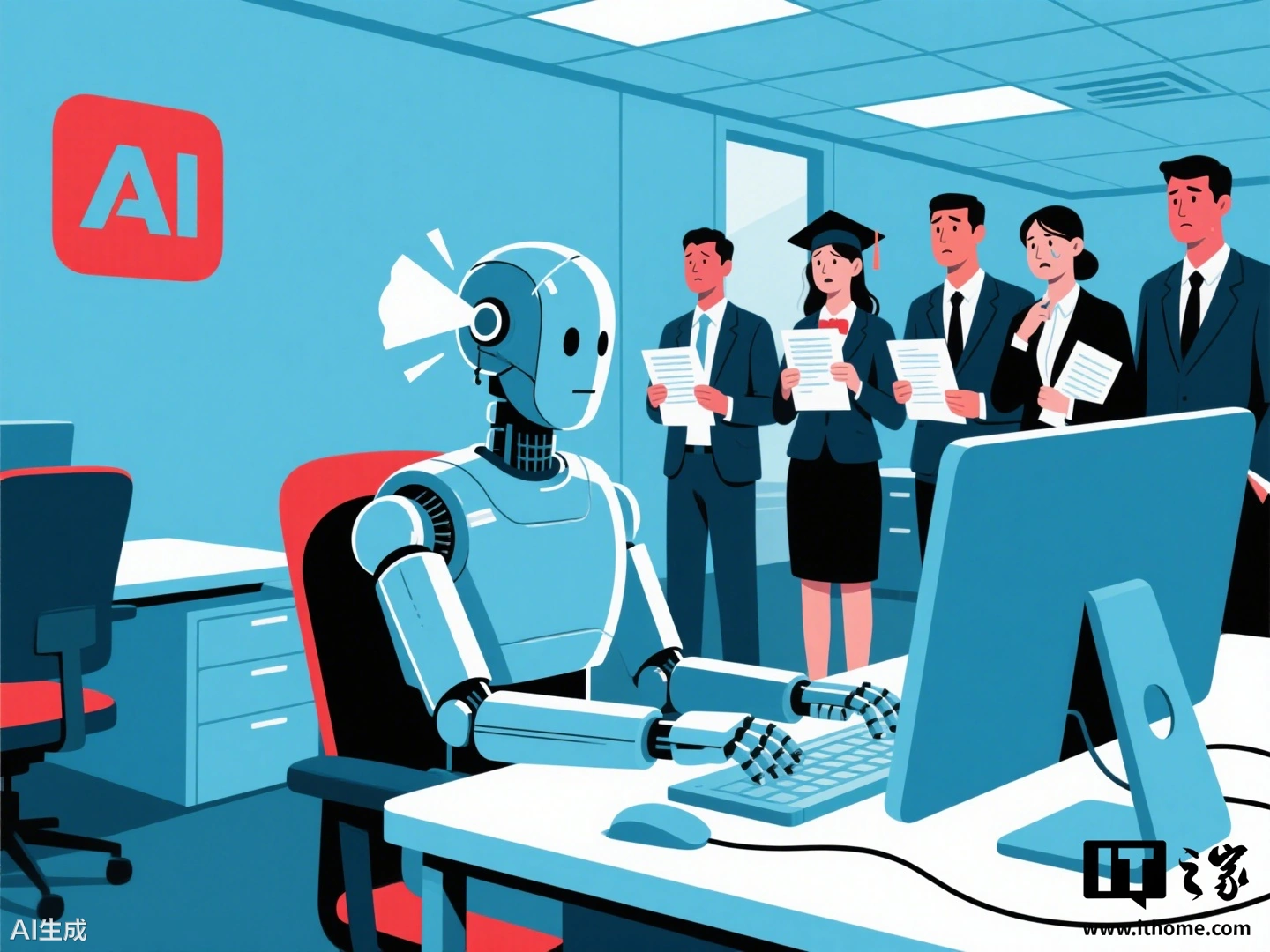
According to a report by Business Insider today (the 31st), a new white paper from Apollo Global Management suggests that AI may not directly take people’s jobs, but could first drive down wages.
The study tracked wage and employment data for 321 occupations. The results showed that, since 2023, real wage growth in jobs with the highest AI exposure has declined by an average of 6.7%. This timing roughly coincides with the rapid rise in popularity of ChatGPT.
In the report, Apollo analysts Sannia Edlich and Chief Economist Torsten Slok wrote that the study has not yet found a “detectable” impact from AI on overall employment.
Low-income workers experienced the most significant wage impact. Since 2023, wage growth for service-sector workers has declined by an average of 24.3%, while wages for workers in the bottom 25% of the income distribution have fallen by 10.7%. The highest-earning group of workers has not experienced a “significant impact.”
The researchers also used the Anthropic Economic Index to assess AI exposure based on the proportion of tasks in each occupation actually completed using Anthropic AI tools.
After comparing data from the U.S. Bureau of Labor Statistics from 2022 to 2024, Apollo found that the following occupations with relatively high AI exposure had already experienced notable changes in real wages:
Some occupations saw larger wage declines, likely driven mainly by broader industry changes. Radio and television announcers and radio DJs had relatively low AI exposure according to the Anthropic index, yet their real wages plunged by 52% over the two-year period.
Some occupations with moderate AI exposure instead achieved substantial wage growth. More than one-third of personal financial advisors’ job tasks may be affected by AI, yet their wages rose by 8.4%. Around 30% of the job tasks of administrative law judges, adjudicators, and hearing officers may be affected by AI, while their wages rose by 17.5% over the same period.
The white paper estimates that approximately 5.8 million workers in the United States are employed in jobs with high AI exposure. Edlich and Slok said that as AI becomes more widely adopted by American businesses, this number is likely to increase substantially and have a major impact on income inequality and labor market policy in the coming years.