
Nearly every company attempting to deploy artificial intelligence faces the same problem: integrating the technology into daily operations is difficult. Industrial giant Caterpillar has been tackling similar challenges in the physical world for decades, and it is now drawing on that experience to put AI into practice.
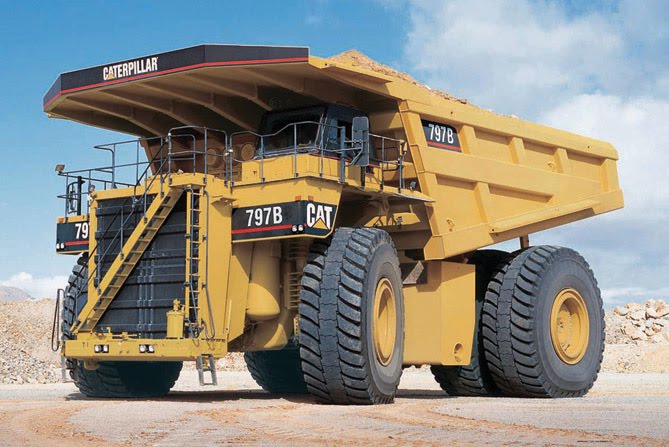
Caterpillar initially moved into automation in the mining sector, where labor shortages and hazardous working conditions make automation especially valuable. Today, the company offers autonomous haul trucks, drills, underground loaders, bulldozers, and remotely operated construction equipment, along with software command centers, fleet management, and remote terrain intelligence services, forming a comprehensive automation solution.
Caterpillar CTO Jaime Mineart told TechCrunch earlier this month at the Ai4 conference in Las Vegas: “We’re at a really exciting point where we can take all the experience we’ve built in mining and bring it into more dynamic environments, such as worksites, quarries, and construction sites.”
The industrial giant is now expanding AI applications into broader areas, including tools for technicians and the company’s employees.
One example is Cat AI Assistant. When field technicians are standing next to a machine, they can use voice commands to retrieve repair procedures, troubleshoot potential problems, and identify parts that may need replacement before beginning a repair. Mineart said customers, equipment operators, and technicians have already started using the tool.
The AI assistant runs on Caterpillar’s proprietary data, including the vast amount of information generated by its connected equipment. Mineart said Caterpillar currently has about 1.6 million connected machines worldwide, with more than 16 PB of structured data.
She added that Caterpillar is using AI to support related software, such as scanning worksites and generating digital-twin models during manufacturing to analyze production operations.
Like nearly every other company, Caterpillar is also applying AI to internal operations and software development. Mineart said: “We use AI agents to modernize legacy code, generate and test new software, and identify defects earlier.”
However, Mineart quickly pointed out that developing the technology is only part of the challenge. Deploying an automated machine is not the same as getting an entire worksite to genuinely adopt AI. Companies must also rethink how employees should work alongside these technologies and what changes existing workflows require.
She said: “The hardest part of automation and physical AI is integrating the technology into customers’ worksites and workflows.”
Mineart said Caterpillar relies on experienced equipment operators to help train AI systems, making full use of the industry experience and expertise those employees have accumulated over decades.
As equipment becomes increasingly automated, some operators’ work may also change. In the future, they may no longer directly control a single machine, but instead supervise multiple machines from a remote command center.
That transition, however, presents Caterpillar with a new challenge: how to train its 118,000 employees.
Mineart said Caterpillar plans to invest $100 million over the next five years in training employees in AI, automation, and robotics (Note: approximately 674 million yuan at the current exchange rate).
The investment will likely also help Caterpillar capitalize on the rapid growth of AI infrastructure, a trend that has already begun driving the company’s revenue growth.
Caterpillar’s second-quarter revenue reached a record $20.5 billion (approximately 138.083 billion yuan at the current exchange rate), with strong demand for power-generation equipment used in data centers serving as an important growth driver.
Sales in the company’s power-generation business surged 72% year over year to $3.1 billion (approximately 20.881 billion yuan at the current exchange rate). Caterpillar CEO Joe Creed said that amid growing demand for cloud computing and generative AI infrastructure, “nobody is slowing down.”