

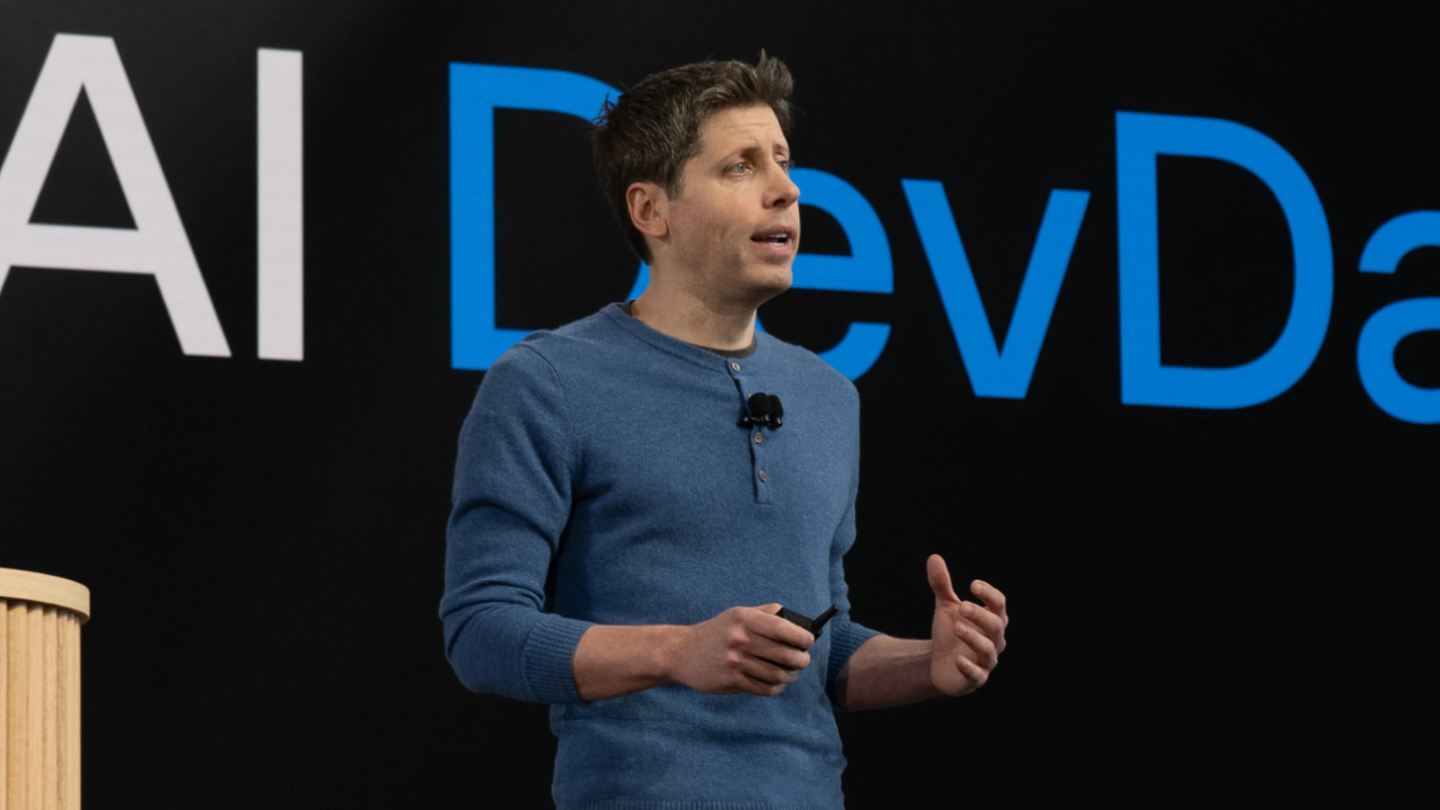
OpenAI CEO Sam Altman’s understanding of what is “cool” seems to differ from that of most people.
For example, his X bio reads, “AI is cool i guess.” He also deliberately wrote the “i” in lowercase. Some people think this style is very “cool,” but not everyone agrees.
This week, Altman shared on X what he called a “cool use case” for ChatGPT, but the response from users was anything but “cool”—it was rather lukewarm.
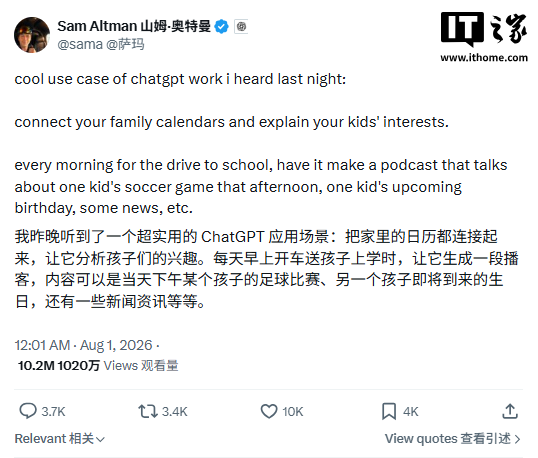
Writing entirely in lowercase, he said: “Link your family’s calendars and have ChatGPT summarize what your kids are into lately.” He also said that this was not his own idea, but something he had heard from someone else.
He gave the example that, on the way to taking the children to school each morning, you could have ChatGPT generate a podcast segment introducing one child’s soccer game that afternoon, another child’s upcoming birthday, and some news updates, among other information.
This idea reflects an increasingly popular trend in recent years—using AI to reduce the burden of parenting. Altman himself has been promoting this concept for nearly a year.
In 2025, Altman and his husband, Oliver Mulherin, welcomed their son. He has said repeatedly that ChatGPT was an indispensable assistant during the first few months of being a father.
However, for many people, incorporating AI into every moment of life—especially time spent with children—is not a welcome idea.
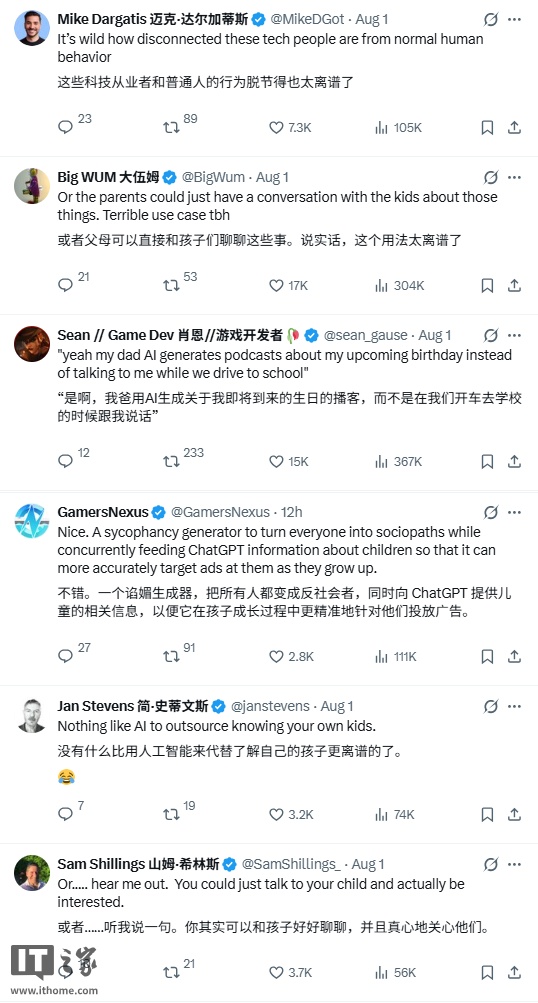
Alex Hirsch, creator of the Disney animated series Gravity Falls, replied in the comments: “Why don’t you just talk to your own kids?” His reply received about 10 times as many likes as Altman’s original post.
Hundreds of X users then joined the discussion. One user commented: “Replacing real human interaction with AI is one of the worst uses of AI.”
This view also appears to have received partial support from OpenAI President Greg Brockman.
A post he published on X on Saturday likewise attracted widespread attention. He said that company employees do not like ChatGPT asking them to do things, even though they would be “completely willing to do it” if the same request came from a colleague.
Again using all lowercase letters, he wrote: “This further shows that people value relationships with other people a great deal and are willing to help one another. They want AI to help them save time or enhance the experience of being with other people, rather than become a barrier between people.”
For parents who support using AI to assist with parenting, however, saving time is precisely their most urgent need.
Hally Peck, a mother of two, told Business Insider that she uses AI assistants to manage work schedules, school arrangements, extracurricular activities, birthday reminders, and various childcare-related tasks.
“I have two children, and my husband also works full time. We are both extremely busy, so time is our most valuable resource,” she said.
In a previous interview with American host Jimmy Fallon, Altman also said that without ChatGPT, he could hardly imagine how he would care for a newborn.
He said he often uses ChatGPT to look up information about babies’ developmental stages and various everyday parenting questions.
Altman has also said that in the future, his children will have “far greater abilities than people today” because they will learn to use AI, even though they “will never be smarter than AI.”
Alexandr Wang, a Meta AI executive and founder of Scale AI, who is currently 29 years old, has proposed an even more radical vision. He once said that he might wait to have children until brain-computer interface technologies such as Neuralink had matured sufficiently. He believes that children’s brains have strong neuroplasticity, allowing them to adapt to such technologies from an early age and eventually think in tandem with superintelligent systems.