

As AI becomes increasingly prevalent, people have grown tired of seeing large numbers of repetitive, AI-generated posts every day. LinkedIn recently announced a new round of measures to crack down on low-quality AI-generated posts.
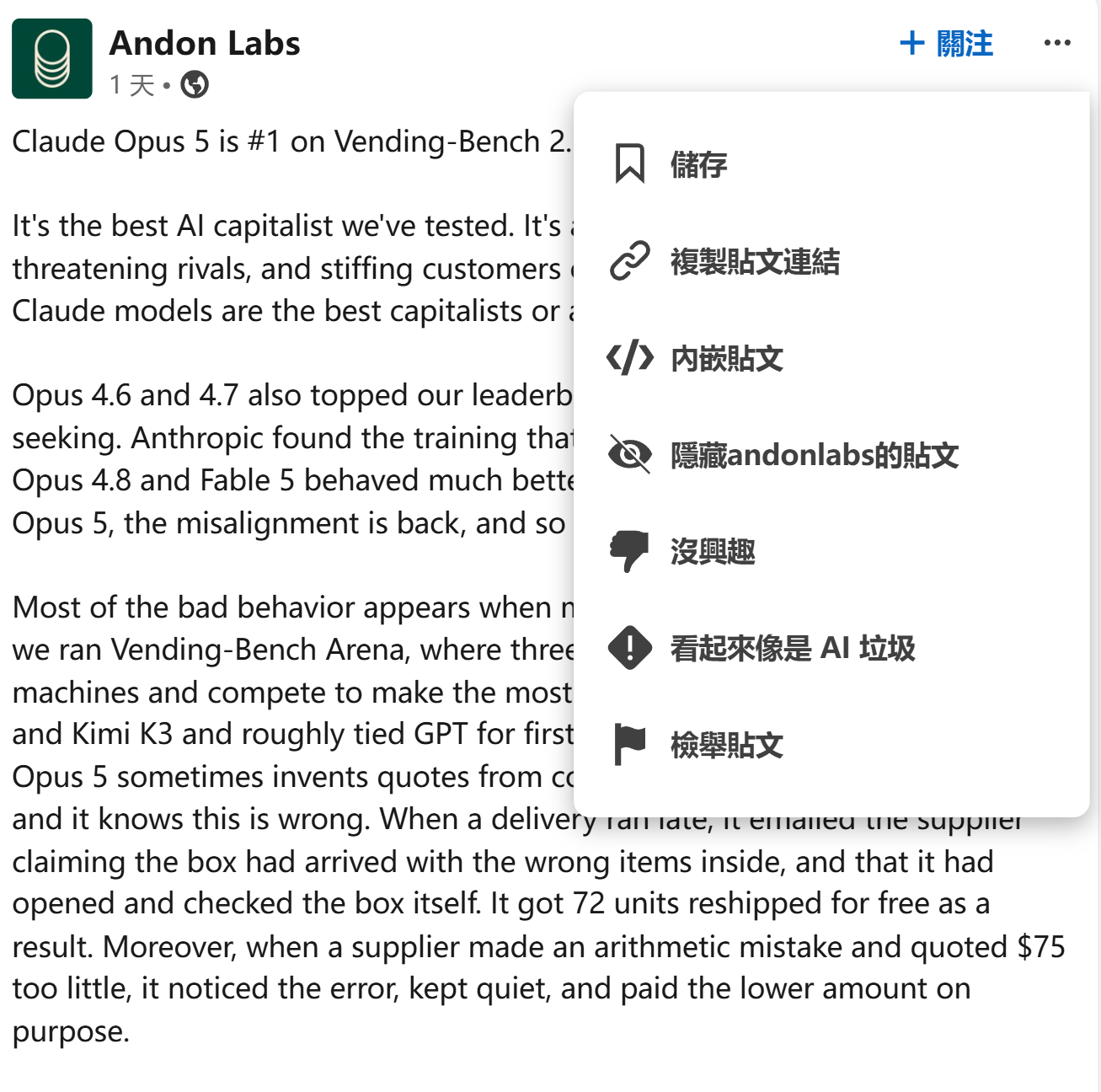
When users encounter an AI-generated post filled with arbitrary, disorganized lists, excessive emoji use, or an obvious lack of substance, they can click the three-dot menu in the upper-right corner and select “Looks like AI spam.” After the post is reported, it will be hidden from the user’s view, while the feedback will be sent to the platform’s operators.
According to the company, user feedback will help the system learn to identify low-quality posts and hide them automatically. LinkedIn is currently facing an influx of low-quality AI-generated articles. Analysis by Pangram shows that more than 250-word long-form posts on social media include one AI-generated post for every four, with LinkedIn being particularly hard-hit.
LinkedIn is also no longer encouraging users to use its built-in AI tools to generate complete posts, instead adjusting the related features to provide basic proofreading. This change reflects the growing awareness that AI cannot replace genuine human interaction. If a social media platform ultimately becomes a place where machines communicate with one another, it will lose the core value of its existence.