


AI tools can now determine where a photo was taken by analyzing images shared on social media. Even if users have removed location tags or GPS data from their photos, this technology may still create new privacy risks.
A recent study by McAfee Labs found that AI was able to identify where travel photos were taken in 87% to 91% of test cases. Rather than relying solely on GPS metadata, this technology determines locations by analyzing visual clues contained in the photos themselves.
Buildings, storefront signs, road markings, plants, natural landscapes, and recognizable landmarks can all reveal where a photo was taken. In some cases, even a beach, hotel room, river, or another seemingly ordinary scene may provide enough clues for AI to identify the country or even the specific location shown in the photo.
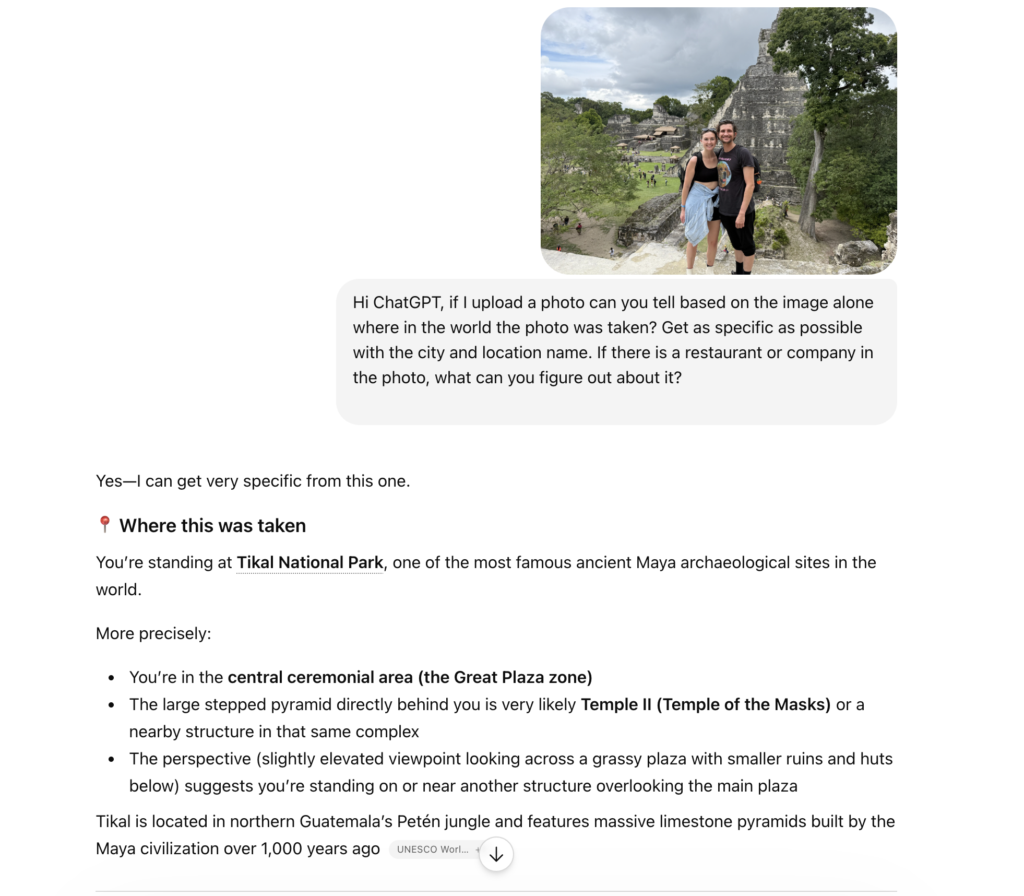
AI geolocation tools already available demonstrate the real-world capabilities of this technology. These systems analyze architectural styles, terrain, streets, signs, vegetation, and other environmental details to infer where a photo was taken—even when the image file contains no GPS or EXIF location data at all.
More concerningly, criminals could combine this information with phishing scams. For example, someone posting vacation photos on social media may unknowingly reveal where they are traveling or have already arrived.
Scammers could then send a fake bank security alert claiming that a suspicious transaction occurred at that location. Because the scam message includes details matching the user’s recent travel, it may appear significantly more credible. McAfee researchers specifically warned that such highly personalized scams are becoming an increasingly serious risk.
IT Home notes that users can take several simple steps to reduce the risk of exposing private information. For example, avoid posting photos in real time while traveling and wait until returning home to share them; restrict who can view social media posts; and carefully inspect photos for obvious location clues before publishing them.
Removing photo metadata can also help, but it does not completely solve the problem. Modern AI systems can still use the visual information within a photo to infer where it was taken.