

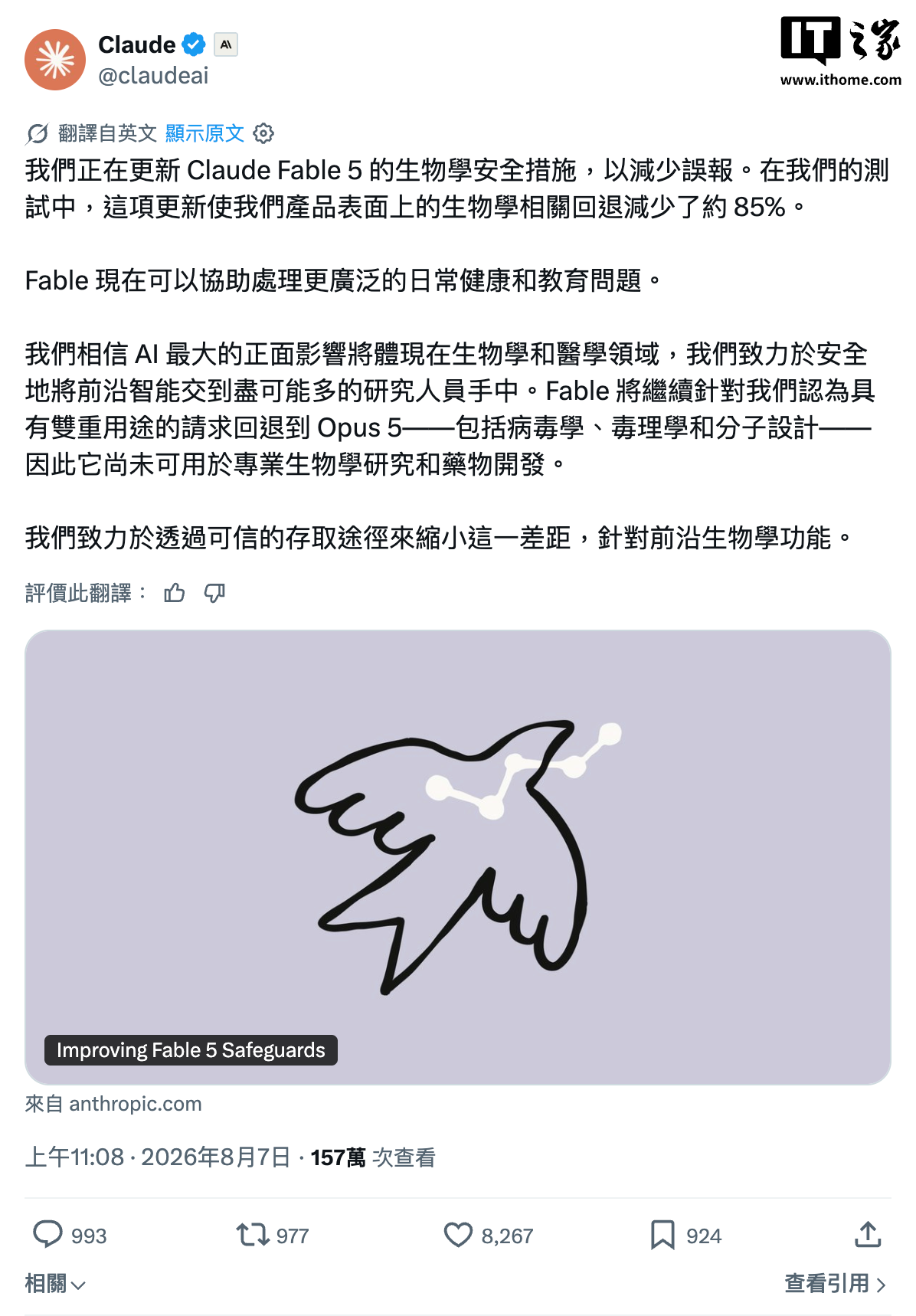
Anthropic, a U.S. artificial intelligence startup, said in a blog post yesterday that it is updating the Claude Fable 5 model’s biosafety safeguards, significantly reducing false blocks. When Fable 5 users ask biology-related questions, the system is now less likely to downgrade its response.
According to Anthropic’s official test data, this update reduced refusals for biology-related questions by 85%, and Fable 5 can now handle a broader range of biological tasks.
Anthropic said that some malicious users use the Fable 5 model for high-risk activities such as biological weapons research. To prevent this, the company specifically configured safety classifiers for Claude to detect whether users are asking Fable 5 to perform protected biological tasks or generate harmful content.
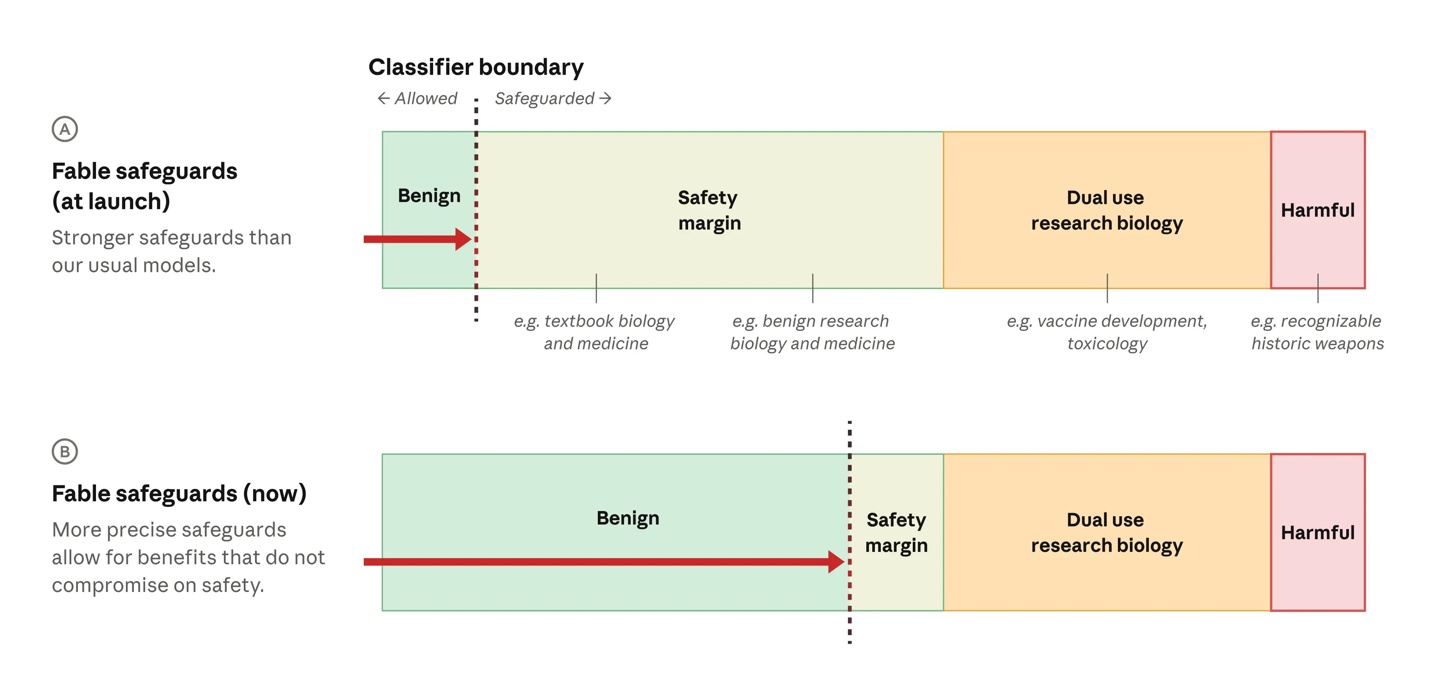
Anthropic has now adjusted how its safety classifiers work so that they can more accurately distinguish harmless questions from high-risk ones.
However, to guard against ongoing AI risks, Fable 5 will still restrict requests related to specialized biological research and drug development.