

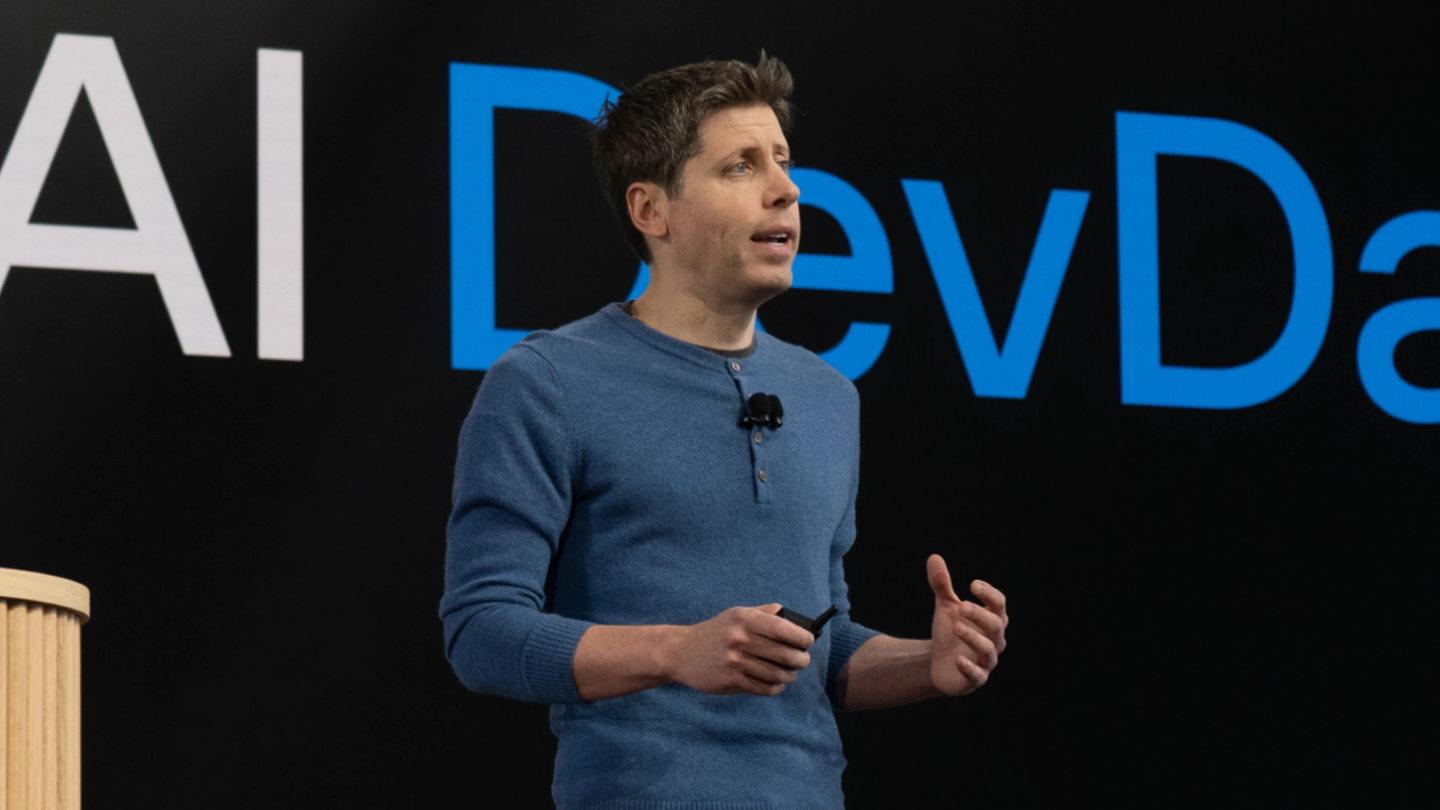
OpenAI CEO Sam Altman said that one underestimated risk of artificial intelligence (AI) is that people may become overly dependent on the technology to do their thinking, causing their own cognitive abilities to gradually deteriorate.
During an episode of the Invest Like the Best podcast that aired on Tuesday local time, Altman was asked about the most important unresolved issue in the AI field today. He said, “I think one issue that hasn’t received enough attention is: How do we avoid cognitive decline?”
He continued: “How do we use these tools while making sure we continue to exercise our brains and keep understanding the things that really matter?”
Altman made these comments as a growing number of researchers have begun warning that, while AI can improve work efficiency, it may also weaken the professional skills and cognitive abilities people already possess.
“There has never been a tool like this that gave us the opportunity to hand over the thinking process to it.” Nataliya Kosmyna, a researcher at the Massachusetts Institute of Technology (MIT), told Business Insider earlier this month. A preliminary study she conducted found that people who used generative AI to write essays performed worse over time than those who used Google Search or no tools at all.
Theoretical neuroscientist and AI researcher Vivienne Ming has referred to the risk of people abandoning cognitive labor because AI can perform tasks for them as “chronic substitution.” She said last month that repeatedly relying on AI to replace the thinking process could weaken people’s cognitive reserve, an important defense against dementia.
As AI tools continue to grow more capable, these concerns have become more pronounced. Today, AI is no longer used only to answer questions and generate text; it is beginning to take on increasingly complex tasks, including document review, research analysis, customer support, and programming.
Altman is not the only technology industry leader concerned about AI’s impact on human cognitive abilities.
Last year, Arthur Mensch, CEO of French AI company Mistral AI, told The Times that the greatest risk of AI could be “deskilling” among workers. As people increasingly rely on AI to search for information, humans may gradually become lazier.
However, in this podcast interview, Altman remained more optimistic about the future of AI.
He described a “very magical” future scenario in which a personal AI assistant could run around the clock, read various documents, sit in on meetings, recall the contents of emails from several weeks earlier, use idle computing capacity overnight to generate ideas, and proactively suggest what users should do next.
But he also said that even powerful AI models may still struggle to replicate the abilities that make humans unique. He said, “The world may need to create a new word to describe the kind of judgment that humans are very good at, but AI still seems to have great difficulty truly mastering.”