

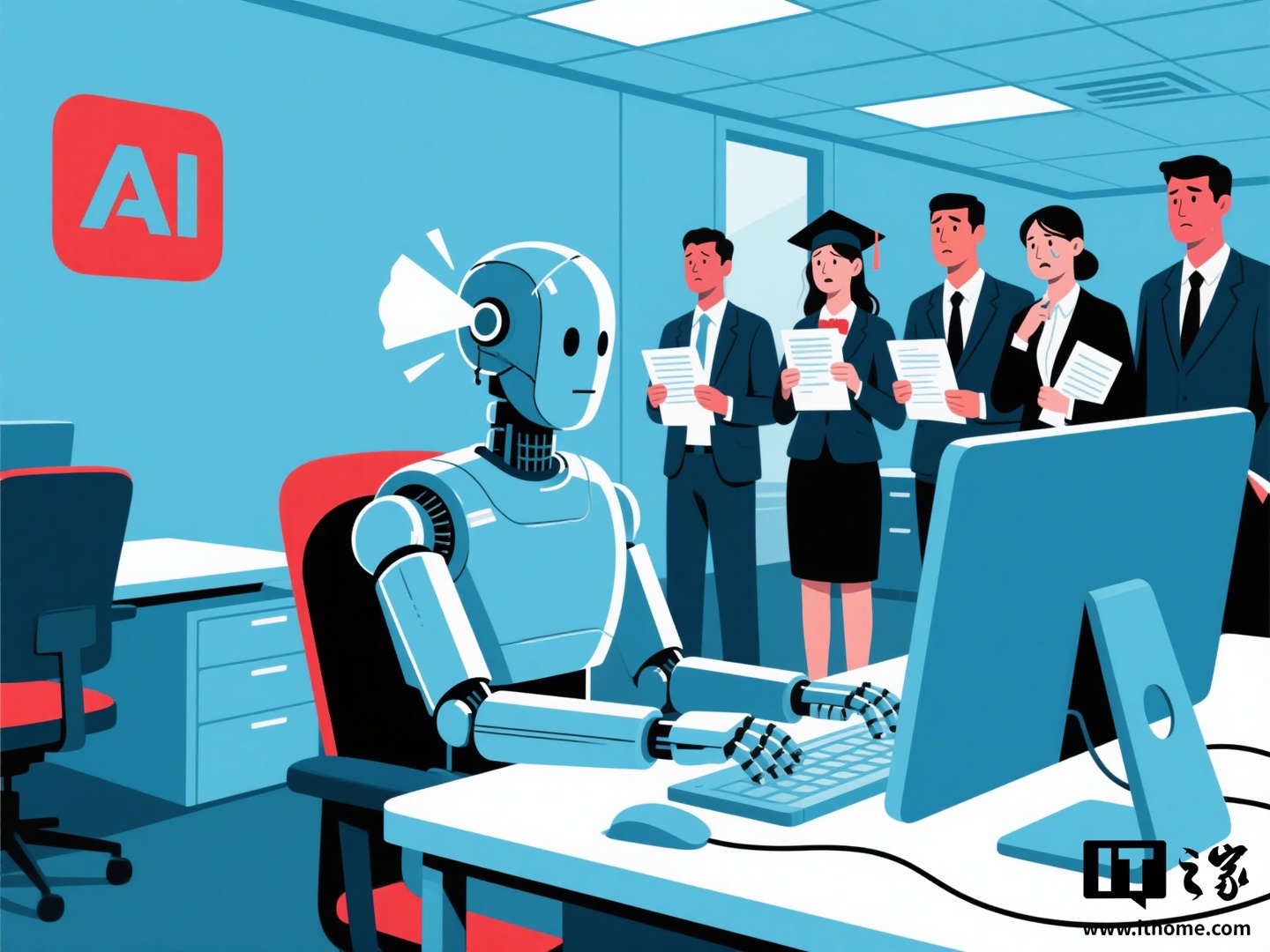
These days, AI is constantly being promoted as a powerful tool for boosting productivity, theoretically helping companies reduce costs and improve efficiency. However, according to a report by Futurism on the 25th local time, the reality is quite different. A growing number of analyses have found that AI has delivered only very limited productivity gains.
A recent survey of business executives by the U.S. National Bureau of Economic Research found that more than 90% of respondents acknowledged that AI had “not affected employment at their company” over the past three years; about 89% also said that AI had “not affected productivity at all.”
Nevertheless, companies continue to lay off employees. Mark Ma, a professor at the University of Pittsburgh’s business school who was not involved in the study, wrote in The Conversation that companies are increasing their investment in AI while continuously cutting jobs. This contradiction has become a typical phenomenon in the business world today.
Using AI as a reason for layoffs could make the situation even worse. Mark Ma wrote: “AI-driven layoffs and the resulting job insecurity are undermining the conditions necessary for AI to improve employee efficiency. In fact, layoffs worsen employees’ attitudes toward AI, even though after companies adopt AI, employees’ attitudes toward AI are one of the most important factors for predicting company productivity.”
The report noted that investors may not necessarily approve of using AI adoption as a justification for layoffs, meaning companies could ultimately lose more than they gain. Mark Ma further pointed out: “Managers believe that investing in AI and laying off employees can both increase company value. But after analyzing stock-market reactions to these layoff announcements, we found that the average return was close to zero.”
Employee morale is also continuing to decline, as managers repeatedly emphasize that AI will soon make some positions unnecessary. Meta is a typical example: after large-scale layoffs that were poorly executed, the company has struggled to restore employee morale.
Business executives still have a long way to go if they want to regain the trust of these employees, who are under pressure. IT Home learned from the report that Mark Ma and his colleagues recently analyzed Glassdoor reviews and found a strong correlation between employees’ attitudes toward AI and productivity measured using companies’ financial information. The study showed that employees’ anti-AI sentiment actually reduces productivity and offsets the efficiency gains AI might bring.
Mark Ma pointed out that employees’ attitudes are more important to truly unlocking AI’s value than managers’ optimistic expectations. He advised managers to stop using AI to justify layoffs, calling the practice “a strategic misjudgment that runs counter to AI’s potential benefits.”