

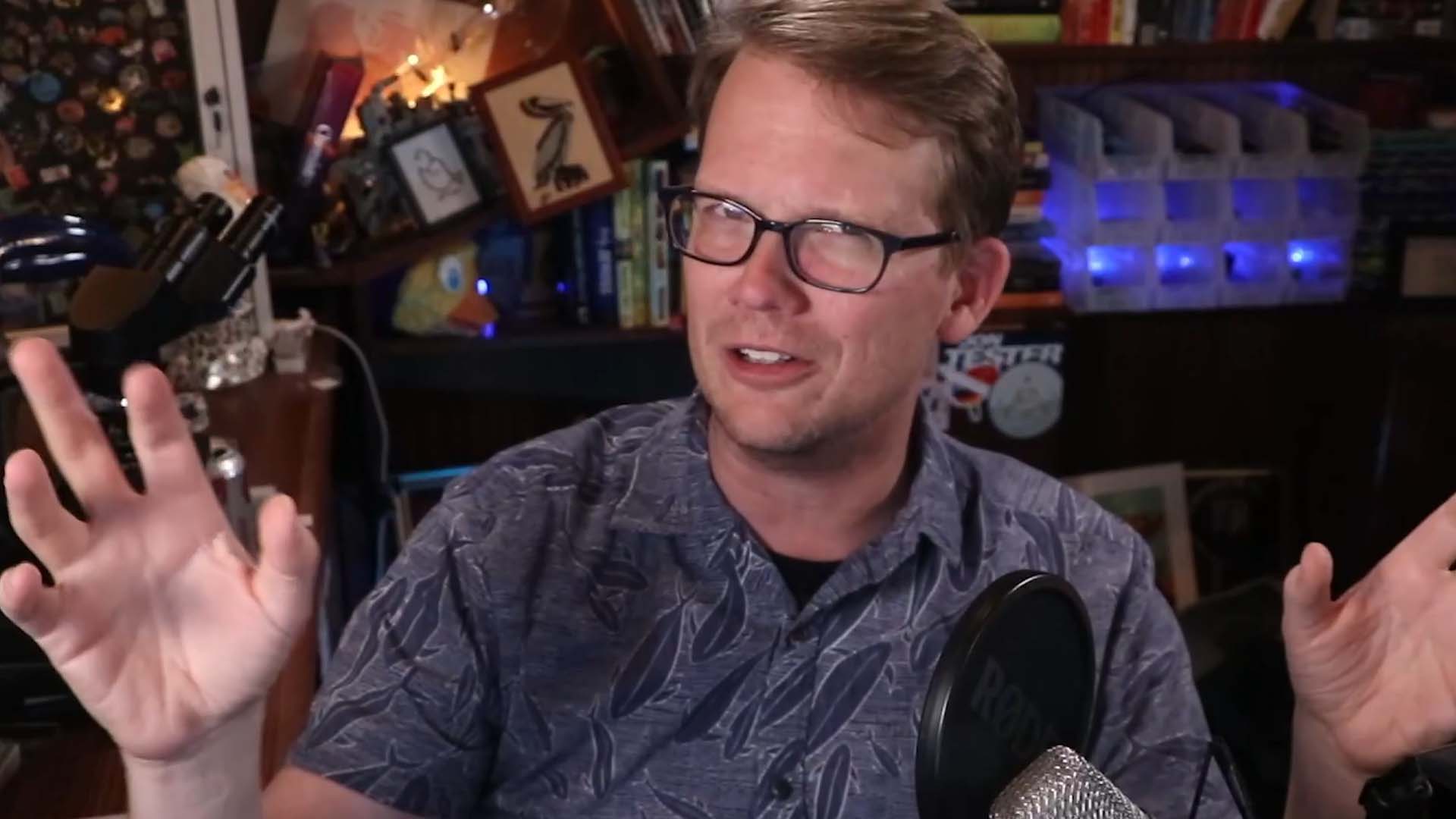
Hank Green, a well-known overseas science communicator, said he would slow down his content production after facing criticism from fans over his use of AI.
IT Home learned that, in addition to his personal channel, Green also runs the well-known science YouTube channels SciShow and Crash Course. SciShow consists of multiple channels focused on different fields of science, while Crash Course explains a wide range of topics in an accessible way through video, including Latin American literature and reading statistics.
He also co-founded the Vlogbrothers channel with his brother, John Green.
On Friday local time, Green published a lengthy post on Reddit saying that his YouTube update frequency would drop significantly for some time.
He wrote: “You can expect fewer updates from Hankschannel, and it may even go on hiatus for a while. It may return in the future with support from writing and research, or its update frequency may simply decline substantially.”
He also said that his two daily online word games, SMUSH and 4x3, would pause updates as well.
The controversy surrounding Green’s use of AI began earlier that day. At the time, he revealed on the social platform X that he had used OpenAI’s ChatGPT to conduct background research for a video script.
The statement shocked many X users. Some believed that Green’s failure to disclose his use of AI when creating content had damaged his credibility.
As the controversy escalated, Green deleted the post and went to Reddit to respond. He said he “felt incredibly guilty” because he had “let so many people down.”
He said: “I did rely too heavily on AI as a research assistant. It is extremely useful for this purpose, and it can quickly help me find many papers I didn’t previously know about. But I think this actually harmed my creative work, because it took away the process of exploring and understanding a subject in my own way.”
As technology companies continue pushing AI into people’s daily lives, an increasing number of critics are concerned that the technology could weaken people’s ability to think independently.
A survey released by Workday in 2025 showed that nearly half of respondents were concerned that AI would lead to a decline in people’s critical-thinking abilities.
At the same time, people have also begun focusing on the potential impact of AI on mental health. OpenAI is currently facing multiple lawsuits related to users’ mental health, with some cases alleging that ChatGPT encouraged users to commit suicide. In June this year, multiple U.S. states also jointly launched an investigation into ChatGPT’s impact on teenagers.
In addition, the issue of “AI hallucinations” in large language models—that is, the generation of incorrect or false content—continues to draw attention. Such errors have appeared in legal documents submitted to courts, forcing lawyers and law firms to issue public apologies. Similar problems have also appeared in research reports from some major global consulting firms.
Green said that his primary purpose in using AI was to help find research materials, rather than to directly create content. However, he also acknowledged that audiences have the right to know which material comes from him and which comes from AI.
He said: “I have always worked too quickly, to the point that I never fully sorted out my own creative process. I hope to be able to make a clear commitment on this in the future.”
Green also said that he was not opposed to AI, but understood many fans’ concerns about it, including how models are trained, their environmental impact, and the possibility that large technology companies could use them to further consolidate economic power.
He ultimately apologized to his supporters. He said: “It is very possible that you—the person reading this—have different views from me and from one another about whether AI should be used and how it should be used. I think that disagreement itself is perfectly normal. But I have always believed that my audience is more likely to be right than I am. You can sense things that I cannot truly experience. I am deeply sorry that I have strayed from my original purpose and harmed everything we built together.”
Green also said that he had been under ongoing pressure from constantly producing content. In the future, he would work to manage his workload more effectively and reassess his relationship with AI, because that relationship had become “unhealthy.”
He said: “More importantly, I need to accept the fact that the dopamine stimulation from constantly interacting with large language models and constantly doing more is not healthy for me, nor is it good for the world. This state has made me careless and gradually disconnected me from the issues people actually care about.”