

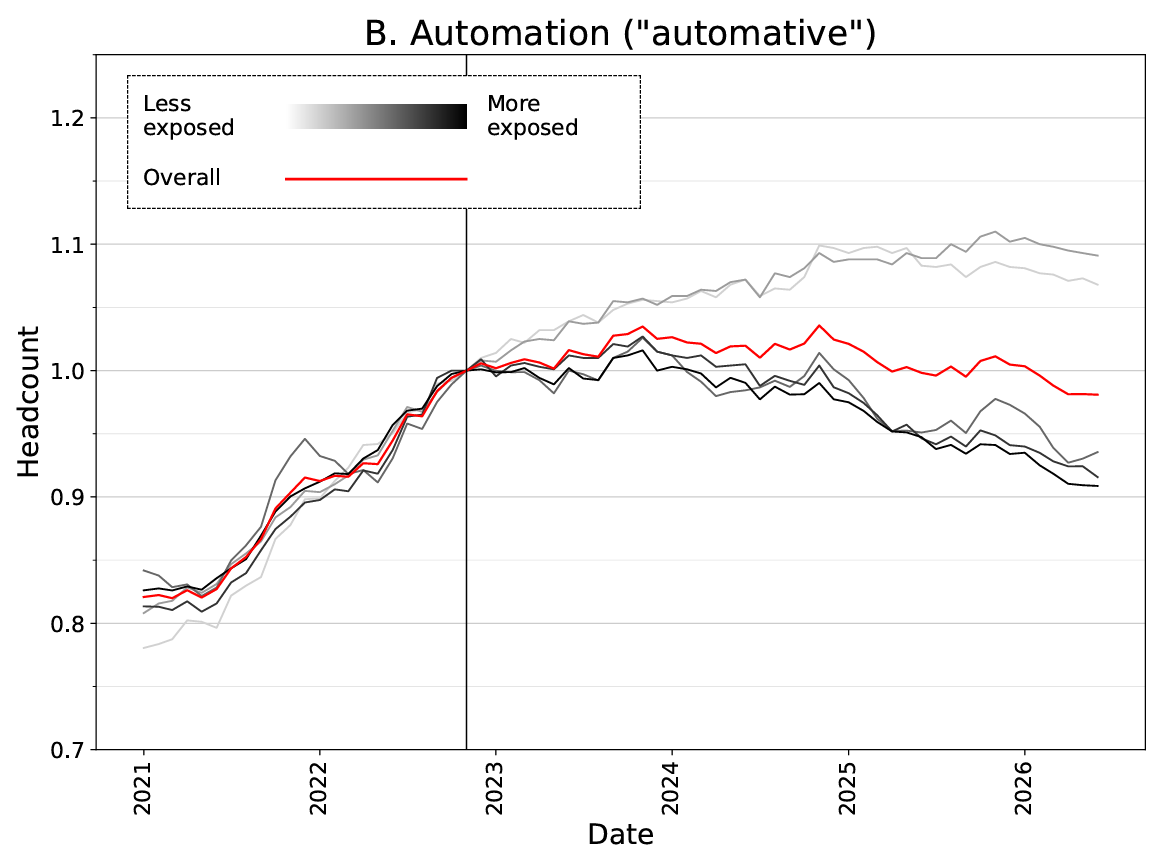
The Stanford Digital Economy Lab updated its paper on August 12, drawing on high-frequency payroll data from ADP, a payroll services provider covering millions of U.S. workers, to reveal the labor market’s real changes following the spread of generative AI. The report warns that recent graduates and young people just entering the workforce are bearing the most direct impact from AI.
The study found that, overall, there is no evidence of large-scale AI replacement of jobs across the United States, but young people’s “first-rung” employment has been seriously affected.
The report noted that in highly affected occupations such as software development and customer service, the employment rate of 22–25-year-olds lagged by about 19% compared with fields less affected by AI, while the gap was only 13% in 2025. By contrast, experienced workers in the same occupations did not show a comparable employment shortfall; employment remained stable or even increased.
The study argues that entry-level employees are more vulnerable partly because these jobs rely heavily on “codified knowledge.” Codified knowledge refers to formal, standardized, and documented knowledge that can be conveyed through education, textbooks, or written procedures. Such knowledge generally follows clear rules, making it easier for AI to participate in or replace related work.
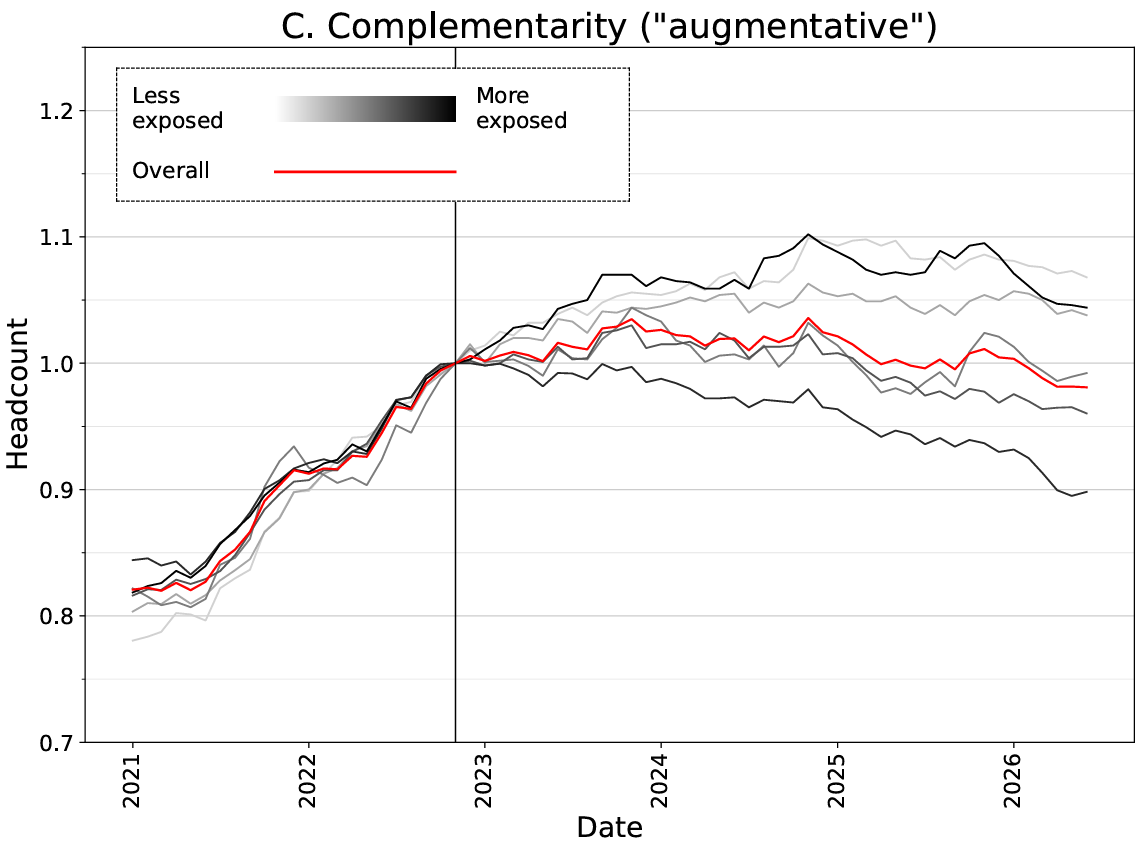
By contrast, tacit knowledge is acquired mainly through practice, mentorship, and repeated exposure to real-world situations. Researchers believe that in this type of work, AI is more likely to assist experienced employees and cannot directly replace their practical judgment. The study also found that higher education can cushion the impact of AI on employment.
Reference link above
Canaries in the Coal Mine? Six Facts about the Recent Employment Effects of Artificial Intelligence