
According to a Reuters report today, two people familiar with the matter said that Google co-founder Sergey Brin has been urging employees in key AI departments to devote themselves fully to the Gemini models in recent months, as its parent company Alphabet seeks to narrow the gap with competitors.
According to one person who requested anonymity, as Anthropic presses ahead with a preview of its powerful Claude Mythos model, Brin addressed hundreds of Google employees at an all-hands meeting in April and urged the company’s Google DeepMind artificial intelligence lab to accelerate its pace.
Google’s Gemini models briefly surpassed competitors last November, but the latest updates from Anthropic and OpenAI have once again left them behind. Sources said Google postponed the release by two months in August because internal testing showed that the new flagship version of Gemini was still lagging behind competitors in areas such as programming.
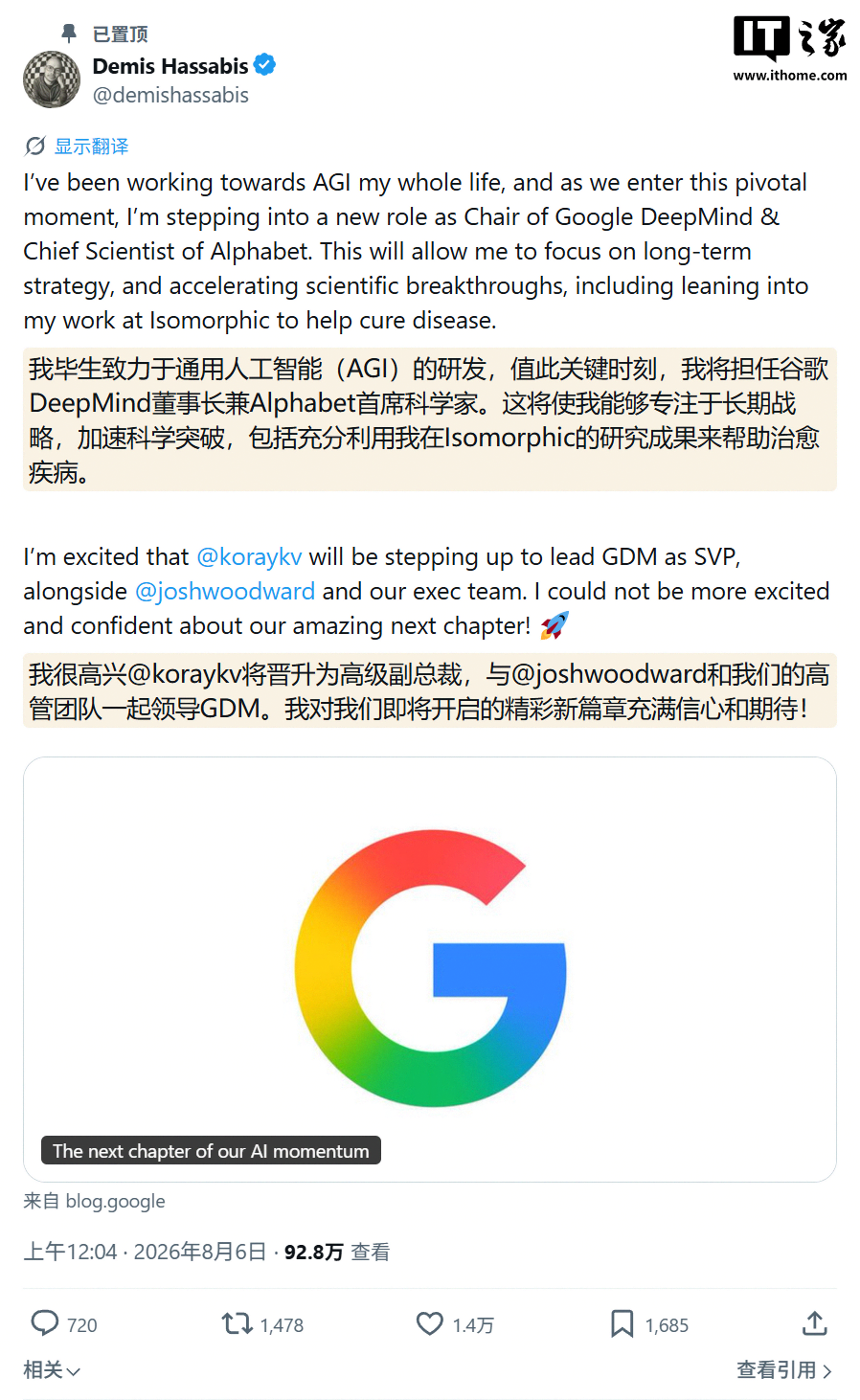
On August 5, Google announced a major leadership reshuffle at its AI division, DeepMind. Former CEO Demis Hassabis stepped down and was succeeded by his deputy, Koray Kavukcuoglu. Hassabis became chairman, with fewer management responsibilities. Meanwhile, the two former technical leaders of the Gemini project also resigned and jointly founded a startup.
Although some industry observers have questioned whether Google is withdrawing from the model race, seven people familiar with Gemini’s development said Alphabet’s commercialization strategy and personnel changes last week are closely tied to its efforts to achieve dominance in AI models.
The changes mark a further reduction in DeepMind’s autonomy. Since Google acquired the London-based lab in 2014, it has gradually reduced DeepMind’s autonomy in an effort to apply its AI technology to more software products and generate greater profits. According to two sources, Alphabet also announced at an all-hands meeting on August 6 that some teams would leave DeepMind and join Google’s corporate organization.
Google declined to answer Reuters’ questions about Brin’s recent involvement in DeepMind affairs, structural changes at DeepMind, and employee concerns.
The report also said that at an all-department all-hands meeting held last Thursday, Hassabis and Kavukcuoglu tried to ease employees’ concerns about DeepMind’s future—most of them had learned of the changes only after they were made public.
Two sources said Hassabis and Kavukcuoglu told employees that several nontechnical teams would be separated from DeepMind and incorporated into the company-wide reporting structure.
Meanwhile, sources said Hassabis reduced his management involvement with Gemini and transferred responsibility to his deputy shortly after the AI model was first launched in 2023.
The report also said that Kavukcuoglu has been consolidating power. Last year, he moved from London to Mountain View and was promoted to chief AI architect, reporting directly to Google CEO Sundar Pichai. Kavukcuoglu has also gradually built a reputation in other parts of Google for being more skilled at commercialization. According to one person familiar with the matter, even before his transfer, Kavukcuoglu—not Hassabis—was the primary liaison between DeepMind and Google Cloud (note: the company’s main source of AI revenue).