
LinkedIn said views of low-quality AI posts have declined, while people suspected by users of posting such content will also begin receiving related feedback.
LinkedIn Chief Product Officer Hari Srinivasan said that compared with a few weeks ago, overall views of posts the professional social platform identifies as AI “slop” have fallen 40%.
“Although we’ve made some progress, we know there is still much work to do to ensure LinkedIn remains a place where you can find real people and real perspectives… This remains a major focus for us,” Srinivasan wrote in a post recently published on LinkedIn.
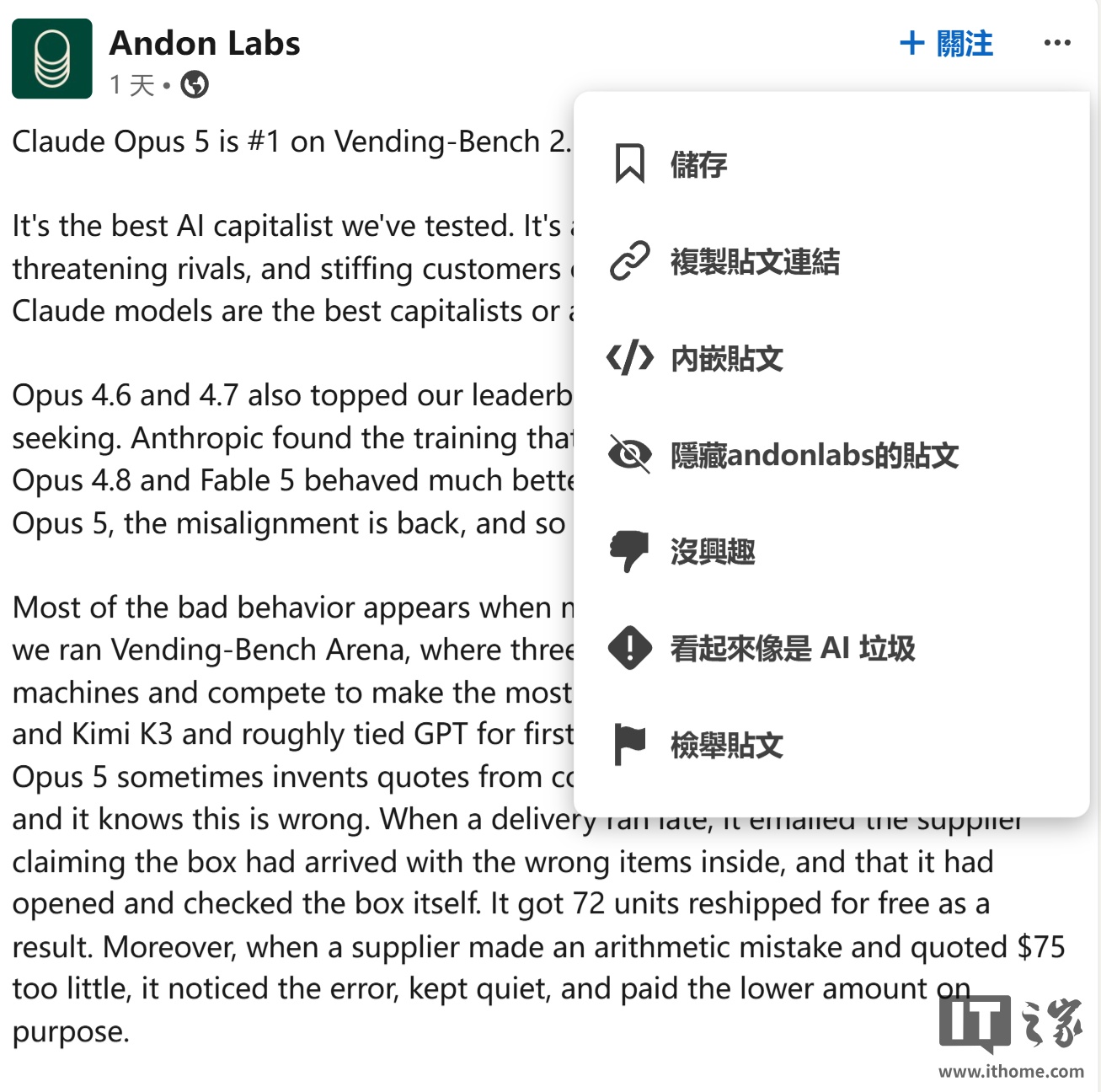
Srinivasan said that since LinkedIn launched the “seems like AI slop” button on July 30, more than 1 million people have clicked it to provide feedback on posts and comments they considered suspicious.
At the time, Srinivasan stressed that LinkedIn preferred to rely on feedback between users rather than automated detectors to identify AI-generated content.
“We want members to receive feedback from real people about whether content sounds authentic, rather than simply having an AI detector make the judgment and produce false positives,” he wrote.
Srinivasan said that if a post receives “enough community feedback,” LinkedIn now highlights this in Post Analytics with a notification “to help you understand how other people view your content.”
He also said LinkedIn has “built safeguards” to prevent users’ content from being unfairly mass-reported or targeted by other users.
“We designed this mechanism with good intentions; I know I’m paying more and more attention to avoiding making content sound like AI, and our goal is to provide helpful feedback,” he wrote.
Recently, as AI tools such as Anthropic’s Claude and OpenAI’s ChatGPT have become increasingly widespread, other platforms, including Substack and YouTube, have also begun taking a stricter stance toward AI-generated content.
Business Insider’s Katie Notopoulos recently tried an AI tool called Cringebot 3000. The tool specializes in imitating the ubiquitous “thought leader” writing style on LinkedIn. She found that compared with posts she normally publishes, content generated by the tool received more views on LinkedIn.
With LinkedIn’s latest changes now in place, low-quality content generated by Cringebot and other AI chatbots may reach fewer users and could also prompt related user feedback.