

- Monthly visits
- 0
- Pricing
- Free
- Listed
- 2025-09-01
- Updated
- 2026-08-25
01Product Positioning
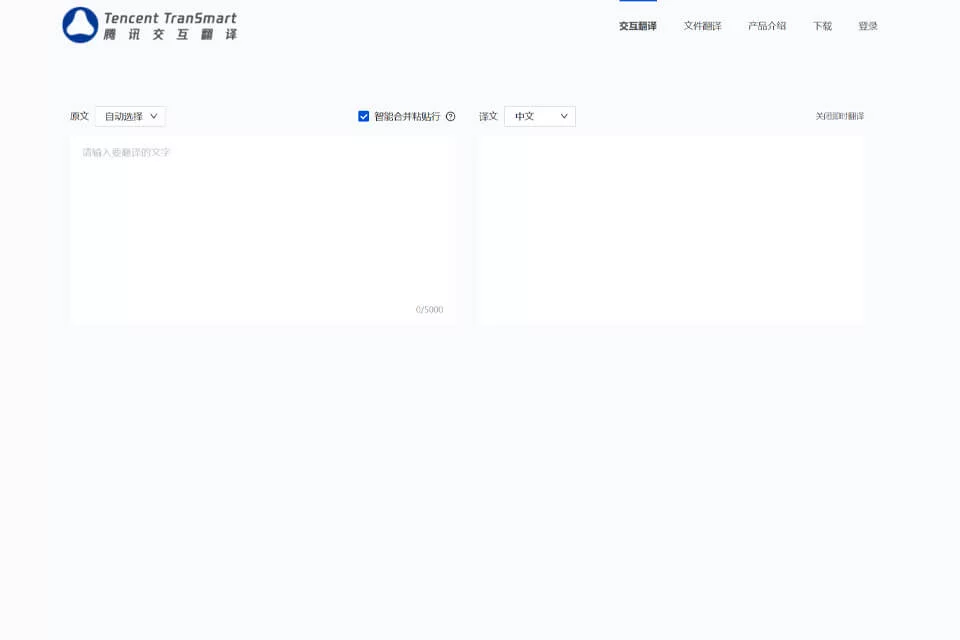
Tencent Interactive Translation (TranSmart) is an AI-assisted translation tool launched by Tencent AI Lab. It combines interactive machine translation with neural machine translation and supports text input, file processing, and content in formats such as images, speech, and webpages.
Its key feature is an interactive translation workflow: as users enter content, the system predicts and completes the translation in real time, making it suitable for workflows that involve continuously processing foreign-language content or repeatedly revising translations.
02Key Features
The product supports text, document, image, speech, and webpage translation. Document translation covers formats such as Word, PDF, PPT, and Excel, and supports batch processing. For images, users can upload an image or take a photo to recognize its text. Speech translation supports real-time translation, while webpage translation can be completed through a browser extension.
Interactive machine translation recommends subsequent translation text as users type. Translation memory integration adjusts subsequent results based on the user's translation habits, while the translation input method uses context and machine translation knowledge to assist with phrase composition.
03Use Cases
Professional translators can use it for initial translation, continuous input, and translation revision, reducing repetitive typing. Employees of multinational companies can process foreign-language documents, webpages, and everyday communications. Students, educators, and researchers can use it to read or organize academic papers and foreign-language materials.
Image, speech, and webpage translation are suitable for instant communication and information access while traveling. Software developers may also use its translation input and related capabilities as an aid when handling multilingual content.
04Usage Notes
Interactive prediction can improve input efficiency, but recommended translations should still be evaluated against the full context. For specialized terminology, academic content, or corporate business materials, check terminology consistency, semantic accuracy, and formatting after output.
The effectiveness of translation memory integration depends on user habits and accumulated usage, and its suitability may vary across fields and text types. Batch document processing, image recognition, real-time speech translation, and webpage translation should also be checked individually according to the quality of the original content and the specific task.
© Disclaimer: domains and linked content may change over time. AIEZZ does not control third-party websites. Review external content and risks independently.
User reviews0