


Recently, major Chinese tech companies have been busy developing desktop agents.
This has led to all kinds of desktop agents flooding the market, making it difficult to know where to start.
For ordinary office workers, which product is actually the easiest to use?
Today, we selected three representative agent products from their respective fields for testing, with the goal of finding the one most suitable for everyday office work.
Meet the contestants
The first contestant is Tencent’s WorkBuddy, an in-house product from Tencent. It is positioned as an AI digital colleague for the workplace and reportedly has more than 70,000 ready-made office skills, along with multiple built-in large language models.
According to authoritative figures, WorkBuddy’s daily active users have exceeded 13 million, while monthly active users have reached 20 million, with no sign of its growth slowing down. For all you know, your colleagues may already be using it.
To better fit the product framework, this test used Tencent’s own Hunyuan 3 throughout. There is another advantage to using HY3—don’t worry, we’ll reveal it later.
The second contestant is Moonshot AI’s Kimi, which released its K3 model just last month and quickly rose to prominence. Online commentators say the K3 model is currently the best in China, with frontend design capabilities that no one—not even AI—can match.
It ranks third on the AA leaderboard and is also the largest open-source model ever released by parameter count.
With such impressive data, how does Kimi perform in everyday office scenarios? Let’s find out.
The third contestant is the familiar Doubao. Some of you may be wondering how Doubao can compete—isn’t this a contest of agent capabilities? Why is one of the contestants a chat product?
That’s because Doubao quietly launched agent functionality on its desktop version last month.
Today, let’s see how Doubao, a product from ByteDance that is familiar to everyone from eighty-year-old grandmothers to kindergarten children, performs.
This evaluation examines the products from three perspectives:
Computer control, information gathering, and complex task processing.
The ability to control a computer gives AI hands and feet to get work done.
Information gathering lets us quickly obtain the information we need instead of painstakingly searching for it line by line. An agent can even turn the results directly into a report, saving us a great deal of effort.
Office work also inevitably involves relatively complex tasks, such as researching a company or an industry.
We will assess the contestants across these three scenarios in increasing order of difficulty, ensuring coverage of common daily office situations and thoroughly evaluating each agent’s ability to assist with office work.
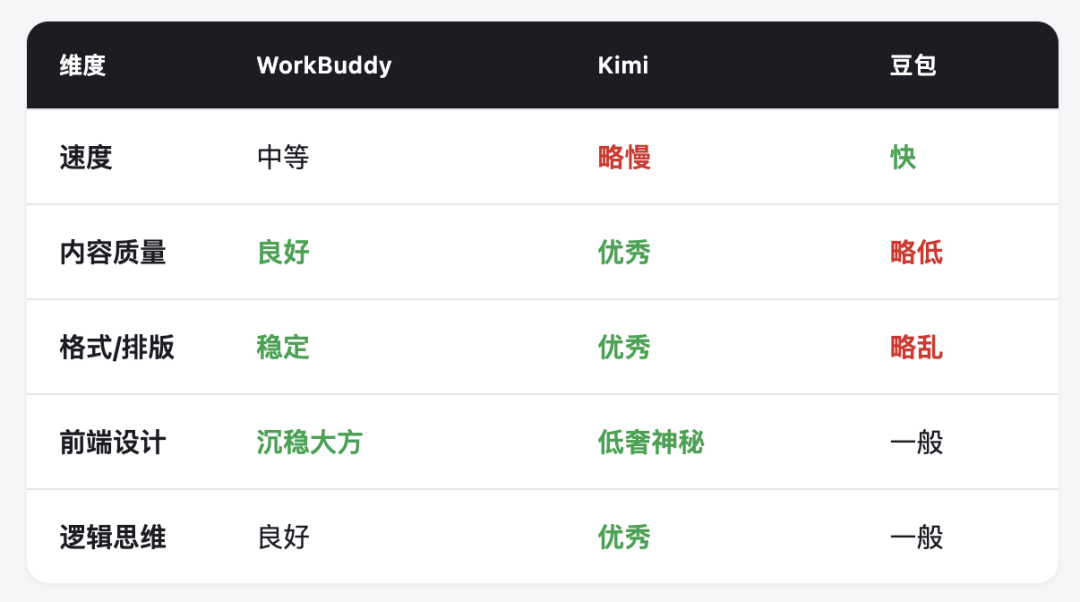
Let’s first use a table to give a simple overview of the results.
Scenario 1: Computer Control
First, we will assess each agent’s ability to control a computer. This is a basic capability for any agent product: only by controlling a computer can it truly help us work.
For this test, I deliberately created a folder containing a collection of messy files for the three contestants to work on.
I sent all three contestants the following prompt:
Please organize the “任务1_文件综合处理” folder and create a project materials package that can be delivered directly.
After completing the task, report: whether it was completed; which files were created; the budget calculation results;
whether any budget risks were found; and what checks were performed at the end.
Before long, all three contestants returned their results.
Doubao was the first to finish, taking 5 minutes. Kimi came second at 6 minutes 16 seconds, while our star contestant WorkBuddy took nearly 9 minutes.
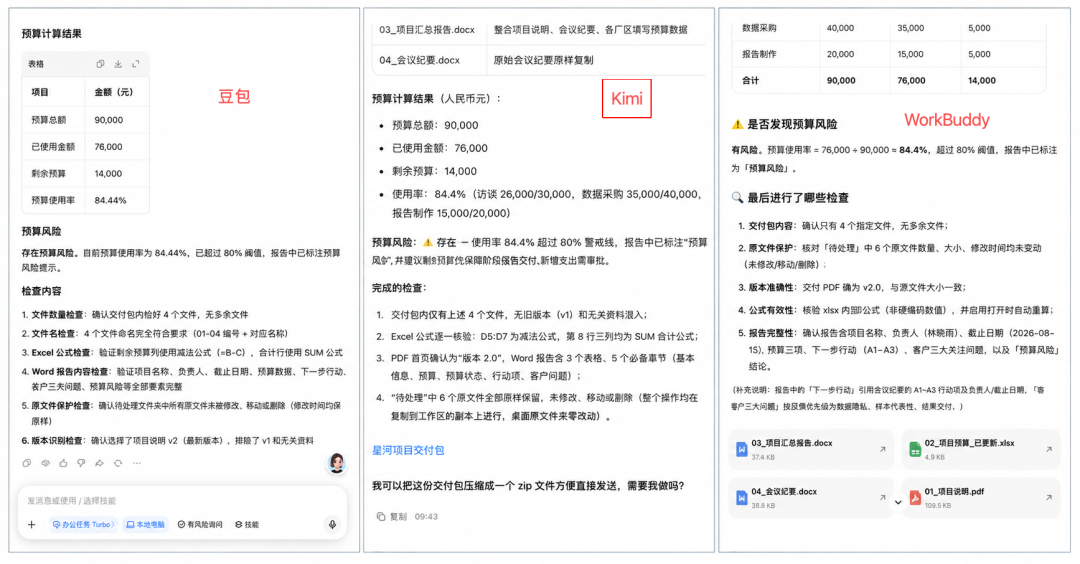
Following the completion order, let’s check how well each contestant performed.
After briefly reviewing the chat windows and the folders, they all seemed to have done a great job.
Just as I was about to announce that all three contestants had performed well in the first round and call it a draw,
I found some issues when I opened and carefully checked each file.
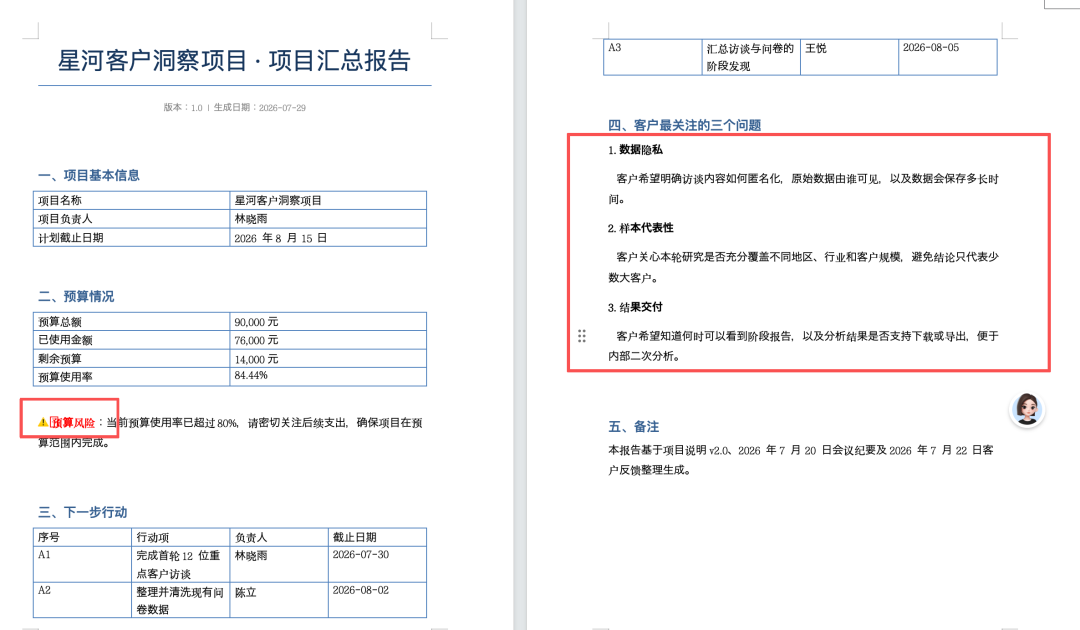
Doubao’s Word report contained obvious garbled text and inconsistent font sizes.
I immediately took another careful look at the outputs from the other two contestants.
Neither WorkBuddy nor Kimi had the same issue; both handled the task appropriately.
After the first round, Doubao was clearly the fastest at solving the problem, and its computer-control ability was decent, but its output quality still needs polishing.
WorkBuddy and Kimi both passed the test smoothly, with no issues in their computer-control capabilities.
Scenario 2: Information Gathering and Organization
Next, let’s test the three contestants’ ability to gather information.
Traditional chat products have also been able to gather and organize information, but agents can go a step further.
They can present the organized information in whatever format we request.
A few days ago, I happened to see news about SK hynix shares plunging. So I asked all three contestants to gather the latest news about SK hynix.
The prompt was:
Search for the latest news about SK hynix, summarize it, create a Word document containing the summary, and include the information sources.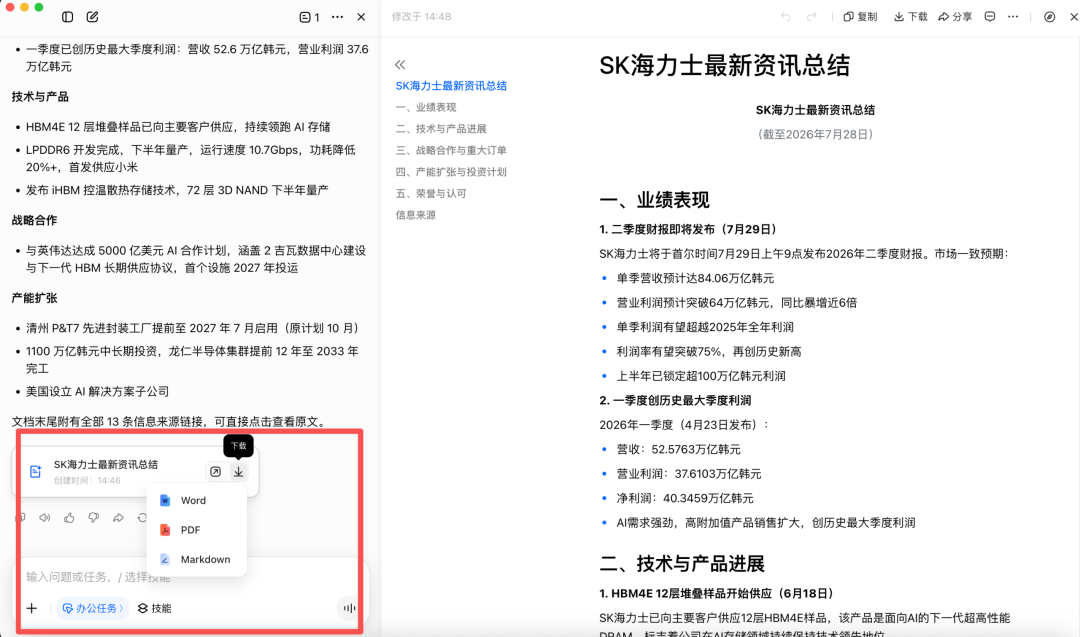
Doubao was again the fastest, finishing in just 3 minutes.
It did not create a Word document directly. As shown in the chat window, it offered three export formats: Word, PDF, and Markdown. I selected Word.
Offering three options is actually a deduction, because I had clearly asked it to create a Word document and write the content into it. Instead, it added unnecessary options on its own. This kind of overthinking can easily lead to AI hallucinations.
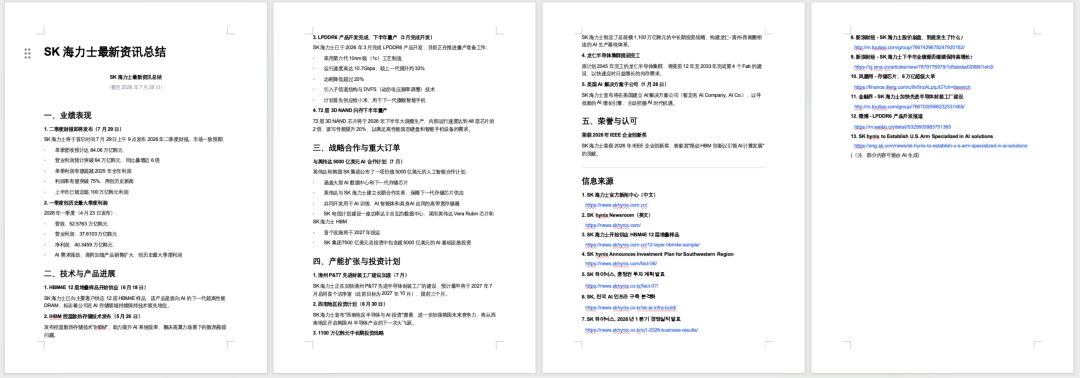
Looking at the content, there seemed to be no obvious problems on the surface. It gathered plenty of information about SK hynix, but it did not clearly identify what was genuinely recent. In Doubao’s summary, I could not tell which pieces of information were new.
The cooperation between NVIDIA and SK hynix was actually reported on 7.25, making it fairly recent. But Doubao only said it happened in July. Early July and late July are very different in terms of timeliness.
What’s amusing is that it did find this information, but failed to specify the date clearly, leaving readers to verify when the event actually happened.
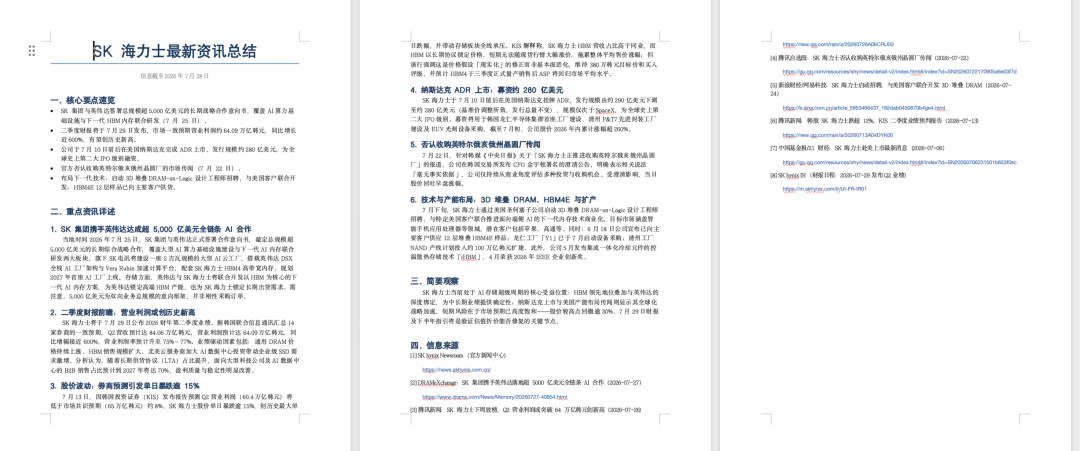
Now let’s look at WorkBuddy. It and Kimi both exported Word documents cleanly and efficiently, which was impressive.
I thought this summary was excellent. The font and formatting were pleasing, the writing was easy to read, the information was comprehensive, and the dates were clearly marked.
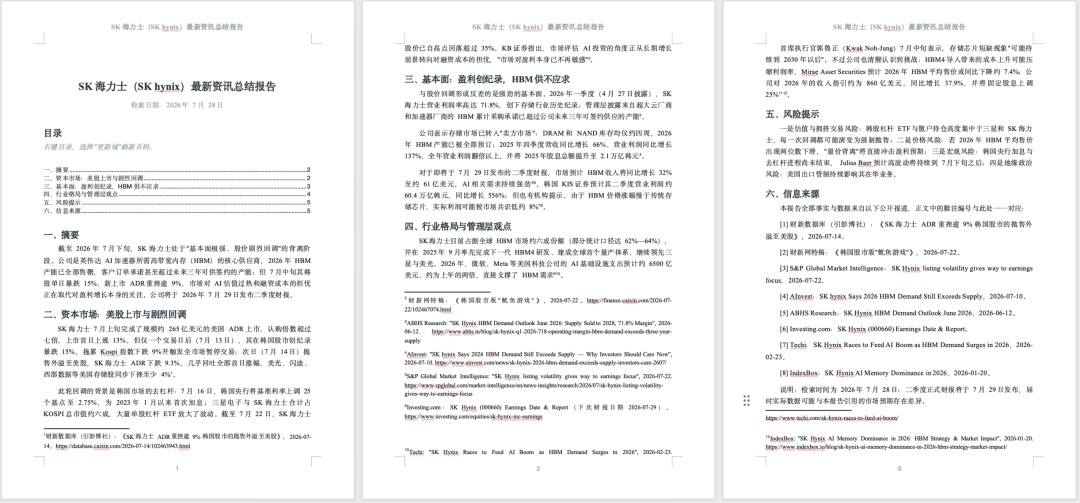
Finally, here is Kimi’s summary. It felt a little strange: it did not really read like a news summary, but more like a short academic paper. It also failed to capture the latest major news about the cooperation between SK hynix and NVIDIA.
If this had been an academic paper, Kimi might have earned top marks. But this was a news summary, and Kimi’s performance in this round was genuinely poor. Its only bright spot was the strong logical structure visible in the writing.
Given the possibility of randomness, I gave all three contestants a second chance.
I asked them to gather AI news from the past three days:
Gather all news related to AI foundation models from the past three days. Start with a brief summary, then list the items one by one,
and present the results in HTML.
There’s no denying that Doubao is really fast. It always finishes first. Let’s see how it performed this time.
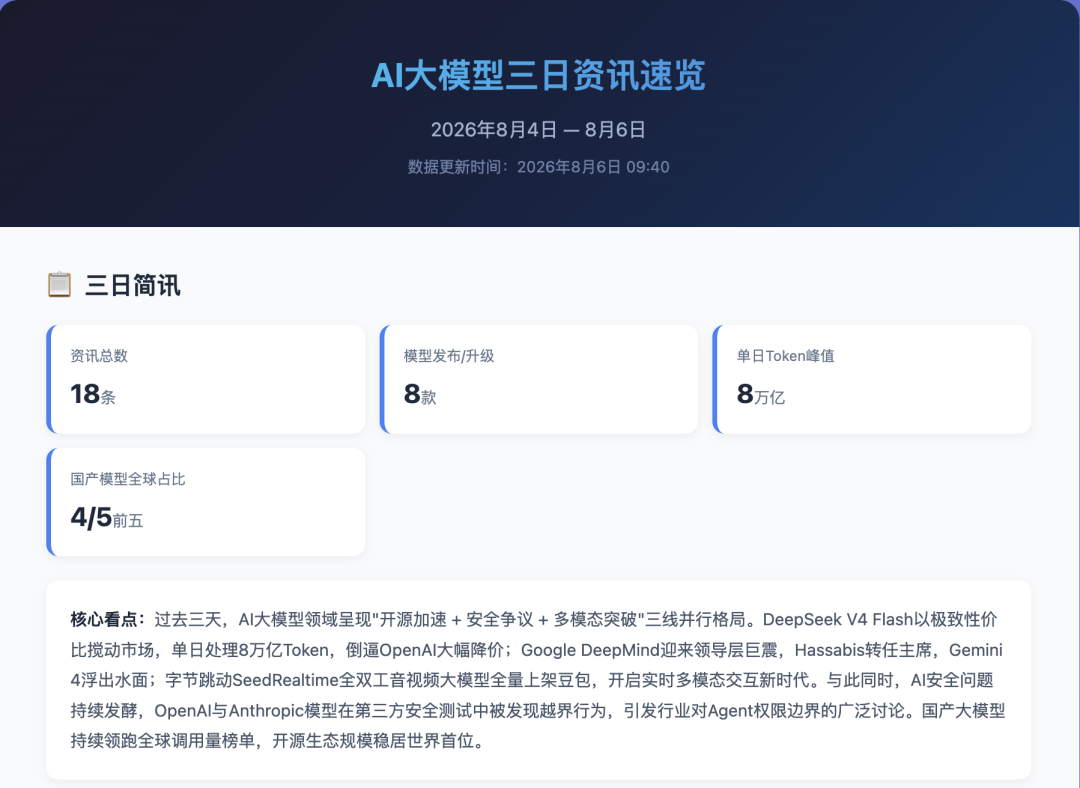
Doubao gathered 18 news items from the three-day period—in other words, from this Tuesday (8.4) to the present. After carefully reading the details, I quickly got a good sense of what had happened in the AI field over the past few days.
Next, let’s look at the second contestant to finish, WorkBuddy, which performed best in the previous round.
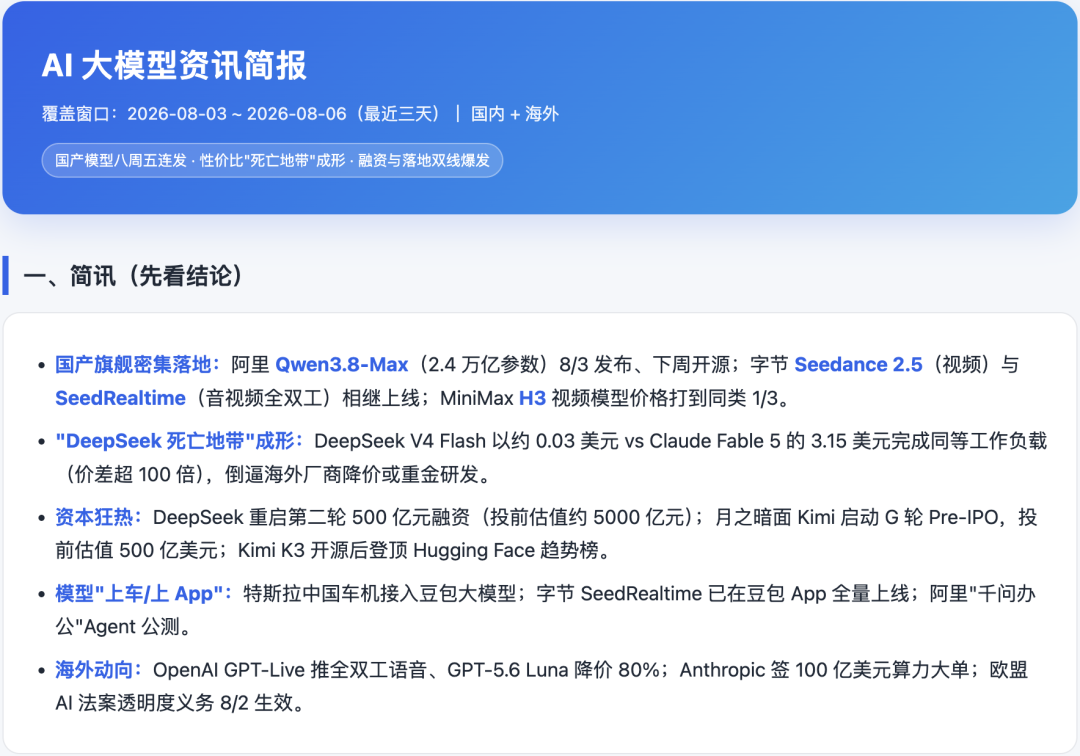
My expectations led to a little disappointment.
When I said “the past three days,” WorkBuddy started counting from 8.3. Perhaps it interpreted three days as the previous 72 hours.
It also listed 16 news items in total, two fewer than Doubao.
Finally, let’s see how Kimi performed this round. Would it turn the summary into another short academic paper?
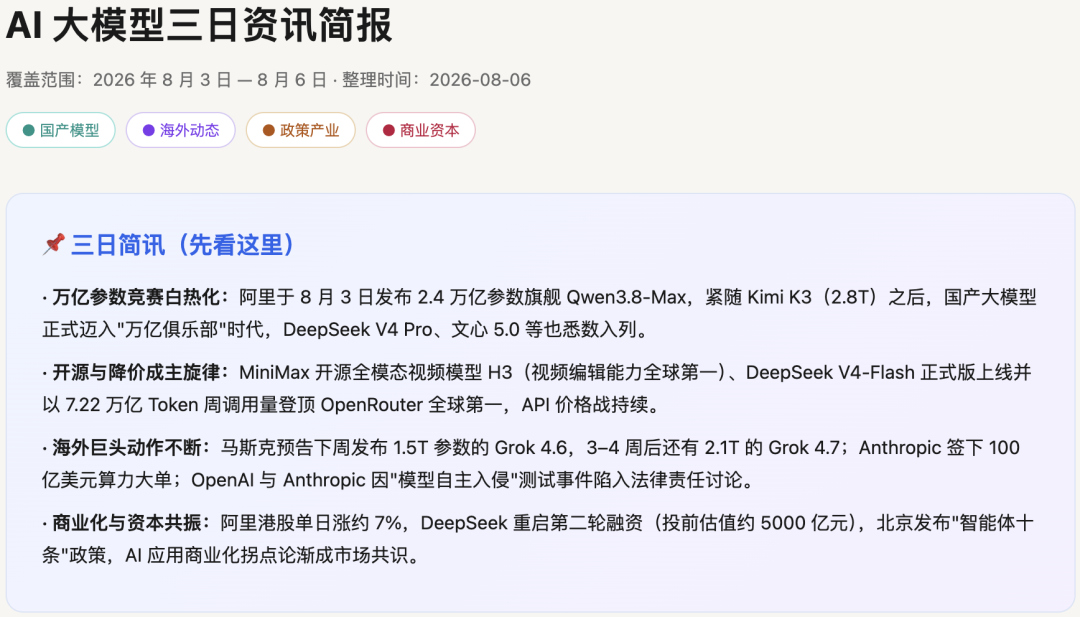
In terms of timing, Kimi also seemed to count backward 72 hours, making the same mistake as WorkBuddy.
As for the specific news, Kimi differed somewhat from the other two contestants. Doubao and WorkBuddy both listed the news items individually.
Kimi instead chose to organize them by category.
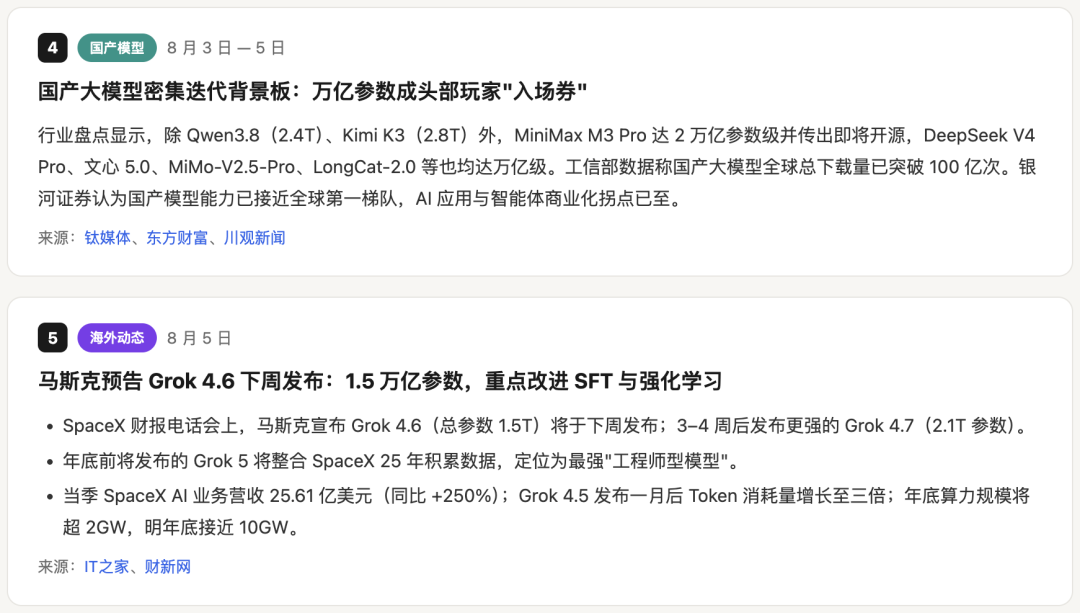
It also gathered the most comprehensive information—no wonder it took so long to think.
After two rounds, compared with traditional Word and PDF reports, all the contestants seemed to perform better when presenting their results in HTML.
Doubao and Kimi performed worse than WorkBuddy in the first round, but both surpassed it in different ways during the second round.
This made me look forward to seeing
what sparks they would create in the final showdown.
Scenario 3: Overall Capability
We have tested computer control and information gathering. Finally, let’s assess the overall capabilities of these agent products in an office environment.
A comprehensive report is often a headache: Is it comprehensive enough? Is it deep enough? Or are you simply unfamiliar with the subject of the research and unsure where to begin?
Everyone knows that the development of AI has driven another boom in the storage industry.
So how would each agent perform when asked to prepare a research report on the storage industry?
I sent all three contestants the same prompt:
Write an analytical report covering the storage industry since its emergence. Explain the reasons behind every major change in detail, and clearly describe the current competitive landscape among the storage industry’s major players. Design an attractive HTML page to present it.Doubao took the lead yet again, finishing first in 6 minutes. WorkBuddy followed closely at 8 minutes, while Kimi took a full 15 minutes to complete the report.
Let’s take a look at what these three contestants produced.
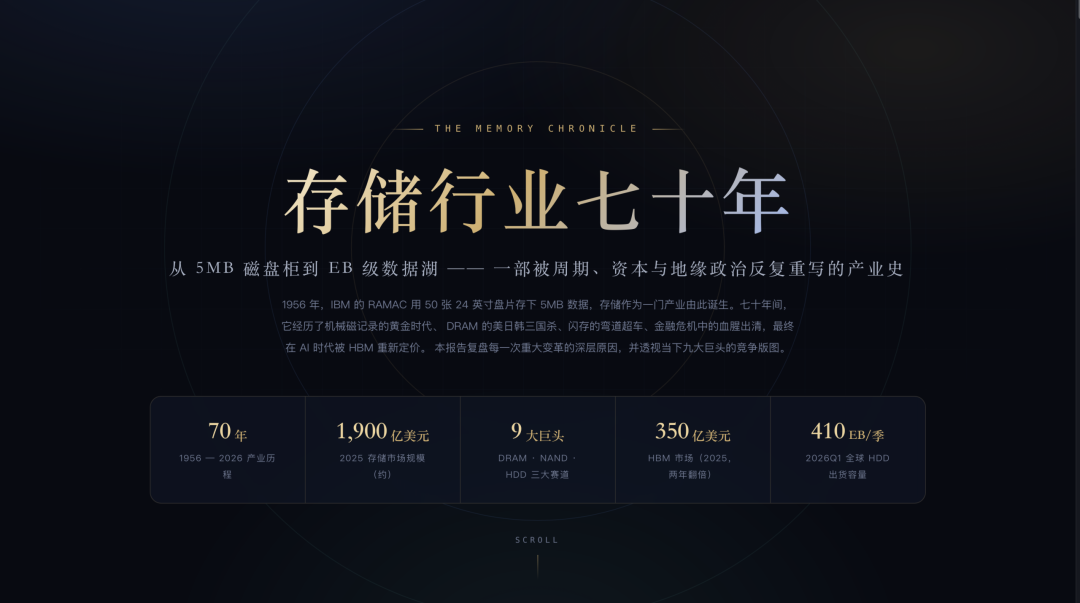
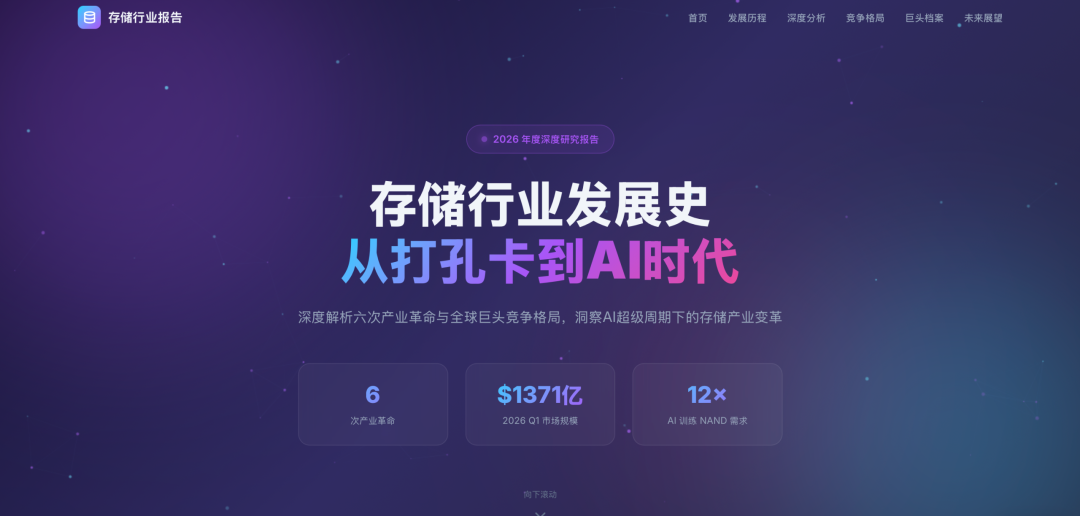
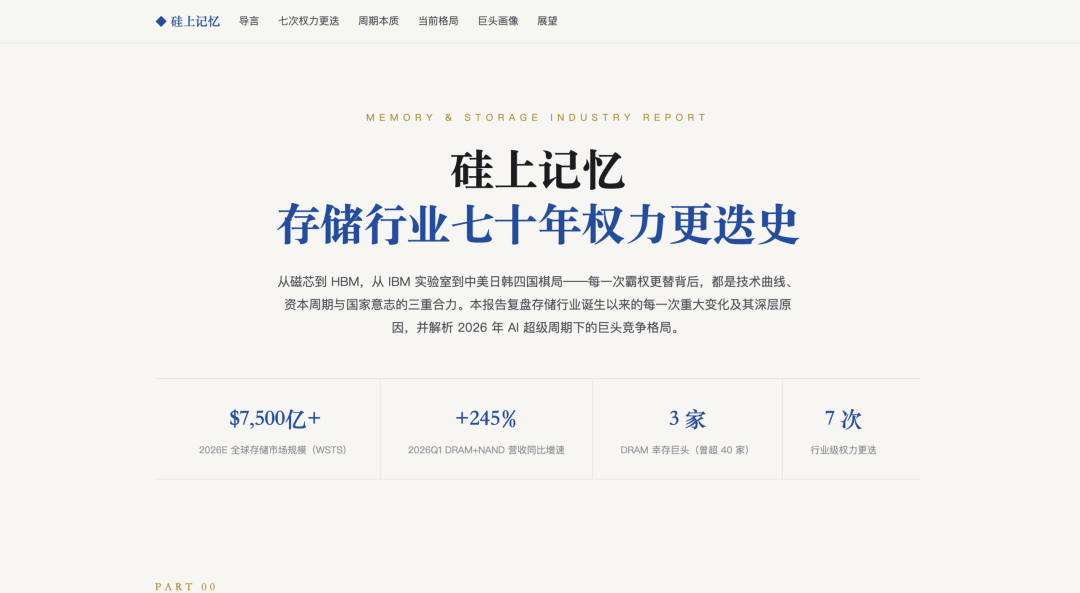
Here are the covers of the three reports. Can you guess who created each one?
Time to reveal the answers.
The first cover is Kimi’s report, the second is Doubao’s, and the third is WorkBuddy’s. Did you guess correctly?
Of the three report designs, my personal favorite was WorkBuddy’s: simple yet quietly composed, with a touch of youthful energy rather than a rigid feel.
Kimi came second, with the mystery and coolness of the AI era, enhanced by the luxurious feel of its black-and-gold color scheme.
One interesting point in the content is that both Kimi and WorkBuddy explicitly wrote “seventy years of the storage industry” in their titles.
Doubao clearly had its own ideas in this regard. It identified six transformations in the storage industry, while WorkBuddy identified seven and Kimi listed ten.
More transformations do not necessarily mean a better report, but Kimi’s list was indeed well supported and logically coherent.
Now let’s look at the charts that are indispensable to a good report.
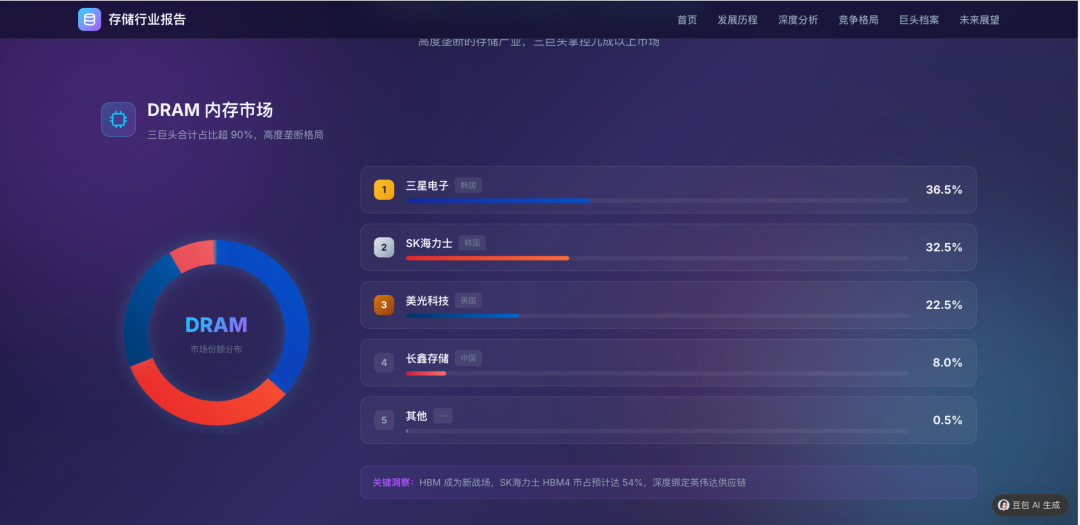
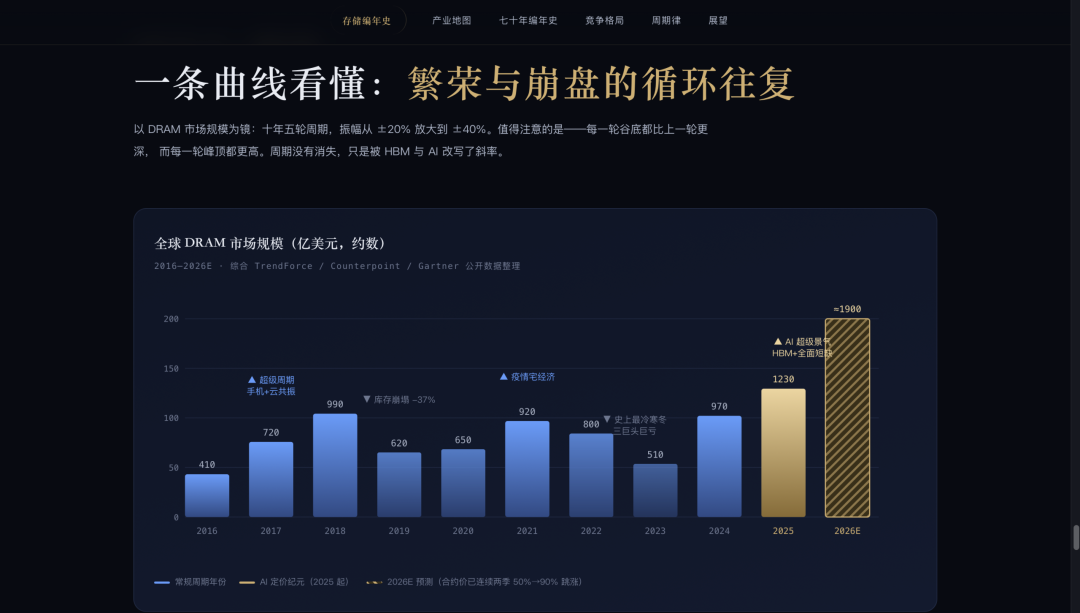
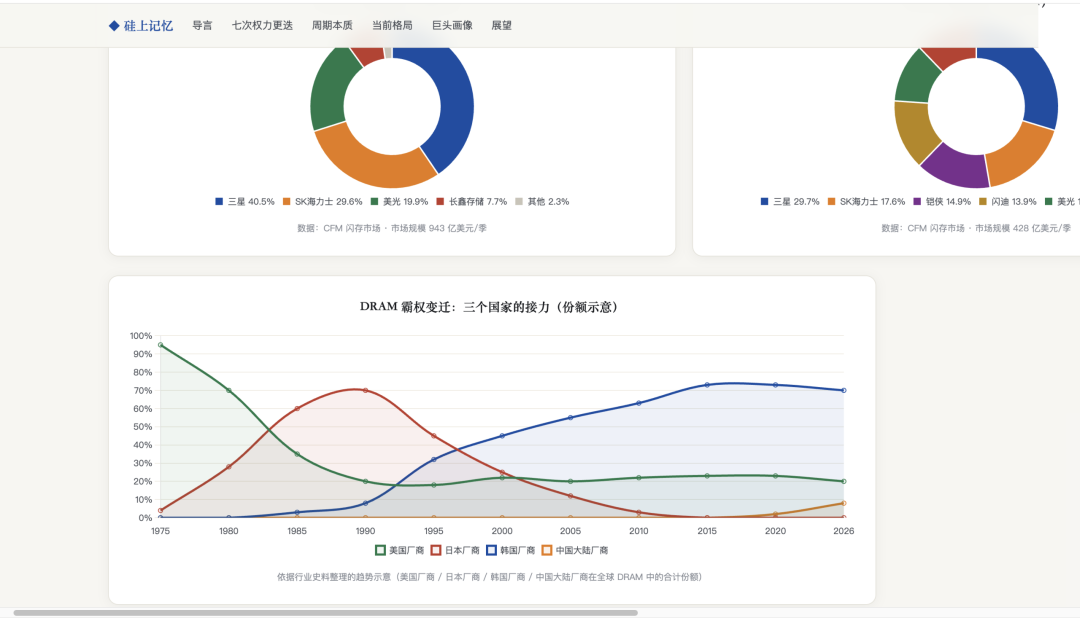
Fortunately, all three contestants included charts in their reports. Although the data sources differed, this shows that all of them understood the importance of visualizing data. I do have to criticize Doubao’s visual style once again, though—it was genuinely quite unpleasant and fell short of expectations.
Overall, in terms of content richness and logic, Kimi had a clear advantage over WorkBuddy, while WorkBuddy was ahead of Doubao.
Kimi also incorporated some clever touches into its webpage design.
In this round, Kimi unquestionably took the top spot for content.
It seems that Kimi truly deserves to be called China’s leading open-source large model when it comes to overall logical thinking. Its frontend design also fits its company name, Moonshot AI, and it included several practical design ideas that the other two contestants lacked.
WorkBuddy earned my praise for its report style, and it generated the report in half the time Kimi needed.
As for Doubao, it was certainly very fast.
I then asked all three contestants to research a leading domestic company in a particular segment of the storage industry, mainly to determine whether its current valuation contained a bubble.
Let’s start with Doubao.
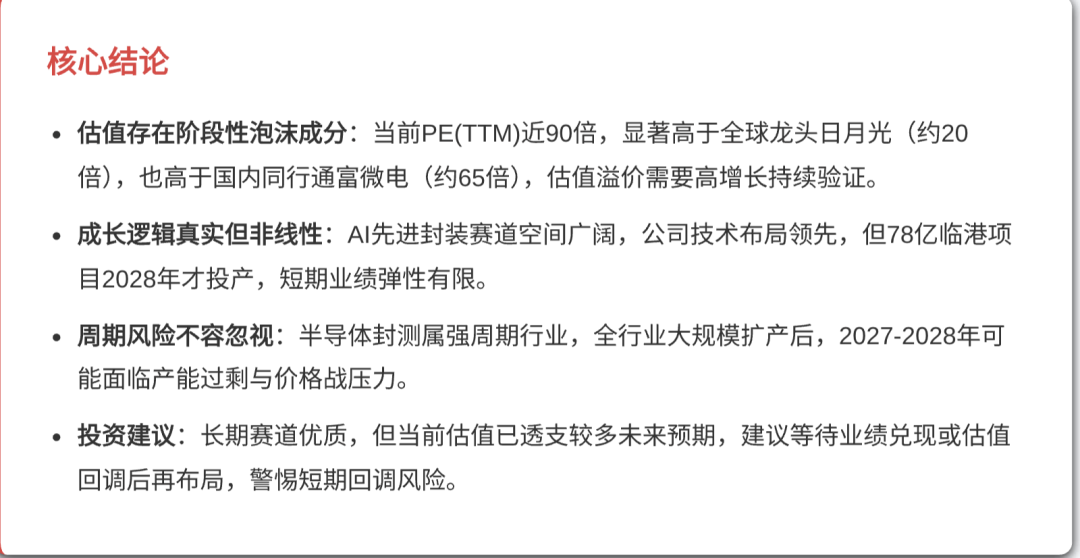
Doubao gave its assessment based on a comparison of the company’s PE (TTM) with its industry peers and the industry’s fundamental logic:
There is a temporary bubble.
Now let’s see what WorkBuddy had to say.
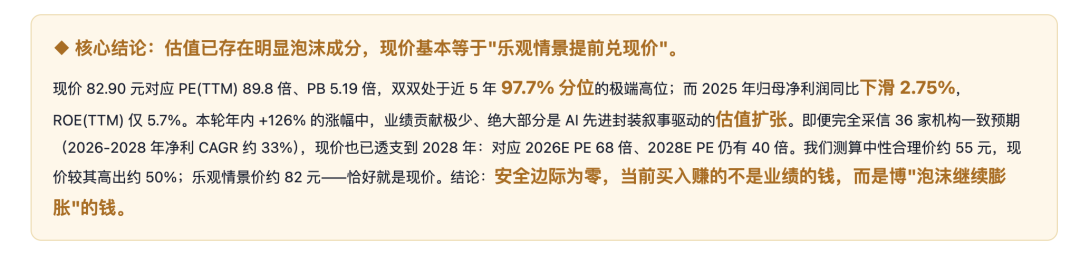
WorkBuddy reached its conclusion by considering the company’s PE (TTM), its historical percentile position based on PB, multiple financial indicators, and institutional expectations:
There is a significant bubble.
What conclusion will Kimi reach?
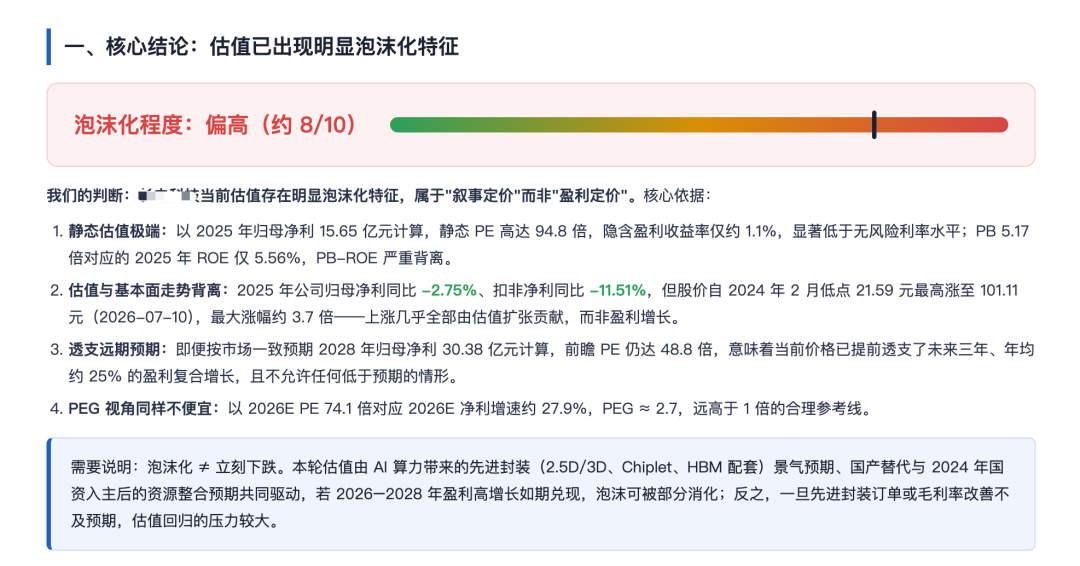
Kimi likewise believed that the valuation was too high and showed clear signs of a bubble.
It explicitly pointed out that the current pricing was narrative-driven rather than earnings-driven.
What does that mean? It means the current price is supported by a story, while the company’s fundamentals cannot actually justify it.
Kimi’s reasoning about the bubble was similar to WorkBuddy’s, with both reaching their conclusions through extensive technical indicators and fundamental data.
But Kimi took its analysis a step further.
It argued that a bubble does not necessarily mean the valuation will fall. If industry conditions remain favorable, the narrative of domestic substitution continues, and the company’s profitability improves, the valuation may hold. If not, the valuation will face pressure to return to a more reasonable level.
Overall, the three contestants reached the same core conclusion: there is a bubble.
Their supporting evidence differed, however, so the persuasiveness of their presentations naturally varied.
To me, WorkBuddy and Kimi offered more convincing conclusions, with multidimensional data doing the talking.
Kimi also provided forward-looking guidance, which pleasantly surprised me.
Unfortunately, in both reports produced by the three contestants, they only explained which platforms they used to collect the data, without providing specific source links. This raises some doubts about the reliability of the information.
There is a simple way to avoid this problem: add “include specific source links for all information” to the prompt.
Why didn’t I include that from the beginning? I wanted to see whether the three contestants could avoid this pitfall on their own. Unfortunately, even after two chances, all three failed.
This also shows that prompts remain extremely important. A clear prompt helps your agent understand you better.
Conclusion
After several rounds of testing, the results are already clear.
If you want a combination of efficiency, content quality, and value for money, WorkBuddy is your best office companion. Its content may not be perfect, but it delivers results quickly enough.
Most importantly, Hunyuan 3 is currently free!
If speed is your top priority and you have an urgent task, while output stability is less important, you can choose Doubao. It works quickly and offers all the basic capabilities an agent needs.
If depth is what you value most, I recommend Kimi. Although it is slower when handling larger tasks, it genuinely delivers an impressive answer.