


I spent some time organizing all the Skills related to my open-source content creation work. These are some of the core skills.
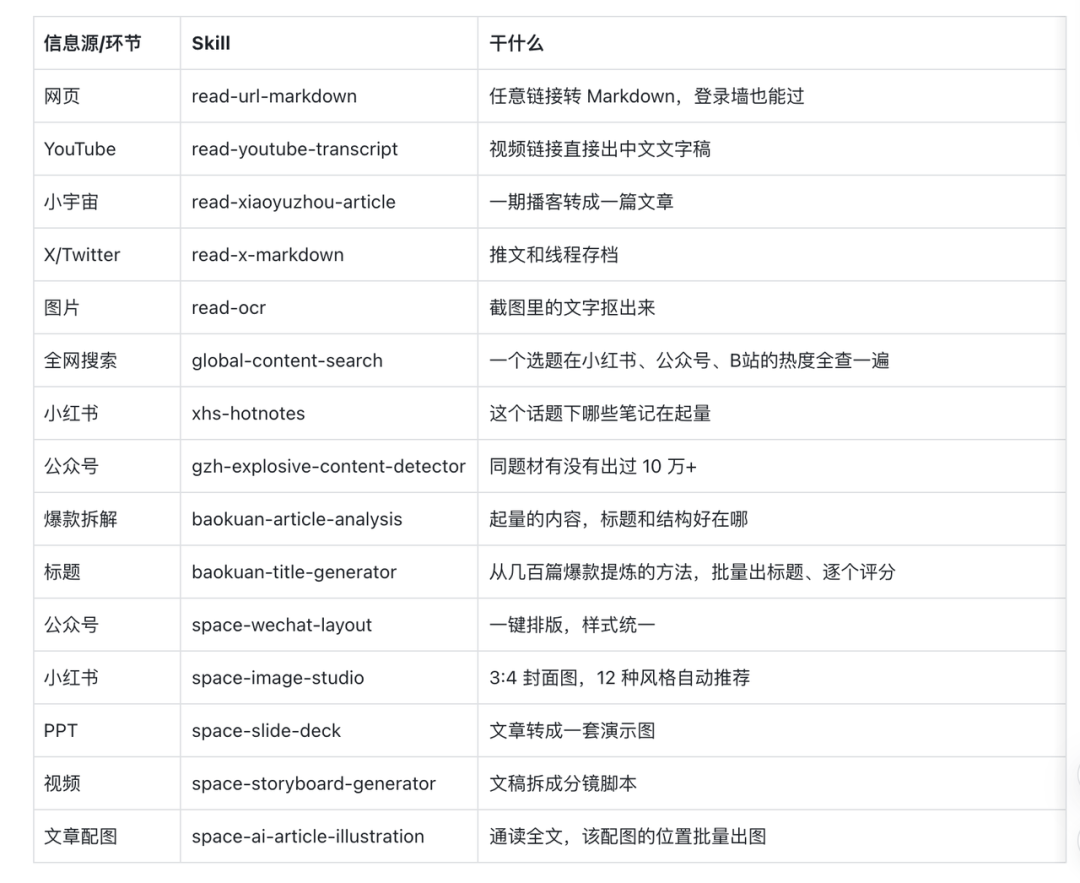
I found that these 50 skills have already formed a four-layer data—creation—layout—distribution system.
Most people collect Skills like bookmarks: they save one whenever they see it, use it once, then never use it again—or can't find it when they need it.
If you turn Skills into a system and connect them across different scenarios, these problems disappear.
Here's how my AI content creation system works 👇
1. Data layer: building the Agent's context
This layer handles incoming information. Web pages, YouTube, Xiaoyuzhou podcasts, posts, screenshots, and OCR—whatever the format, everything is uniformly converted into text.
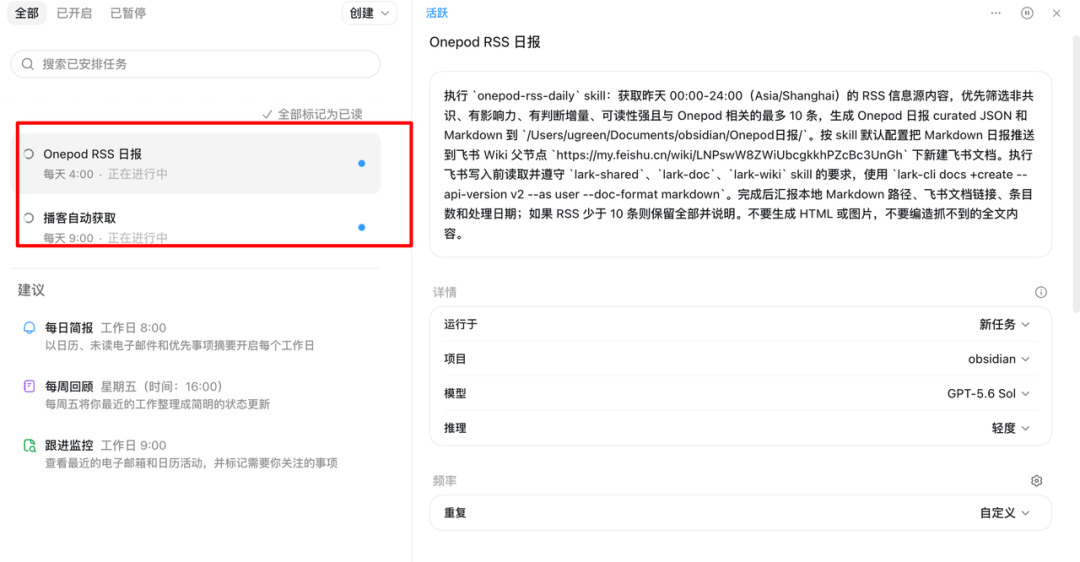
It automatically retrieves updates from the RSS feeds and creators I follow, so I don't have to browse everywhere every day.
You can use Codex scheduled tasks to collect updates at set times each day and generate a daily report from different sources.
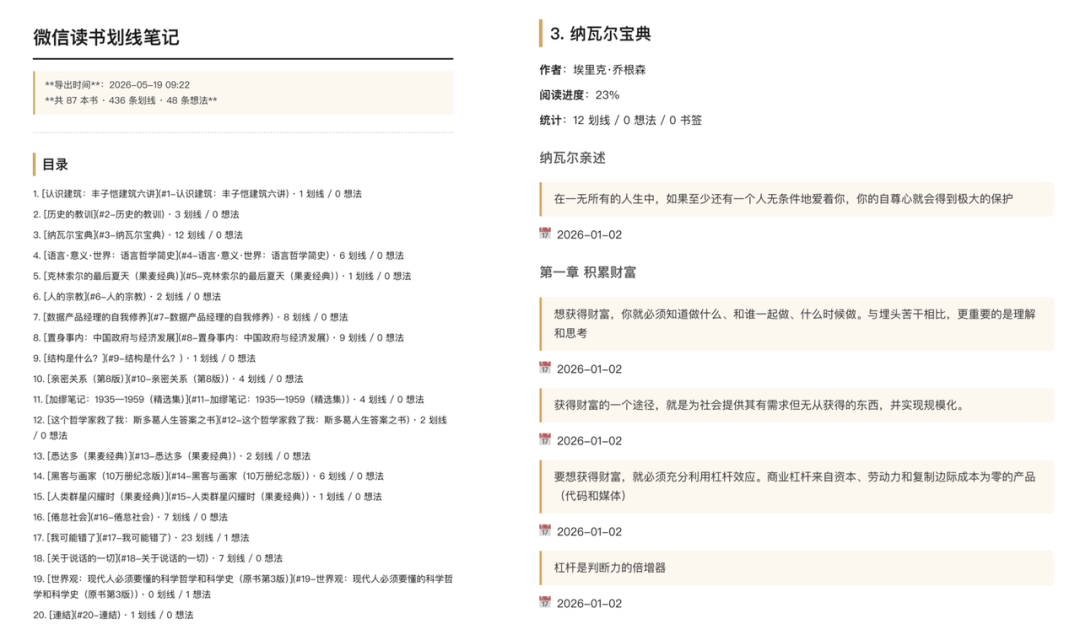
Skills can also export content from apps such as WeChat Read and Xiaohongshu Favorites.
I used the WeChat Read Skill to export 87 books and 436 highlights.
Finally, all this content is saved in my own content library.
It is all turned into context that AI can access.
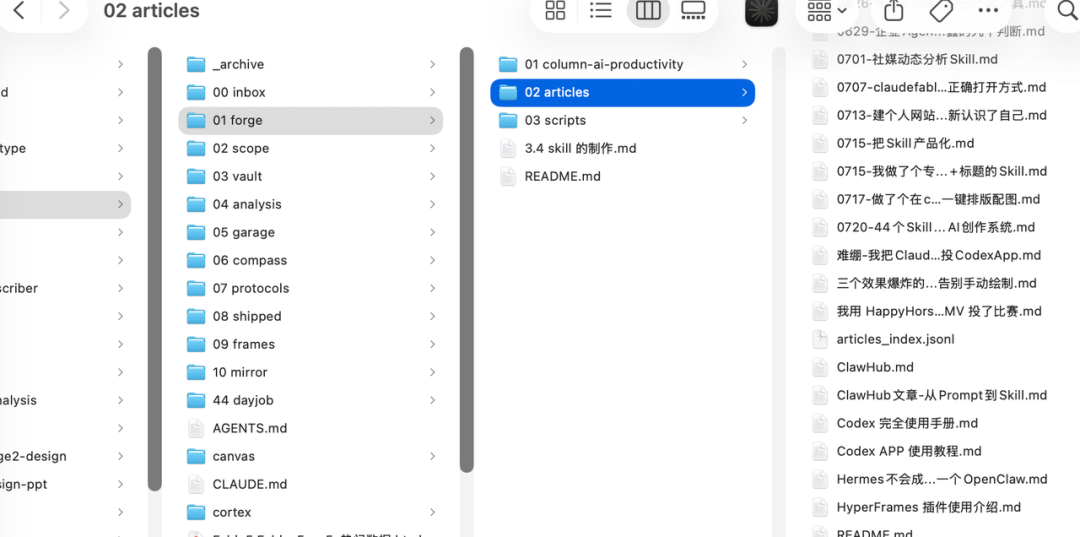
With this foundation, AI brings my entire reading experience to the table whenever I write an article.
2. Creation layer: topic selection and writing
This layer is mainly responsible for validating topics and creating titles.
All the content above can be passed to the next step for topic selection.
Topic selection mainly combines trends on Xiaohongshu, WeChat Official Accounts, Bilibili, and Douyin.
It identifies which content is gaining traction, then breaks down the titles and structures of viral posts.
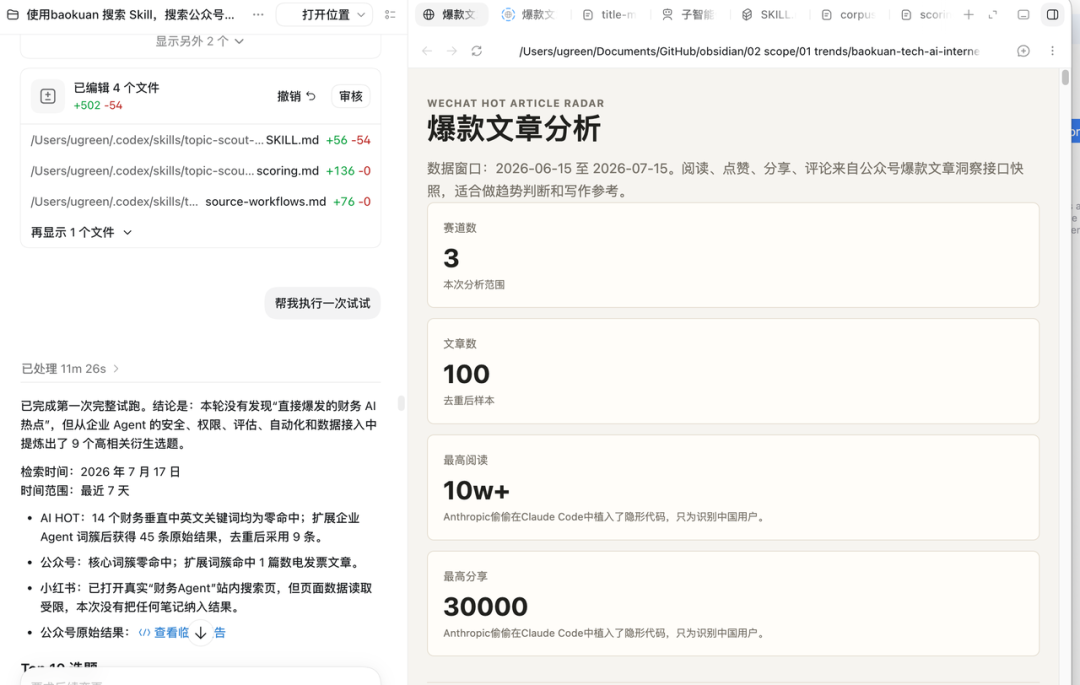
Once a topic is found, I use proven title formulas to determine the article title and structure. Then the full article can be written.
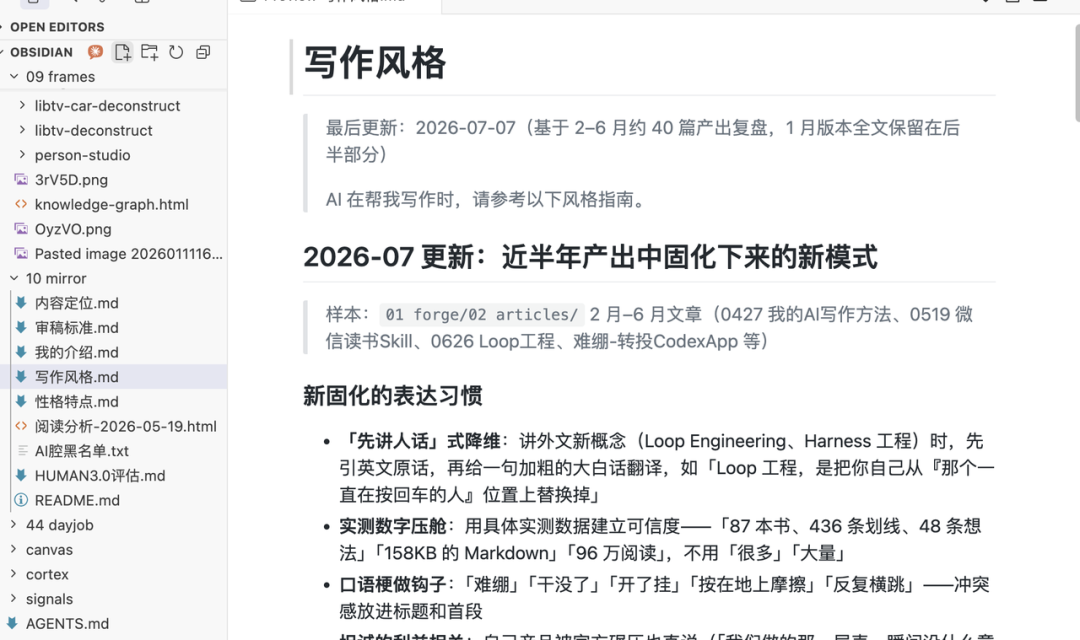
When writing the full article, the Agent generates it based on the automatically updated style of my entire content library.
My content library contains style guides, a historical article index, and review standards. They update their rules in real time based on the articles I write.
Having AI read all of this before writing works better than any writing assistant.
>3. Layout layer: turning text into multiple modalities
This layer turns written content into images, videos, and other formats.
WeChat Official Account formatting, Xiaohongshu covers, PPTs, video storyboards, batch image generation, and logic diagrams each have their own Skill.
You can use Notebook LM, Lovart, and GPT-image2 to generate images in batches. Here are the results.
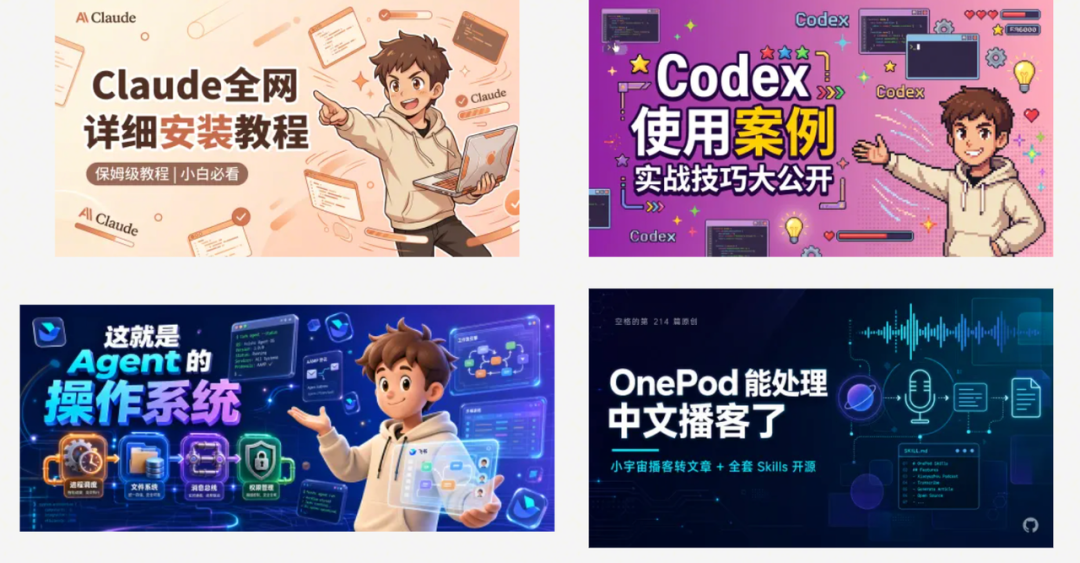
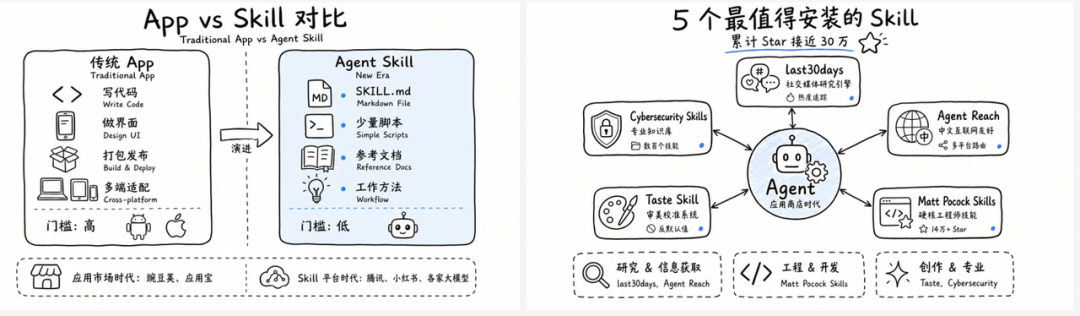
Write the content once; let the tools handle the format.
There are many ways to produce videos. At this stage, text can be reliably turned into B-roll.
4. Distribution
To be honest, this system is still missing its final link.
I still publish to WeChat Official Accounts, Xiaohongshu, and Bilibili manually. Once the layout layer produces the finished content, I still have to copy and paste it myself for the final step.
The Skills for the distribution layer are on the way. I'll write another article when they're ready.
5. A demonstration of a workflow that works
Drop in a Xiaoyuzhou link, convert it into text, and save it to the content library. Then I review it to extract keywords or insights.
Next, call the trend-analysis Skill, check the popularity across three platforms to confirm that the topic is worth writing about, create an outline, generate a set of titles and choose one, then add images in batches, format the article, and publish it to a WeChat Official Account.
Then create a cover and adapt it into a Xiaohongshu post.
From one link to finished content on two platforms, I only need to do three things in between: make decisions, write the main text, and choose the results.
The Skill ecosystem is taking shape. Collecting 100 Skills from others is less valuable than connecting your own 10 into a system.
Finally, here's a summary of the core Skills mentioned above:
All three repositories are on GitHub:
/SpaceZephyr/read-buddy
/SpaceZephyr/creator-buddy
/SpaceZephyr/design-buddy