


Summary
A manhua-drama studio distilled its production experience from more than a thousand real projects into 8 AI skills compatible with Claude Code and Codex. From scripts, character assets, and storyboards to image/video prompts and independent reviews, the entire workflow is standardized, helping AI short-drama production move beyond "luck-of-the-draw" creation.
Introduction
Anyone making AI manhua dramas knows this pain.
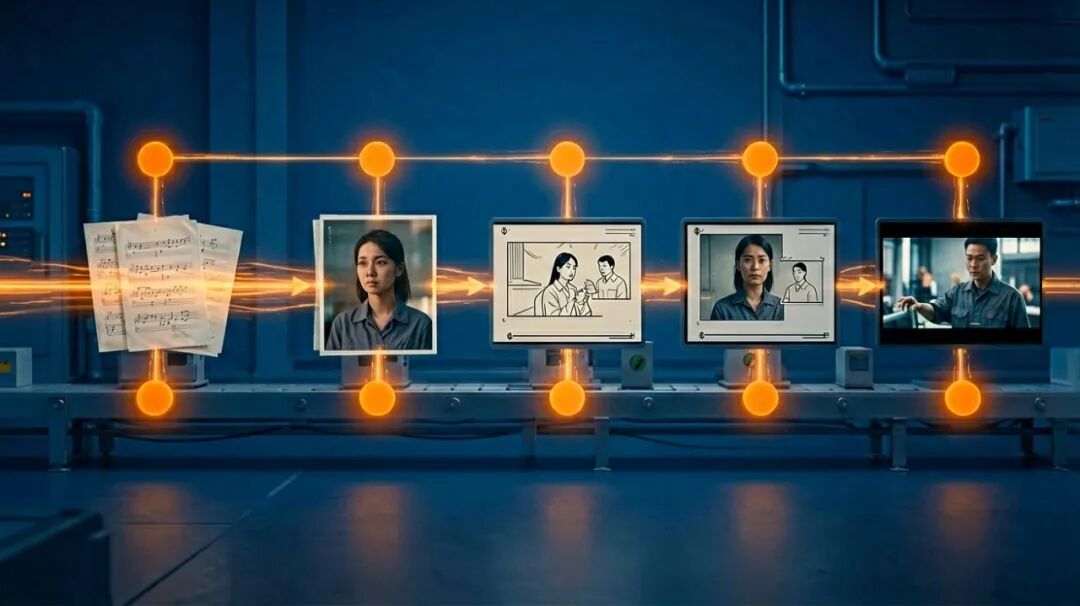
You painstakingly write a script and send it to an AI image generator. What happens? In the first shot, the female lead has blunt bangs; in the second, she has big waves. In the same living room, the light comes from the left in one panel and from the right in the next. How could that not drive you crazy?
People in the industry call this "luck-of-the-draw production." It can take three to five generations to get one usable image. If you're lucky, you can piece together an episode; if not, you'll spend the entire day stuck on a single shot.
Today's project is designed to solve exactly this problem. It's called drama-skills, a suite that distills the production experience from more than a thousand real manhua-drama projects into a set of standardized AI skills.
It has 478+ Stars on GitHub and was released only two weeks ago. Let's take it apart and see how it helps you move beyond "luck-of-the-draw" production.
>
The confusion caused by inconsistent character appearances in AI manhua creation: comparisons of different looks for the same character
What is drama-skills?
In one sentence: an AI short-drama creation skill suite for screenwriters, manhua-drama studios, and writer-directors.
The creator is a manhua-drama studio that has produced more than a thousand AI short-drama and AI manhua-drama projects from 2025 to the present. Its front-end and back-end code has grown to nearly 80,000 lines, making it difficult to maintain.
So they distilled all their project workflows and image/video prompts, extracting a set of end-to-end skills compatible with Claude Code, Codex, and other environments that support the Agent Skill specification.
The core approach can be summarized in three points:
Scripts must deliver facts that are "performable and producible"—use action, blocking, and dialogue to carry meaning rather than vague adjectives.
Assets must have identity and state—every character, setting, and prop has a clear specification, while each storyboard shot shows only what belongs in that shot.
Continuity must be explicitly recorded—compare the confirmed boundaries of adjacent shots precisely, and repeat only the anchors currently required in the prompts.
In short, it turns the most frustrating problems—characters changing faces, settings jumping around, and shots failing to connect—into a standardized process.
8 skills covering the full workflow
drama-skills is not a standalone plugin but a complete skill set, with 8 skills in total:
short-drama: the main router, responsible for project initialization, routing, state management, and delivery
short-drama-develop: traceable adaptation of novels/long-form material, the story engine, episode maps, and the director's statement
short-drama-write: episode objectives, causal beats, and shootable scripts
short-drama-assets: character/look design, locations/views, props/states, and continuity decisions
short-drama-image-prompts: reference-board prompts for characters, settings, and props
short-drama-storyboard: shot objectives, blocking, continuity boundaries, and frozen keyframes
short-drama-video-prompts: movement, performance, cinematography, sound, and start/end states within a single shot
short-drama-review: structural validation, evidence-based content review, and production quality checks
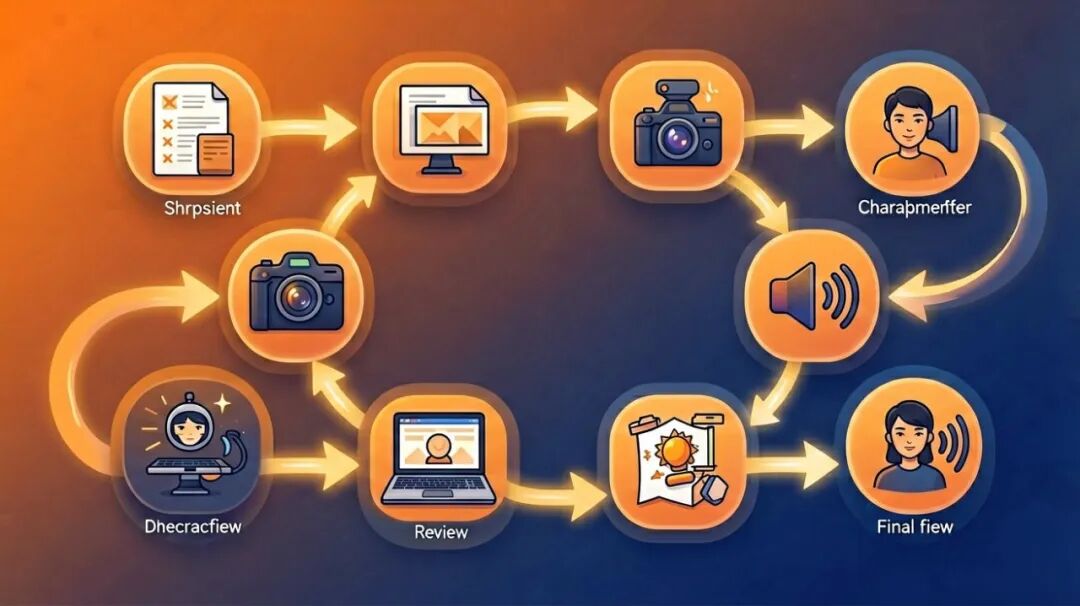
Linked together, these 8 skills form a complete production pipeline:
Story development → Episode script → Asset decisions → Image prompts / Storyboard → Video prompts → Independent review → Structured text delivery package
Each step produces standardized text that can be used directly by the next step, with no gaps in the workflow.
>
A diagram of the short-drama production pipeline formed by the 8 linked AI skills
How does it solve "face drift"?
This is the most valuable aspect of drama-skills.
The traditional AI manhua-drama workflow is: provide a description → generate an image → generate a video. Each generation is an isolated event, so the character's identity cannot be consistently carried forward.
drama-skills takes the opposite approach: define the assets first, then write the prompts.
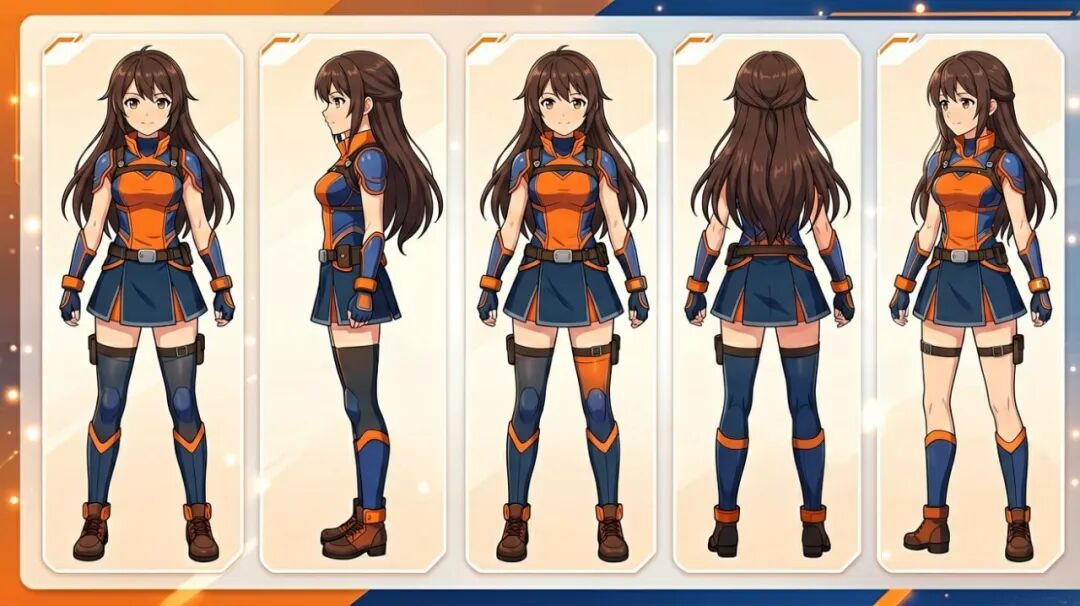
short-drama-assets breaks down every element in the story into a structured format—each character gets an independent look specification, settings have front, back, and 360° views, and props are managed separately.
Then short-drama-image-prompts writes "reference-board prompts" for these assets, while short-drama-storyboard writes keyframe prompts for each shot that represent only the shot's starting state.
The two share accepted asset facts but manage different responsibilities: assets define "what this character looks like," while the storyboard defines "what this shot should show." Once character identities remain stable and settings stop shifting, the biggest pain point in AI manhua dramas is brought under control.
>
Character asset library specifications, with reference boards showing different looks for the same character
How to get started: complete the workflow in 3 steps
Installation is very simple. Choose either of two methods:
Method 1: Import directly (recommended)
Tell Claude Code or Codex:
Install this skill suite https://github.com/worldwonderer/drama-skills
It will automatically install all 8 skills in the environment.
Method 2: Link manually
git clone https://github.com/worldwonderer/drama-skills.git && cd drama-skills # Claude Code mkdir -p 「$HOME/.claude/skills」 for skill in skills/*; do ln -s 「$PWD/$skill」 「$HOME/.claude/skills/$(basename 」$skill「)」 doneOnce installed, you're ready to go. Try the official example:
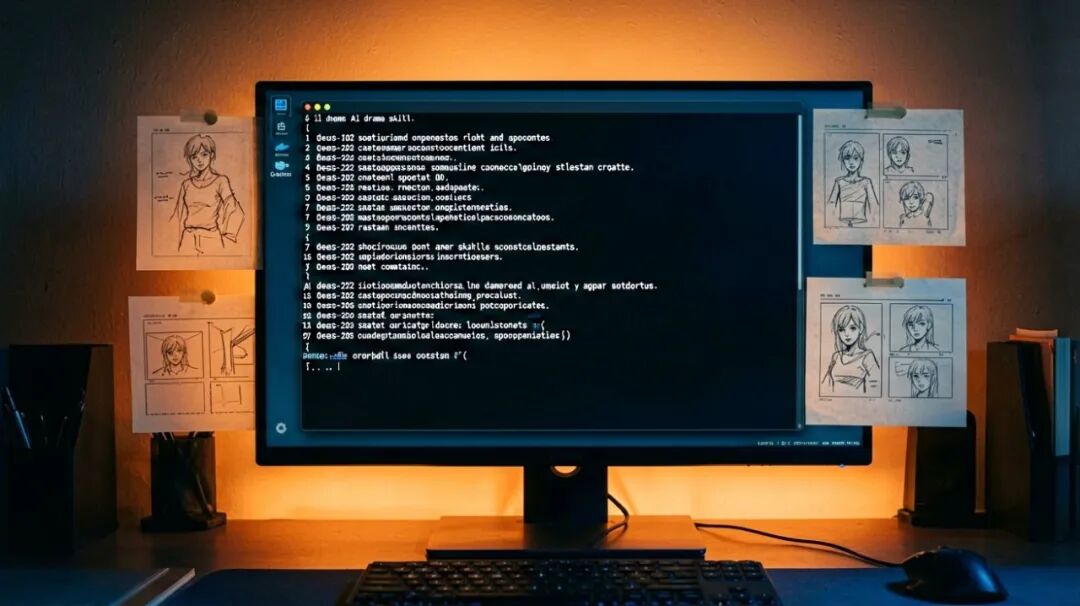
# 1. Create a project: initialize a vertical 9:16 short drama about an urban comeuppance story $short-drama Initialize a vertical 9:16 short drama about an urban comeuppance story # 2. Write episode 1: a delivery worker is humiliated by a manager at an upscale restaurant, then reveals his identity as a group chairman $short-drama-write Write episode 1 # 3. Break down the assets: extract characters/settings/props from episode 1 $short-drama-assets Extract characters/settings/props from episode 1 # 4. Write prompts: create reference-image prompts + storyboard + video prompts for the assets $short-drama-image-prompts Write reference-image prompts for the accepted assets $short-drama-storyboard Create a storyboard for episode 1 $short-drama-video-prompts Translate the storyboard shot by shot into video prompts # 5. Independent review $short-drama-review Review the script and prompts for episode 1In Claude Code, simply replace $ with /, or describe the task in plain language and it can route the request to the appropriate skill.
>
The developer terminal interface showing AI short-drama skill commands being executed
An honest caveat
There is a line in the README that deserves respect: the current version only delivers scripts, asset descriptions, storyboards, prompts, review records, and structured text; it does not call actual image, video, or audio generation services.
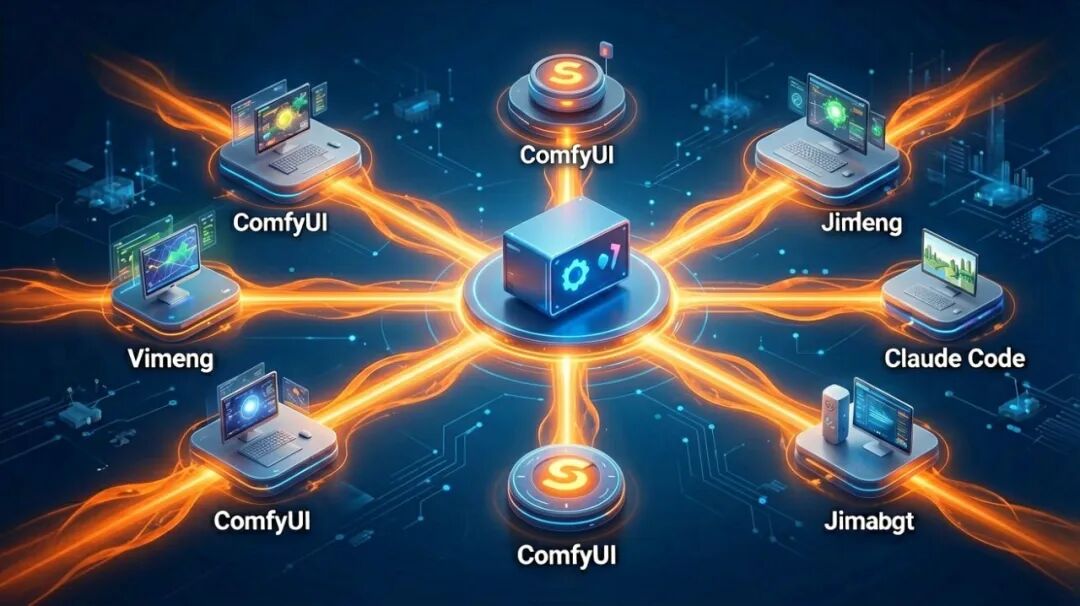
It does not hype "generating a finished video with one sentence." Instead, it focuses on perfecting everything that happens "before generation"—scripts, assets, prompts, and reviews. For the generation step, you can connect ComfyUI, Jimeng, Kling, or any image/video generation service you like.
The benefit is that the prompt quality is genuinely solid and works with any model, without locking you into a particular tool. The trade-off is that it is not a "ready-to-use finished-video" tool: it must be used alongside image/video generation services and has a certain learning curve.
If you're a beginner who simply wants to "make a video with one sentence," a fully automated generation platform may be a better fit. But if you're a manhua-drama studio, screenwriter, writer-director, or part of a team seeking a standardized production process, this skill suite is highly relevant.
>
A multi-tool collaboration scenario connecting ComfyUI, Claude Code, and other generation tools
Conclusion
The AI manhua-drama sector has been booming over the past two years, but most tools compete on "generation" and few seriously address the industrialization that comes "before generation."
What makes drama-skills stand out is that it has distilled the pitfalls of more than a thousand real projects into a complete standardized process. How to revise the script, define assets, write prompts, and maintain continuity—all of it follows clear standards.
In the creator's words, this workflow leaves their in-house tools "with only the queueing and luck-of-the-draw generation left"—the most labor-intensive prompt engineering has been standardized.
If you're also making AI short dramas or manhua dramas, or want to standardize your team's creative workflow, this project is worth half an hour of research. It's open source, free, and released under the MIT license, so use it freely.
Project URL: https://github.com/worldwonderer/drama-skills