

Overview
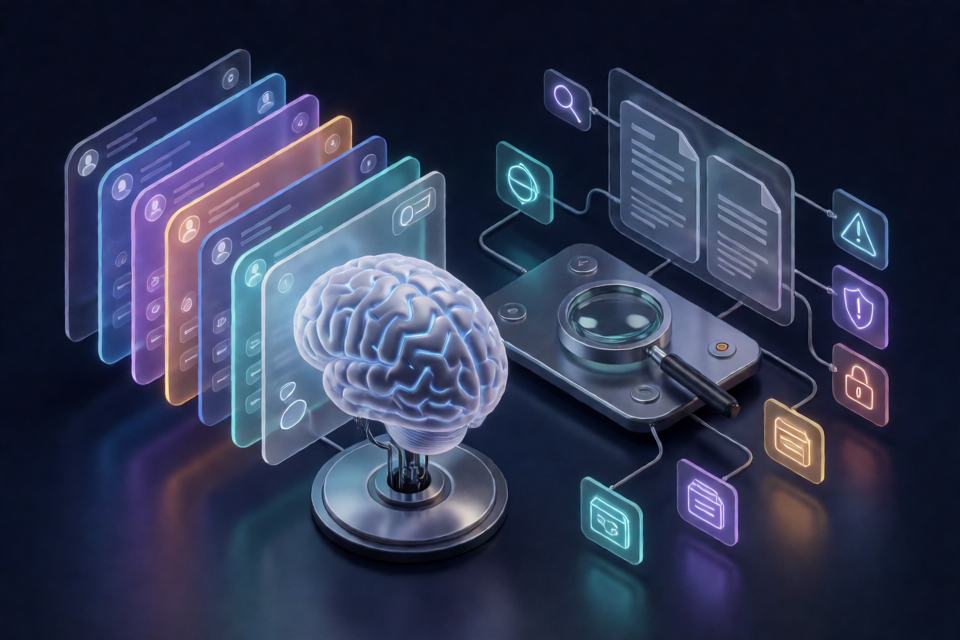
AI Systems Transparency and Observability is an open research and documentation project focused on the instructions and configurations that shape AI behavior. Instead of examining only generated answers, the repository collects available information about system prompts, developer instructions, policies, tools, capabilities, and operational guidelines.
To understand an AI system's output, you also need context about the instructions and capabilities that influenced it.
The repository covers AI models, assistants, search products, coding agents, and development platforms associated with providers such as OpenAI, Google, Anthropic, xAI, Perplexity, Cursor, Windsurf, Devin, Manus, and Replit. Coverage can change as new systems and research become available.
Important: Use the repository at your own risk. Understand the potential account, privacy, legal, security, and platform-policy implications before applying any documented information or research technique.
What the Project Documents
An entry may include some or all of the following information:
- Model or system: The product, model, agent, or platform being studied.
- Version: The relevant release or version, when known.
- Date: When the information was collected or observed.
- System prompt: Available system-level instructions.
- Guidelines: Behavioral or operational instructions.
- Tools: Tool definitions and documented capabilities.
- Configuration: Relevant system configuration details.
- Context: Notes explaining the environment and circumstances.
- Sources: References supporting the entry.
Not every entry necessarily contains every field. Records can also represent a historical version, a specific environment, or a point-in-time observation rather than a platform's current production configuration.
Understanding the AI Instruction Stack
The project presents AI behavior as the result of several interacting layers:
USER INPUT
    |
    v
SYSTEM INSTRUCTIONS
    |
    v
DEVELOPER OR APPLICATION INSTRUCTIONS
    |
    v
POLICIES AND GUARDRAILS
    |
    v
TOOL DEFINITIONS AND CAPABILITIES
    |
    v
AI MODEL
    |
    v
GENERATED OUTPUT
This model helps explain why the visible conversation is only one part of an AI interaction. System and application instructions may establish a persona, define response behavior, restrict certain requests, determine refusal patterns, or grant access to specific tools.
Key Features
- Multi-platform coverage: Research spans major model providers and agent platforms.
- System-level documentation: Entries can preserve prompts, guidelines, tools, capabilities, and configuration details.
- Historical preservation: Older observations remain useful even when systems change.
- Context-first records: Dates, versions, sources, and collection circumstances are emphasized.
- Research reproducibility: Contributors are encouraged to provide enough information for others to understand a finding.
- Evidence labeling: Confirmed material should be distinguished from assumptions, reconstructions, and speculation.
- Community contributions: Researchers can report issues, improve documentation, and submit new findings.
Installation and Setup
This is primarily a research and documentation repository. The README does not specify a software package, runtime, dependency installation, or build process. You can read it directly on GitHub or clone it locally for searching, comparison, and contribution work.
Clone the Repository
- Open the repository's GitHub page.
- Copy its HTTPS or SSH clone URL.
- Run the appropriate Git command:
git clone <repository-url>
cd <repository-directory>
No additional setup commands are documented. If individual folders later include their own instructions, follow those instructions for the relevant material.
Understand the Directory Layout
.
├── providers/
│   ├── openai/
│   ├── google/
│   ├── anthropic/
│   ├── xai/
│   ├── perplexity/
│   └── others/
├── agents/
│   ├── cursor/
│   ├── windsurf/
│   ├── devin/
│   ├── manus/
│   └── replit/
├── prompts/
├── tools/
├── research/
├── documentation/
└── README.md
Provider-specific model research is organized under providers/, while coding and autonomous agent material is grouped under agents/. Cross-cutting records can appear in prompts/, tools/, research/, or documentation/. The structure may evolve as the project grows.
Basic Usage: Investigating an AI System
Step 1: Select a Provider or Agent
Begin by identifying the platform you want to study. For a model provider, inspect the corresponding folder under providers/. For an AI coding or software agent, start under agents/.
Step 2: Establish the Record's Identity
Before interpreting an entry, identify its model or system name, version, and date. A prompt collected from one version or environment should not automatically be treated as the current configuration of every deployment.
System: Example AI
Version: v2.1
Date: 2026-10-02
Step 3: Separate the Instruction Layers
Classify the available material by role. For example, distinguish system-level behavior from application instructions, policies, and tool definitions. This reduces the risk of attributing an application-specific rule to the underlying model.
- Does the material define the assistant's identity or general behavior?
- Does it appear to come from a particular application?
- Does it describe a refusal, safety, ethical, or policy framework?
- Does it define callable tools or supported capabilities?
- Does it include observations rather than verbatim instructions?
Step 4: Check the Source and Context
Review how the information was obtained. Repository material may come from public interfaces, existing documentation, behavioral or security research, reverse-engineering research, community contributions, historical records, or other publicly available sources.
Ask whether the source supports the claim and whether the entry preserves enough context to interpret it. Important details include the interface used, collection date, model version, and any relevant environmental conditions.
Step 5: Classify the Evidence
Do not treat every record as equally certain. Label the material according to what the evidence supports:
- Confirmed: Directly supported by a reliable source or verifiable observation.
- Observed: Recorded behavior with clear collection context.
- Reconstructed: Reassembled or modified rather than preserved as an original.
- Inferred: A conclusion drawn from behavior or partial evidence.
- Speculative: A possibility that has not been verified.
These categories are a practical way to follow the repository's requirement to distinguish confirmed information from assumptions, reconstructions, and speculation.
Step 6: Relate Instructions to Behavior
Once the evidence has been classified, examine how the documented instructions could affect visible behavior. Look for rules governing tone, persona, restrictions, refusals, redirection, tool selection, output structure, or safety handling.
A careful analysis should state what the record shows without claiming that it explains every response from the platform.
Example Research Workflow
Suppose you are comparing tool behavior across two versions of an AI agent. Use the following process:
- Locate both version-specific records.
- Confirm the collection dates and sources.
- Extract only the documented tool definitions and capability descriptions.
- Record differences in tool names, parameters, or stated behavior.
- Separate direct textual differences from conclusions inferred through testing.
- Preserve notes about the interface and environment.
- Verify important findings against original sources whenever possible.
System: Example Agent
Version: 2.1
Date: 2026-10-02
Source: Public reference or documentation
Context: Observed through the publicly accessible interface
Finding: Tool definition or instruction text
Status: Confirmed, observed, reconstructed, inferred, or speculative
Notes: Relevant limitations and comparison details
Contributing a Finding
Contributions may include a new extraction, system prompt, tool definition, documentation correction, or research finding. A useful contribution should contain enough metadata for another researcher to understand and evaluate it.
Recommended Contribution Record
Model or System Name:
Example AI v2.1

Version:
v2.1

Date of Extraction:
2026-10-02

Source:
Source or reference

Extracted Information:
Relevant prompt, instruction, tool definition, or configuration

Context:
How and where the information was obtained

Notes:
Limitations, observations, and evidence classification
Before Submitting
- Verify the information as thoroughly as possible.
- Identify the model or system version when available.
- Include the collection or extraction date.
- Preserve the original context.
- Add relevant sources.
- Distinguish confirmed facts from inference or speculation.
- Do not present reconstructed or modified prompts as official originals.
- Remove personal information, credentials, authentication secrets, and other sensitive data.
Quality, accuracy, and context are more valuable than simply adding more entries.
Advanced Research Tips
Track Changes Over Time
Treat the date and version as core research data rather than optional metadata. Comparing versioned records can reveal how instructions, policies, and tools change, but it does not prove why a change occurred. Keep factual differences separate from interpretations.
Preserve Original Text
When quoting documented material, preserve the original wording and formatting where practical. Put commentary in a separate section so readers can distinguish source material from analysis.
Use Multiple Sources
Cross-check significant claims against original documentation and other publicly available references. A single historical or community-provided record may not represent the current system.
Compare Like with Like
When comparing systems, control for version, date, interface, application, available tools, and account environment. Differences between applications may come from developer instructions or tool configurations rather than from the underlying model.
Make Findings Reproducible
Document enough of the method for another researcher to understand how the observation was produced. Include the system, version, date, source, context, and limitations, but never expose secrets or sensitive personal information.
Use Careful Language
Prefer precise statements such as the archived entry documents, the observed interface showed, or the evidence suggests. Avoid claiming that a record is current, complete, or official unless the supporting evidence establishes that conclusion.
Responsible Research and Limitations
The repository is intended for research, education, analysis, documentation, and transparency. Responsible use includes respecting privacy, applicable laws, platform terms, and appropriate security disclosure practices.
- Do not publish personal information.
- Do not expose credentials or authentication secrets.
- Clearly label inferred or reconstructed information.
- Preserve relevant context and source references.
- Report security-sensitive findings responsibly.
- Verify important information against original sources whenever possible.
The repository does not claim that every documented instruction is the current or official configuration of a platform. AI products can change without notice, and an entry may apply only to a particular version, interface, account environment, or moment in time.
Conclusion
AI Systems Transparency and Observability provides a structured starting point for examining the hidden instructional layers behind AI behavior. Use it by locating relevant records, checking versions and dates, separating instruction layers, validating sources, and distinguishing evidence from inference. When contributing, prioritize accuracy, reproducibility, context, privacy, and responsible disclosure.