
- Monthly visits
- 0
- Pricing
- Paid
- Listed
- 2025-12-19
- Updated
- 2026-08-25
01Product Positioning
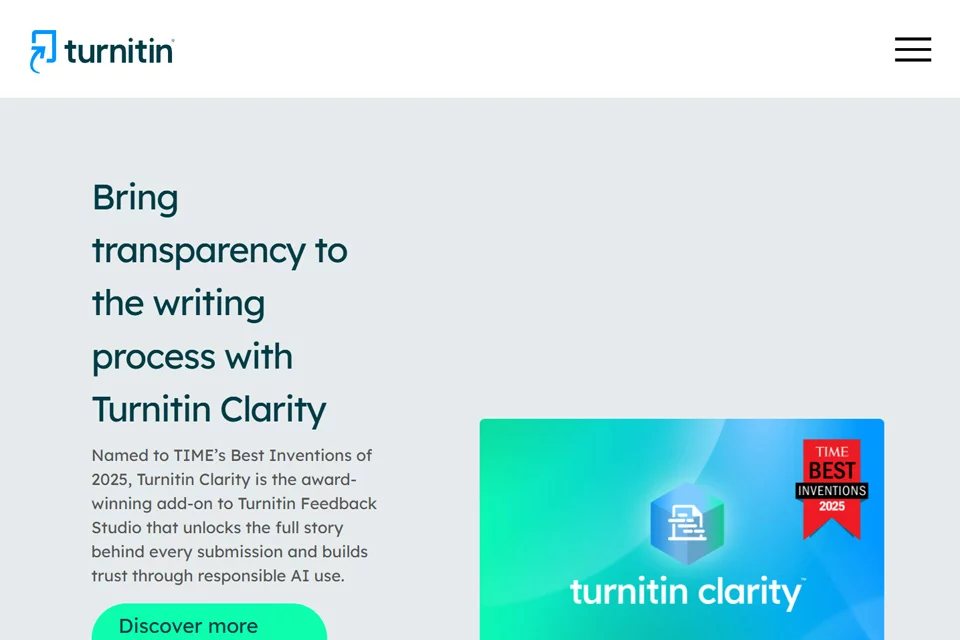
Turnitin primarily serves education and research use cases by checking papers, assignments, and other documents for similar content and helping identify AI-generated text. The platform supports a workflow based on document submission, database comparison, and report review for university instructors and students, researchers, and education administrators.
02Key Features
The platform compares uploaded documents with web content, academic journals, and student paper repositories, generating Originality Reports and related source information. Some features support AI writing detection, citation suggestions, and grammar corrections; instructors can also use online grading to provide scores and feedback. The materials also mention integration with some learning management systems.
03Use Cases
Students can use Turnitin before submitting a paper, course assignment, or other academic document to check for similar content and citation issues. Instructors can use it to support assignment review, similarity checks, grading, and written feedback. Researchers and journal staff can use it for preliminary manuscript screening, while education administrators can use it to support academic integrity management.
04Usage Considerations
Detection reports reflect the system's database and analysis results, and actual coverage depends on the submitted text and the content available for comparison. Similar content does not necessarily constitute plagiarism, and AI writing detection should not be used as the sole basis for a conclusion. Users should consider citation standards, the original context, and human review, while also checking account permissions and feature configurations at their institution.
© Disclaimer: domains and linked content may change over time. AIEZZ does not control third-party websites. Review external content and risks independently.
User reviews0