- Monthly visits
- 0
- Pricing
- Free & Paid
- Listed
- 2025-09-01
- Updated
- 2026-08-25
01Product Positioning
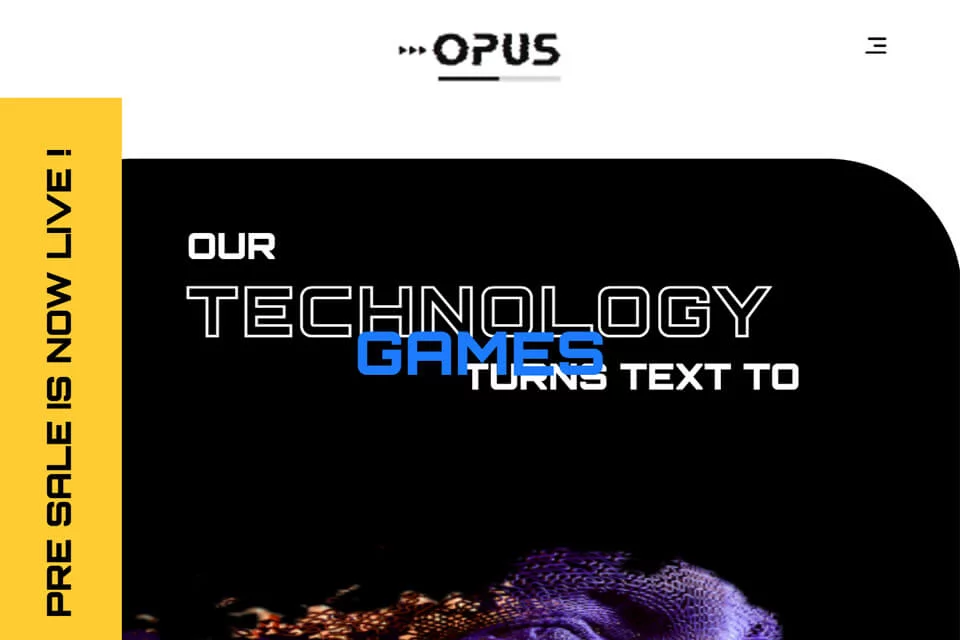
OPUS is designed for virtual content creation. Its core workflow uses natural language to describe creative intent and then generates corresponding 3D scenes and animations. It brings scene construction, character performance, lighting, and camera control into a single text-driven workflow, making it suitable for teams and individual creators who need to quickly develop virtual content drafts or visual concepts.
02Key Features
Product materials indicate that OPUS supports text-to-3D scene and animation generation, covering areas such as 3D modeling, character animation, dynamic lighting, and camera path design. The materials also mention support for motion capture and multidimensional spatial interaction design, which can supplement character movement and virtual space presentation.
Existing materials do not provide complete details about specific model formats, export methods, API scope, or compatible environments. These details should be confirmed against the product's actual interface and documentation before use.
03Use Cases
Game and film developers can use it to build scene drafts, design camera movements, or preview character actions. Virtual reality creators can use it for early ideation of immersive environments and interaction concepts, while educational technology teams can create virtual laboratories or teaching demonstrations. Advertising teams, independent artists, and other content creators can also use it for 3D visual concept validation and personalized expression.
04Usage Considerations
OPUS can accelerate creative validation and pre-production, but it should not directly replace complete modeling, animation, and post-production workflows. Generated content may require human review, particularly for character movements, spatial relationships, lighting continuity, and shot transitions. More specific text descriptions make it easier to express scene structures and action requirements. For formal projects, users should also confirm that the output meets the project's formatting, revision, and delivery requirements.
© Disclaimer: domains and linked content may change over time. AIEZZ does not control third-party websites. Review external content and risks independently.
User reviews0