

- Monthly visits
- 0
- Pricing
- Free & Paid
- Listed
- 2026-05-17
- Updated
- 2026-08-25
01Product Positioning
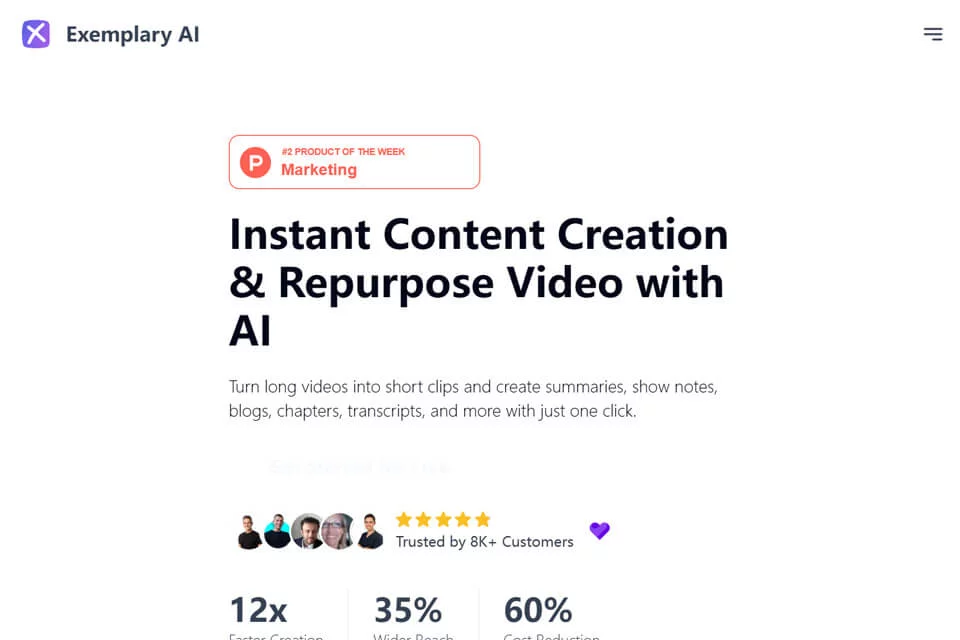
Exemplary AI brings audio and video processing, transcription, and content repurposing into a single workflow. Users can start with a long-form recording, generate a transcript, and continue by creating summaries, articles, subtitles, short video clips, or social media assets.
It is better suited to individuals or teams that regularly process interviews, shows, courses, and marketing videos than to simple one-off audio-to-text tasks.
02Key Features
The tool supports audio and video transcription and can generate subtitles and translations in more than 120 languages. Based on a transcript, users can create text assets such as summaries, blog posts, chapter divisions, and email drafts.
Text-based video editing lets users modify the transcript directly to adjust the corresponding video content, while smart short-form editing organizes clips from long videos for use on social platforms. The AI conversation feature enables users to ask questions and find information within transcript content.
03Use Cases
Podcast and video creators can turn interviews, shows, or course recordings into subtitles, articles, summaries, and short videos. Journalists and media professionals can use it to process interview recordings, extract key information, and produce an initial written draft.
Marketing and social media teams can prepare platform-specific assets from a single piece of long-form content. Educational and training organizations can convert lectures or training recordings into transcripts, summaries, and chapter notes for later review and distribution.
04Usage Considerations
Automatically generated transcripts and translations should be reviewed before publication, with particular attention to names, organization names, technical terms, numbers, and speaker attribution in multi-person conversations. Articles, summaries, and social media copy generated from transcripts should also be checked against the original audio or video to confirm facts and tone.
Text-based editing is useful for quickly processing content, but complex edits may still require further adjustments to visuals, audio, and pacing. In practice, users should also check whether the output meets publishing standards based on the source length, language, and requirements of the target platform.
© Disclaimer: domains and linked content may change over time. AIEZZ does not control third-party websites. Review external content and risks independently.
User reviews0