
- Monthly visits
- 0
- Pricing
- Free & Paid
- Listed
- 2026-04-28
- Updated
- 2026-08-25
01Product Positioning
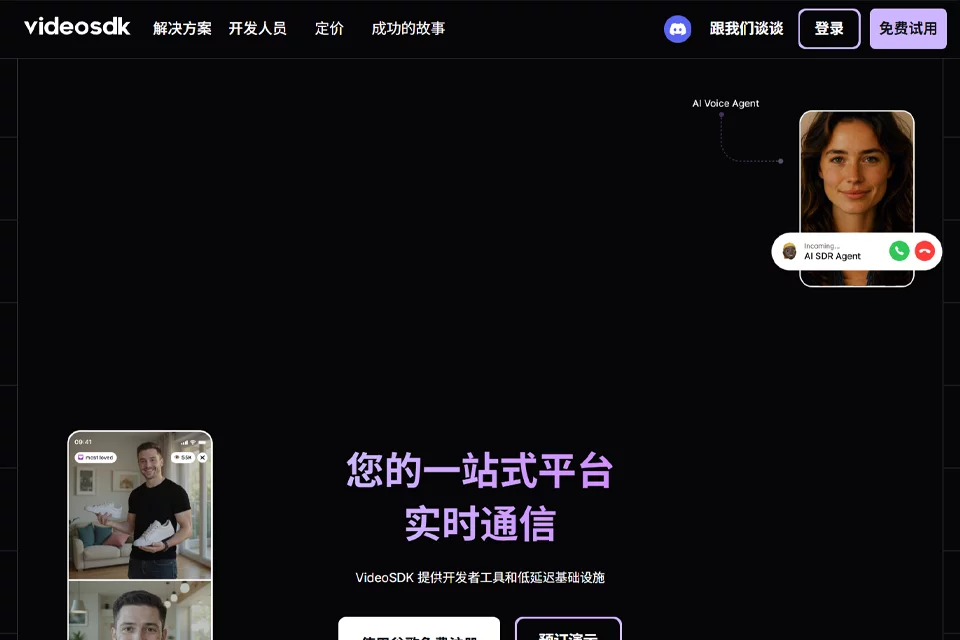
VideoSDK is positioned as real-time audio, video, and AI voice communication infrastructure, primarily serving developers and technical teams that need to embed communication capabilities into their own products.
Through cross-platform SDKs and REST APIs, it supports video conferencing, audio rooms, interactive live streaming, and voice agents, making it suitable for application projects ranging from prototype validation to ongoing development. It is closer to a development component and communication service than a standalone video editing or meeting application for general users.
02Key Features
The product supports one-to-one calls, multi-party meetings, audio calls, and video conferences. It also covers workflows such as creating and joining rooms, muting, video rendering, network status changes, and pre-call device checks.
For live streaming, it can be used for interactive live streams and HLS streaming. AI voice capabilities include AI voice agents for web, mobile, and phone systems. The platform also supports real-time transcription, post-meeting transcription, meeting recording, separate participant recording, and recording storage, as well as interactive features such as chat, polls, Q&A, grid layouts, and custom video tracks.
03Use Cases
Online education teams can use it to build online classes, live courses, virtual classrooms, and one-to-one tutoring. Healthcare and financial services can use it for telehealth consultations, video identity verification, video banking, and insurance claims communication.
Live streaming, e-commerce, and community products can design real-time interactions around guest participation, audio rooms, social live streaming, and virtual events. Teams that need voice customer service, automated outbound calls, or real-time voice assistants can combine AI voice agents with SIP phone capabilities to build telephony applications.
04Considerations
VideoSDK requires a development team to integrate its SDKs or APIs. In actual use, teams must also design business permissions, room management, data retention, and end-user interfaces. Although it covers a broad range of platforms, each platform still requires separate adaptation and testing.
The product offers free and paid plans, with usage costs depending on the audio, video, transcription, recording, or telephony capabilities used. For healthcare, financial, and other regulated applications, teams should separately assess compliance, data retention, and network stability based on their region and business requirements.
© Disclaimer: domains and linked content may change over time. AIEZZ does not control third-party websites. Review external content and risks independently.
User reviews0