
- Monthly visits
- 0
- Pricing
- Free & Paid
- Listed
- 2025-12-24
- Updated
- 2026-08-25
01Product Positioning
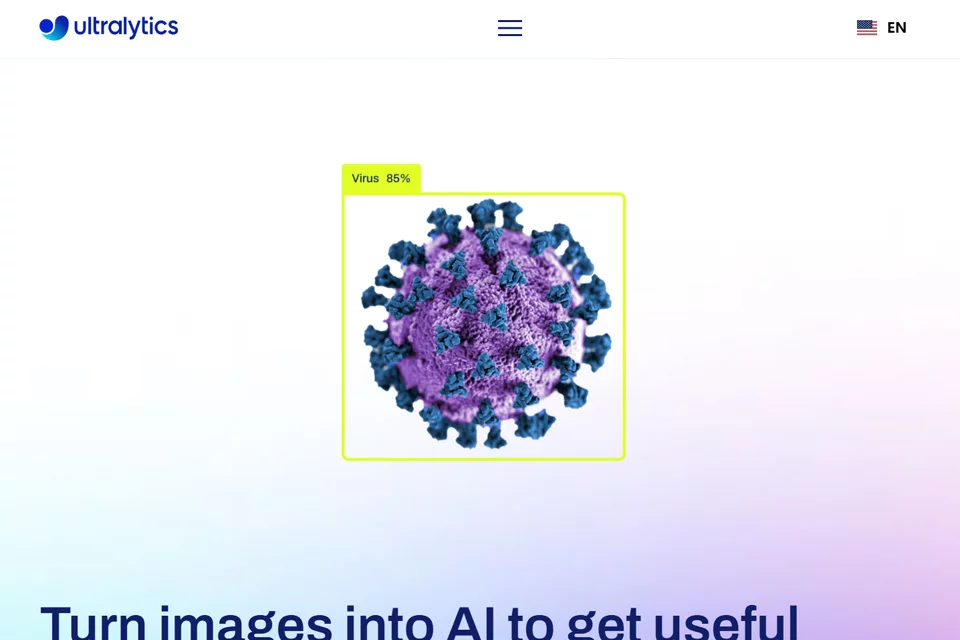
Ultralytics is a tool and model platform for computer vision development, with a focus on data management, model training, and deployment across multiple platforms. Its core resources are the YOLO family of models, complemented by the visual training platform Ultralytics HUB.
The platform is suitable for developers, researchers, and business teams that want to use ready-made computer vision models, quickly begin training, or integrate models into real-world applications.
02Key Features
The platform provides models from YOLOv5 through YOLO11 for tasks such as object detection, image classification, image segmentation, and pose estimation.
With Ultralytics HUB, users can upload data and train models through a visual interface, reducing reliance on training code. After training, models can be exported to formats including ONNX, TensorFlow, and CoreML for further use on iOS and Android phones or edge computing devices.
03Use Cases
Developers can use it to add computer vision capabilities such as object detection to applications, security systems, or production lines, and can also train and validate existing models.
Researchers can use YOLO models as a foundation for algorithm research, model comparisons, and solution validation. Business teams can use it for prototyping computer vision features and preparing for subsequent deployment.
04Usage Considerations
Ultralytics covers the main workflow from training through export, but whether a model meets practical requirements still depends on the task type, training data, and target device. Visual training lowers the barrier to using code, but does not eliminate the need for data preparation, parameter configuration, and result evaluation.
After exporting a model, check format compatibility for the operating environment of the mobile or edge device, and validate recognition quality and deployment performance in practice.
© Disclaimer: domains and linked content may change over time. AIEZZ does not control third-party websites. Review external content and risks independently.
User reviews0