

- Monthly visits
- 0
- Pricing
- Free & Paid
- Listed
- 2026-05-12
- Updated
- 2026-05-13
01Product Positioning
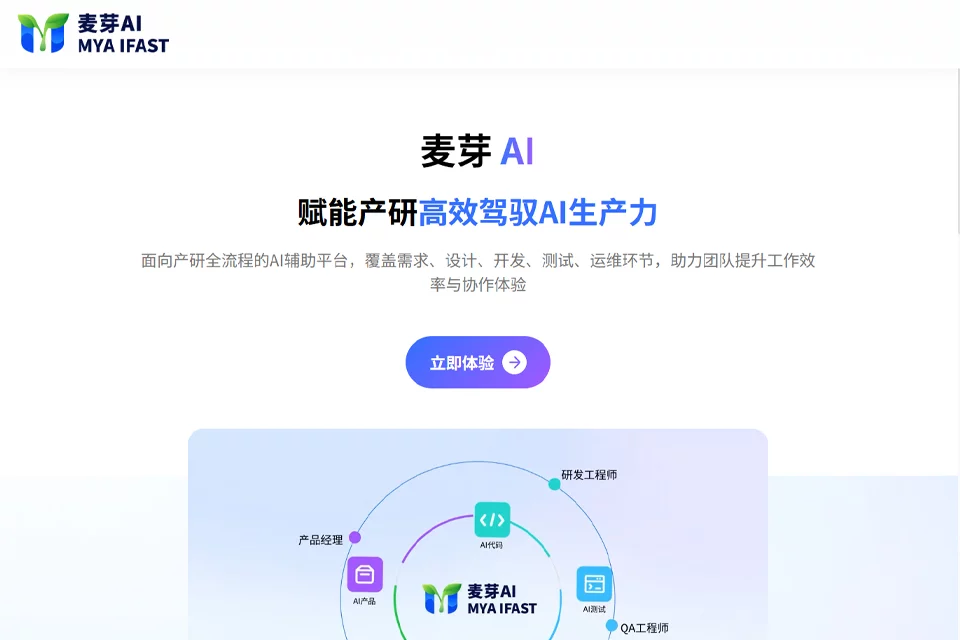
Maiya AI is positioned as an AI toolkit covering multiple stages of project development, rather than a tool limited to standalone code generation. It establishes a continuous support workflow around requirements, prototypes, documentation, databases, code, and testing, allowing product and technical teams to progressively move from expressing requirements to project design and implementation.
The platform uses natural-language conversation as its primary interaction method. It is suitable for turning relatively scattered business ideas into project content that can be further discussed and executed. It works best as an assisting tool within a development collaboration workflow, rather than as a replacement for the team's judgment about product plans and technical results.
02Key Features
Users can describe project requirements in natural language, and Maiya AI can use them to assist with generating prototype plans, helping teams confirm the product form at an early stage.
During project design, the platform assists with organizing project documentation and planning database structures. Once implementation begins, it can assist with writing code based on requirements and design content, while adding automated testing support to the development workflow. These capabilities cover key stages from requirements analysis through validation, while the specific output depends on the input requirements and project complexity.
03Use Cases
Developers and technical teams can use it to advance database design, code writing, and testing, reducing repetitive setup and workflow switching. Product managers can use its prototyping and documentation capabilities to bring business ideas into review and validation earlier.
Startup teams can use it to build project products that are demonstrable, verifiable, and ready for continued iteration. Internal enterprise application teams can use it to develop management systems, business tools, or workflow-based applications. For cross-functional project groups, it can also help align communication across requirements, prototypes, documentation, code, and testing.
04Usage Notes
When using the platform, try to clarify the business objectives, functional scope, and constraints as much as possible so the conversation can continue progressing. For complex requirements, it is recommended to confirm the prototype, documentation, database structure, and code in stages, avoiding overly broad one-time descriptions that may cause the results to deviate.
AI-generated designs, code, and automated test results should not be treated as final deliverables without review. Developers and product personnel still need to check their functionality, logic, and fit with the business. Maiya AI offers both free and paid modes; the specific feature scope, usage limits, and pricing rules are subject to the information shown on the actual product pages.
© Disclaimer: domains and linked content may change over time. AIEZZ does not control third-party websites. Review external content and risks independently.
User reviews0