

- Monthly visits
- 0
- Pricing
- Free & Paid
- Listed
- 2026-01-26
- Updated
- 2026-08-25
01Product Positioning
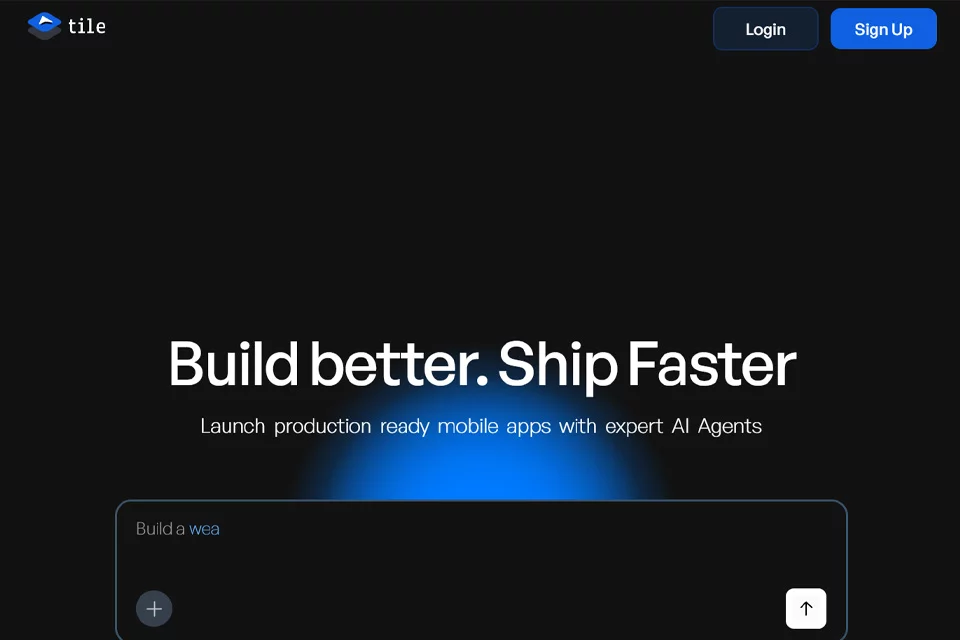
Tile turns natural-language requirements into mobile app development results, positioning itself as a tool for app building and rapid validation. Its workflow covers database design, backend logic, and frontend interfaces, generating React Native code for both iOS and Android.
Unlike prototyping tools that only demonstrate interactions, Tile is designed for app code that can continue through development and release. However, the generated results still need to be reviewed, tested, and refined in the actual project.
02Key Features
Users can describe app ideas and functional requirements in a chat interface, while multiple AI agents handle different development modules. The tool supports generating mobile interfaces, database schemas, and backend logic, and can integrate Supabase databases, user authentication, and Stripe payments.
After generation, users can manually fine-tune UI layouts and details with a visual drag-and-drop editor. These changes do not consume AI credits. Tile also supports automatically building IPA and APK files and provides assistance with app store submissions.
03Use Cases
Nontechnical founders can use Tile to turn product ideas into runnable app versions for early validation. Product managers and designers can participate directly in interface adjustments, reducing the wait between prototyping and development.
Independent developers can delegate foundational modules such as login, databases, and payments to the tool, focusing their time on their product's core business features. Mobile app projects that need to target both iOS and Android are also a primary use case.
04Considerations
Tile offers free and paid plans, but the available materials do not specify the exact quotas or pricing. Natural-language generation does not complete all engineering work; users should verify complex business logic, data structures, authentication flows, and payment flows individually.
For targets published on the App Store or Google Play, users must also check the generated app's performance across different devices and complete the testing, build, and submission preparation required by each platform.
© Disclaimer: domains and linked content may change over time. AIEZZ does not control third-party websites. Review external content and risks independently.
User reviews0