

- Monthly visits
- 0
- Pricing
- Paid
- Listed
- 2025-10-25
- Updated
- 2026-08-25
01Product Positioning
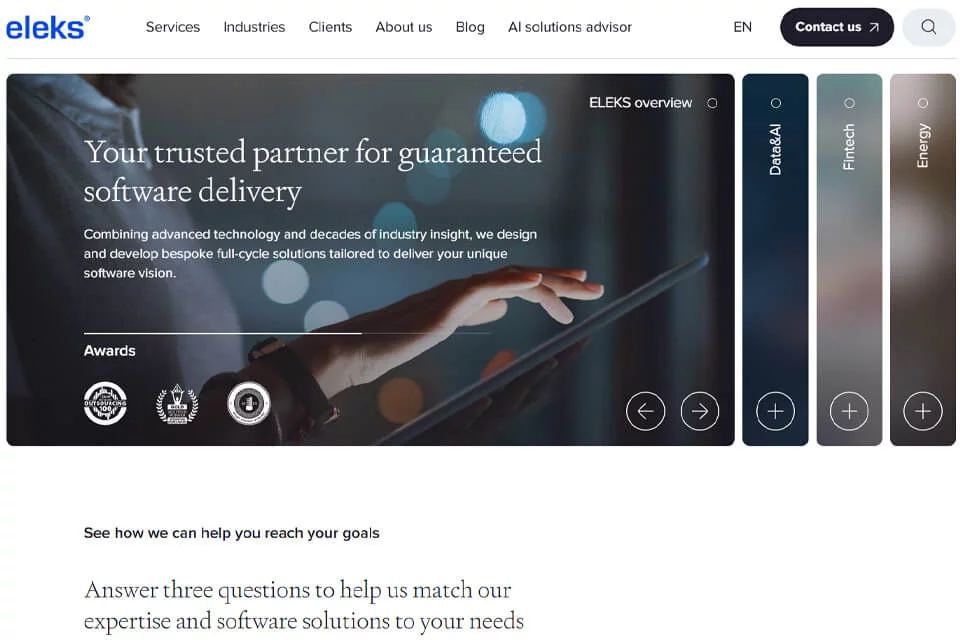
eleks is better understood as an enterprise technology consulting and software engineering services provider than as a code editor or standalone development tool for individual users. Its services focus on planning and delivering customized software and artificial intelligence solutions based on clients' business objectives.
Projects can begin with product concepts, user experience design, and prototype validation, then extend through application development, deployment support, and ongoing technical services.
02Key Features
Software development services cover web applications, mobile applications, enterprise resource planning systems, and customer relationship management systems. Product design services include concept design, user experience design, prototyping, and product validation.
Artificial intelligence services include machine learning, generative artificial intelligence, intelligent automation, and large language model operations. Cybersecurity and compliance services include security testing, compliance consulting, and the compliance automation platform eCAP.
03Use Cases
It is suitable for enterprises that need to advance digital transformation, introduce artificial intelligence, or rebuild business software, as well as startups seeking to turn product ideas into practical solutions.
Clients in finance, healthcare, logistics, retail, automotive, and energy can use it for custom application development, business process automation, data and artificial intelligence projects, software audits, technical feasibility studies, and compliance consulting.
04Considerations
eleks uses a paid service model and typically requires project discussions focused on business objectives, technical scope, and delivery phases. It is better suited to organizations with clear project requirements, budgets, and collaboration resources, rather than being an instant-use personal programming tool.
Project timelines are affected by requirements complexity, data readiness, industry requirements, and the efficiency of collaboration between both parties. For projects involving artificial intelligence, cybersecurity, or regulatory compliance, the boundaries of responsibility for data, testing, and compliance should also be clarified before implementation.
© Disclaimer: domains and linked content may change over time. AIEZZ does not control third-party websites. Review external content and risks independently.
User reviews0