
- Monthly visits
- 0
- Pricing
- Free
- Listed
- 2025-11-24
- Updated
- 2026-08-25
01Product Positioning
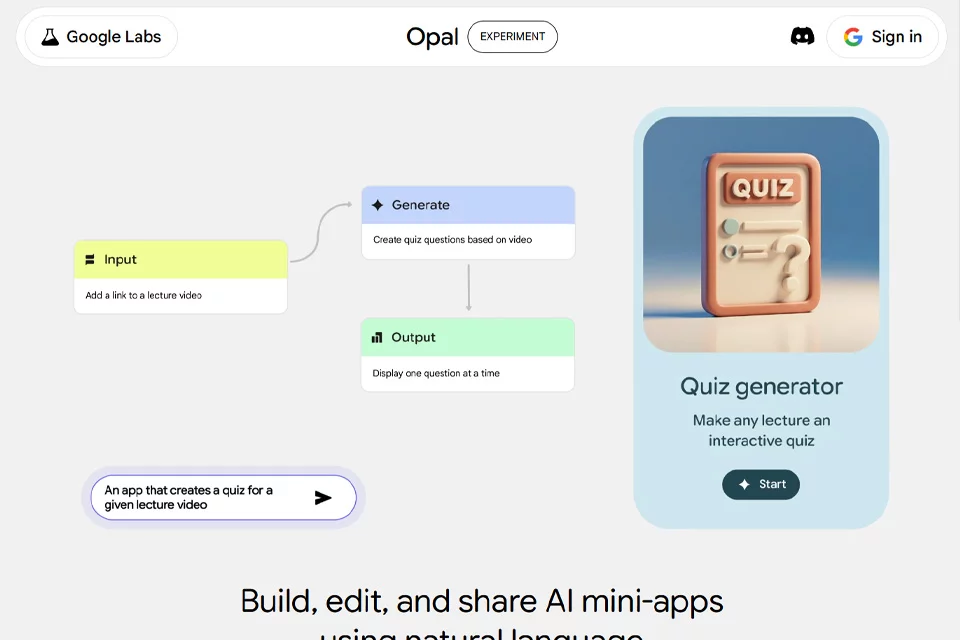
Opal converts natural-language descriptions into workflows for AI mini-apps, targeting users who are unfamiliar with traditional programming. Users can describe an app's goal, review the generated node workflow, and continue editing it. This makes it suitable for turning ideas into interactive prototypes or small tools.
02Key Features
The tool supports generating apps with natural language and provides a visual node editor for adjusting prompts, steps, and logic parameters. The available information also indicates that Opal can use multimodal models such as Gemini, Imagen, and Veo, and can work with services including Google Drive, Docs, Slides, and Sheets to process content.
03Use Cases
Opal can be used to quickly validate product ideas, create content-generation tools, organize materials, and build interactive teaching materials or quizzes. For business users, it can also support customized workflows for tasks such as organizing meeting notes and processing data, although its practical scope depends on the complexity of the requirements and the generated results.
04Usage Considerations
Opal runs as a hosted service, so users do not need to configure their own servers, and generated apps can be shared. Available information indicates that it offers a free tier.
When generating workflows with natural language, it is recommended to review the inputs and outputs between nodes, model prompts, and final results step by step. Generated content may require human revision. Requirements involving more complex logic or data processing may also require multiple rounds of description and adjustment.
© Disclaimer: domains and linked content may change over time. AIEZZ does not control third-party websites. Review external content and risks independently.
User reviews0