
- Monthly visits
- 0
- Pricing
- Free & Paid
- Listed
- 2026-01-27
- Updated
- 2026-08-25
01Product Positioning
Superdesign brings AI-powered design capabilities into the code editor, positioning itself as a design agent for development and product design workflows. Users can describe page requirements directly in IDEs such as VSCode and Cursor, reducing the need to switch between design ideation and frontend implementation.
The tool is suitable for quickly exploring page directions, building product prototypes, and supporting interface development. It was developed by product designer Jason Zhou and is provided as an open-source project.
02Key Features
Superdesign supports generating web interfaces, mobile UIs, dashboard layouts, and components such as buttons, cards, and navigation bars through natural language. It can also be used to create low-fidelity wireframes.
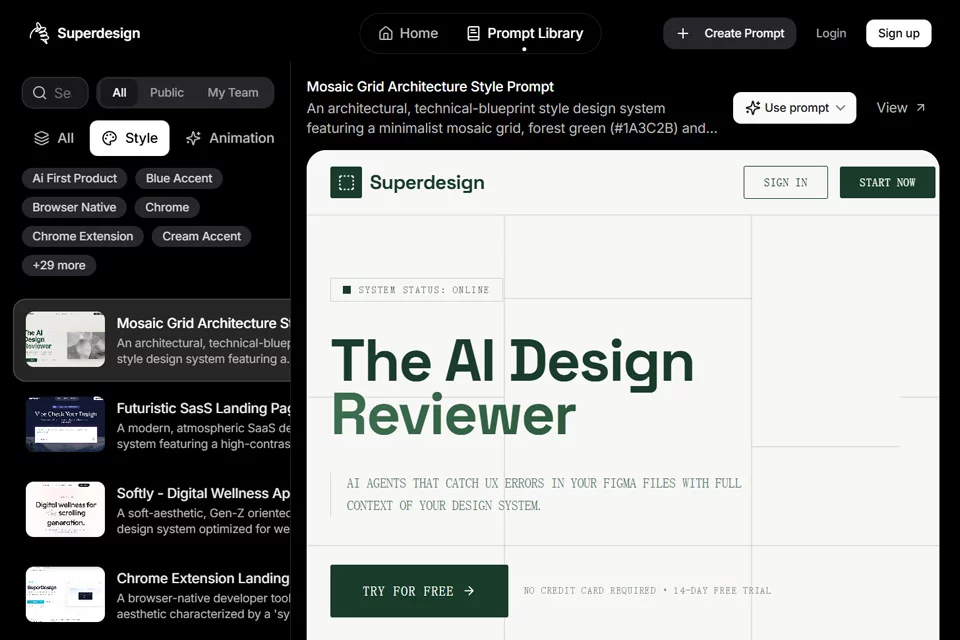
Users can continue modifying and iterating on existing designs and fork them to preserve different options. Generated frontend code includes formats such as React and TailwindCSS, while design files and code are stored in the .superdesign directory of the local project. The official website also provides a prompt library for finding and reusing design prompts.
03Use Cases
Indie developers and frontend engineers can use it to quickly create page drafts and reduce repetitive work between interface ideas and code implementation. UI/UX designers can use it for brainstorming, wireframing, and exploring high-fidelity interfaces.
Startup teams can compare multiple page concepts before developing an MVP, while product managers can turn written requirements into visual interfaces to support communication. This workflow is particularly suitable for early-stage projects that require frequent experimentation with layouts and component combinations.
04Usage Considerations
Superdesign is intended to support design exploration and prototyping, not replace human judgment regarding business logic, interaction details, and visual guidelines. Before generated interfaces and code are used in a production project, they should be reviewed, modified, and integrated according to the product requirements, technology stack, and team standards.
Before use, confirm the project's requirements for local file directories, code organization, and the relevant IDE environment. After iterating or forking, clearly distinguish between different design options to avoid mixing experimental results directly into production code.
© Disclaimer: domains and linked content may change over time. AIEZZ does not control third-party websites. Review external content and risks independently.
User reviews0