

- Monthly visits
- 0
- Pricing
- Free & Paid
- Listed
- 2026-06-07
- Updated
- 2026-08-25
01Product Positioning
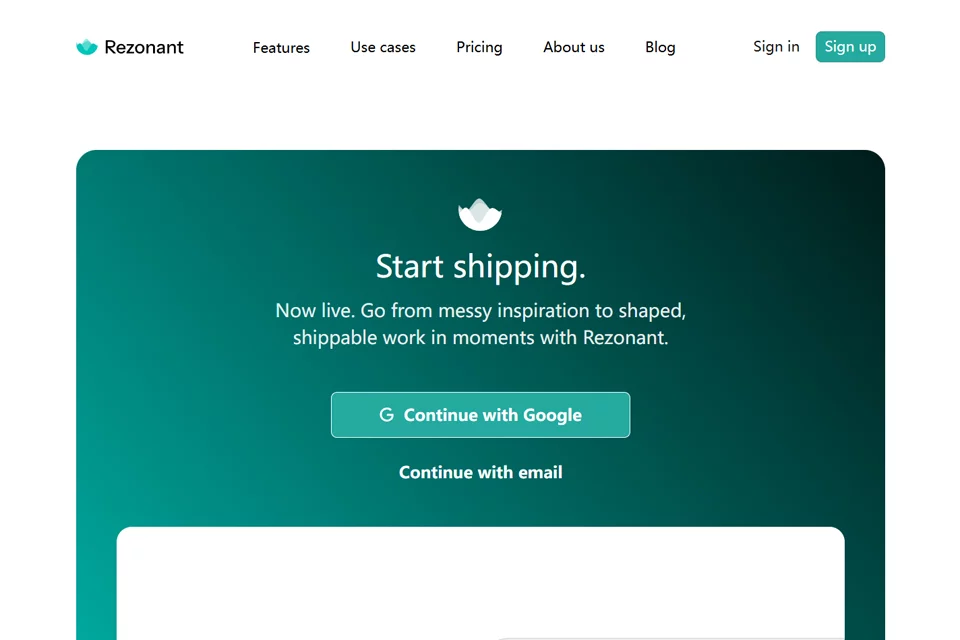
Rezonant brings product requirements, engineering context, and delivery tasks into one workspace. It connects codebases, documentation, and project management tools to help teams turn PRDs, discussions, and page issues into tasks that are closer to engineering execution.
It focuses on translating information between product and engineering, making it suitable for collaborative teams that want to reduce handoff friction and the need to repeat background context.
02Key Features
Rezonant can use codebases, documentation, Jira, and Linear to understand product context and turn structured requirements or scattered descriptions into actionable tasks.
Its Rezonant Alter browser extension lets users select page elements directly in a webpage, describe requested changes, and create tickets. Tasks can sync with Jira or Linear, or be sent to a coding agent to explore the codebase, plan changes, and draft code. The product also supports organizing Pull Requests by task or scope of changes.
03Use Cases
Product managers can use it to organize PRDs, requirement discussions, and verbal ideas into tasks that are easier for engineering teams to take over. Designers, QA professionals, marketing teams, and support staff can point out specific elements on a page and submit visual issues or functional feedback.
Engineering leads can use codebase and project context to clarify task boundaries. Teams that use coding agents to drive iterations can hand organized tasks to an agent or engineer for continued execution.
04Usage Considerations
The quality of Rezonant's tasks depends on whether the context in the codebase, documentation, and project tools is complete and accurate. Selecting elements on a page can clarify where an issue occurs, but it cannot replace an explanation of the business goal and technical constraints.
Plans, code, or Pull Requests generated by coding agents still require team review, especially to verify the requirement scope, architectural impact, and actual page behavior. Before integrating Rezonant into an existing workflow, teams should also confirm how they use Jira, Linear, and their code repositories.
© Disclaimer: domains and linked content may change over time. AIEZZ does not control third-party websites. Review external content and risks independently.
User reviews0