
Multimodal
AIEZZ tool tag
Browsing AI products tagged “Multimodal”, with 5 matching results.
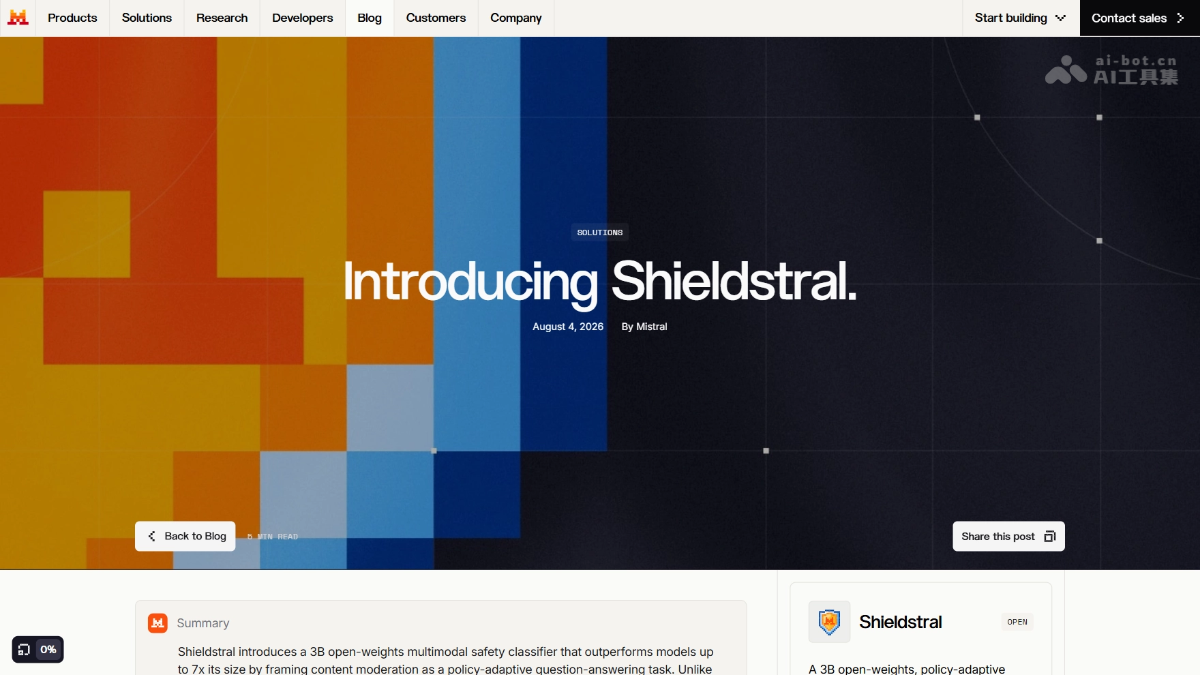 ShieldstralAI Q&AShieldstral – an open-source multimodal content safety classification model released by Mistral AI – is a 3B-parameter open-source multimodal content safety classification model built on Ministral-3B. The model redefines traditional fixed-category content moderation as a binary question-answering task, supporting the real-time definition of moderation policies through natural-language queries and adaptation to different scenarios without retraining. The model achieves an average F1 score of 84.9% on text safety benchmarks and a multimodal safety F1 score of 83.8%, both reaching SOTA performance. It can be deployed on a single 16GB GPU and supports 12 languages. Core features include policy-adaptive moderation, unified multimodal detection, fine-grained violation identification, calibrated safety scoring, and lightweight edge deployment. It is suitable for scenarios such as content risk control on social platforms, AI dialogue safety protection, advertising and marketing compliance, online education content filtering, and enterprise document security auditing.00
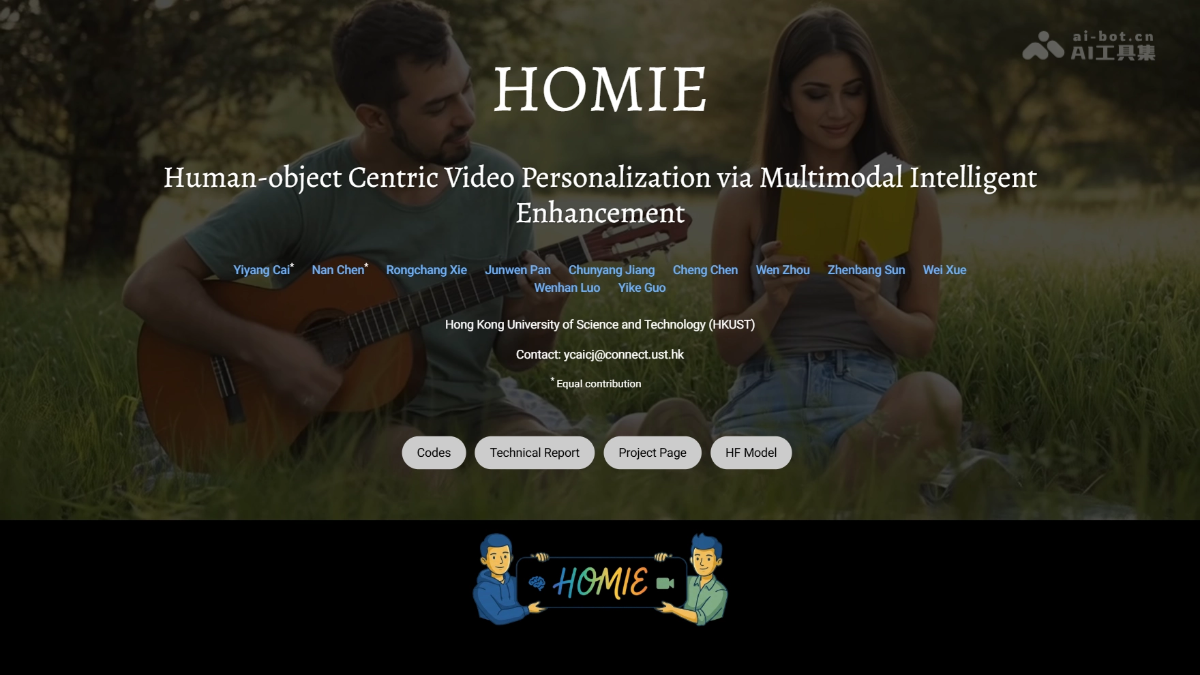 HOMIEAI Video GenerationHOMIE is an open-source digital human video generation framework from the Hong Kong University of Science and Technology, built on the Wan2.1-T2V-14B backbone and integrated with the Qwen3-VL multimodal large language model. The framework uniformly handles four elements—digital humans + products + logos + text—...00
 SenseNova U1.5-Lite-Preview – SenseTime's Open-Source Lightweight Multimodal ModelAI Large Language ModelsSenseNova U1.5-Lite-Preview – SenseTime's open-source lightweight multimodal model is based on the NEO-Unify architecture. With 8B-MoT parameters, it natively unifies visual understanding, reasoning, generation, and editing. The model supports native 4K ultra-high-definition image generation, with fine textures, realistic details, and Chinese and English text rendering in complex layouts. Its built-in Prompt Enhance Skill lowers the barrier to creation, enabling precise execution of long natural-language and structured visual instructions, as well as continuous iterative editing. Designed for designers, developers, and content creators, it provides a commercial-grade visual creation tool with low deployment costs and strong instruction-following capabilities.10
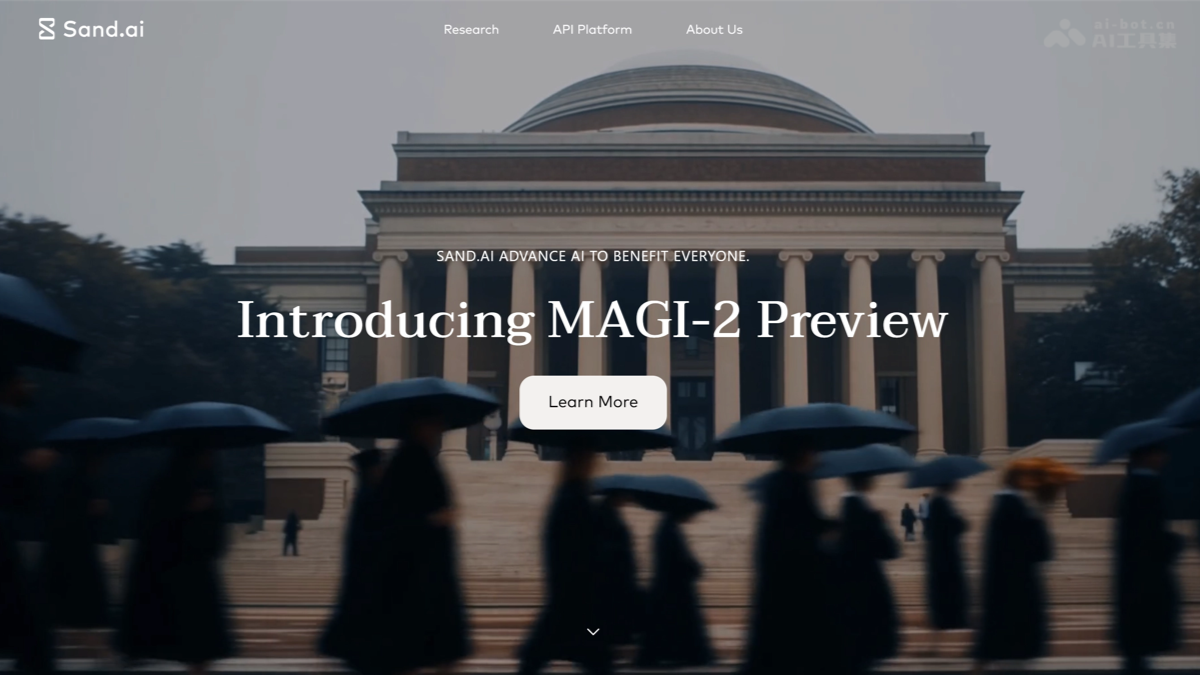 MAGI-2-preview – Sand.ai’s Open-Source Multimodal Video Generation ModelAI Video GenerationMAGI-2-preview – Sand.ai’s Open-Source Multimodal Video Generation Model is Sand.ai’s open-source, 100-billion-parameter MoE multimodal video generation model, with 114B total parameters and only 6B activated. The model retains a single-stream architecture that incorporates text, video, and audio into the same Transformer for joint modeling, enabling native multimodal generation. Its core capabilities include text-to-video, image-to-video, and video-to-video generation, along with native audio understanding. Sparse MoE activation significantly reduces inference costs. Designed for AI researchers, developers, and enterprise technical teams, it supports academic research, private deployment, and multimodal film and television previsualization, providing an efficient, open-source, commercially usable video generation solution.00
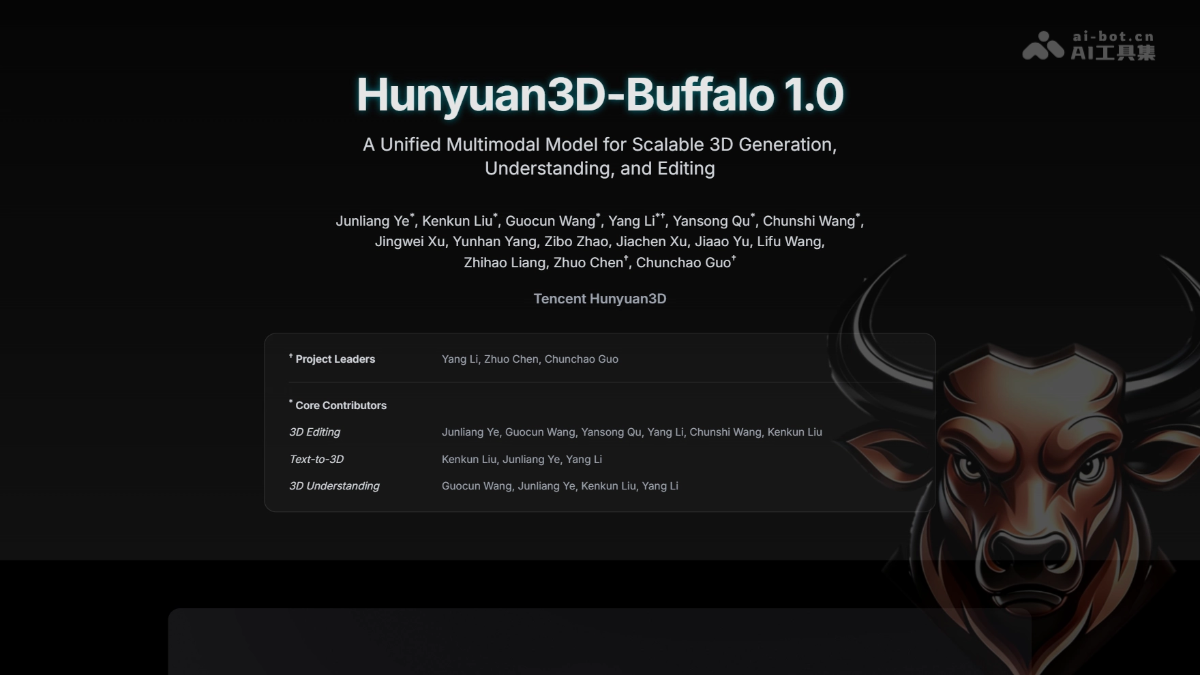 Hunyuan3D-Buffalo 1.0 – Tencent Hunyuan’s 3D Multimodal Framework3D DesignHunyuan3D-Buffalo 1.0 – Tencent Hunyuan’s 3D Multimodal Framework is a unified 3D multimodal framework developed by Tencent Hunyuan. With a shared Hunyuan3D-VLM backbone, it integrates 3D question answering, spatial grounding, text-to-3D generation, instruction-based editing, and part generation into a single workflow. The framework supports understanding 3D model structures through natural language, locating parts, modifying local geometry based on instructions, and extracting semantic-level components. It aims to connect the full cycle of 3D understanding, generation, and editing, providing a composable 3D asset production solution for games, animation, and industrial design. Core capabilities include 3D understanding, text-to-3D generation, instruction-based editing, and part generation, with all four task types sharing the same 3D semantic representation and processing pipeline. It is suitable for game developers, animators, industrial designers, and 3D content creators, lowering the professional barrier through natural-language interaction while improving asset reuse and iteration efficiency.00
All tools with this tag are shown.