

- Monthly visits
- 0
- Pricing
- Free & Paid
- Listed
- 2025-08-30
- Updated
- 2026-08-25
01Product Positioning
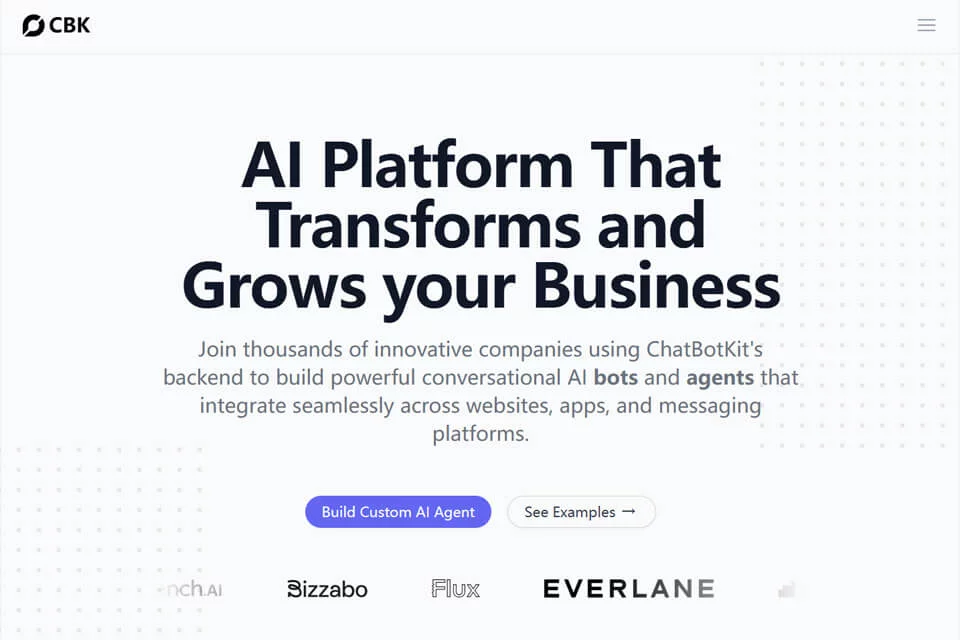
ChatBotKit serves enterprises and teams that need to build intelligent conversational systems, providing composable AI and conversation components. It covers the fundamentals of building conversational applications while also offering integration options for development teams that need to connect business systems.
The platform can be used to validate conversational product ideas, create dedicated assistants, and build automated conversational services for users or internal teams.
02Key Features
The platform supports configuring conversational applications with visual tools, as well as development and integration through APIs and SDKs. Users can combine AI components for different tasks to create question-answering bots or assistants with specific responsibilities.
Conversation components can be used to create web chat windows and support branded interface customization. Platform materials also mention deploying conversational assistants to websites, Slack, and WhatsApp; the specific availability should be confirmed against the current product configuration.
03Use Cases
Technical teams can connect conversational capabilities to existing products or internal systems. Customer service and operations teams can use them to handle common inquiries, collect feedback, and provide automated services. Product managers and startup teams can use the platform to create prototypes of AI features.
Content and marketing teams can build interactive tools for style recommendations, topic-based question answering, and similar use cases. Dedicated assistants can also be designed for tasks such as organizing emails, reporting data, or analyzing trends according to business processes.
04Usage Considerations
Whether to use visual configuration or API and SDK integration should depend on the team's technical capabilities, system connectivity requirements, and deployment scope. Simple question answering is suitable for rapid validation with components, while applications involving business data, permissions, or complex workflows typically require additional development and testing.
Before use, clarify data sources, response boundaries, and human handoff procedures. Although the platform offers free and paid plans, the feature scope, quotas, and eligibility requirements of each option should be verified against the current official documentation.
© Disclaimer: domains and linked content may change over time. AIEZZ does not control third-party websites. Review external content and risks independently.
User reviews0