


Let’s look at the following two fight scenes where the attacks seem unable to hurt the enemy
Clip 1:
Clip 2:
After watching them, ask yourself a question:
Which of these two clips really makes you feel that the enemy was hit?
Was the attack ineffective? Or did it simply miss?
The outcomes expressed in these two clips are actually quite similar:
The enemy is very strong.
The enemy has a huge health bar.
The protagonist’s attack causes no substantial damage.
But they feel completely different.
In Clip 1, a mecha challenges a giant monster. It keeps swinging its sword, with flashes of blade light and sound effects filling the scene. But afterward, you feel that although it is swinging its sword, the attacks are ineffective—they never actually hit the monster.
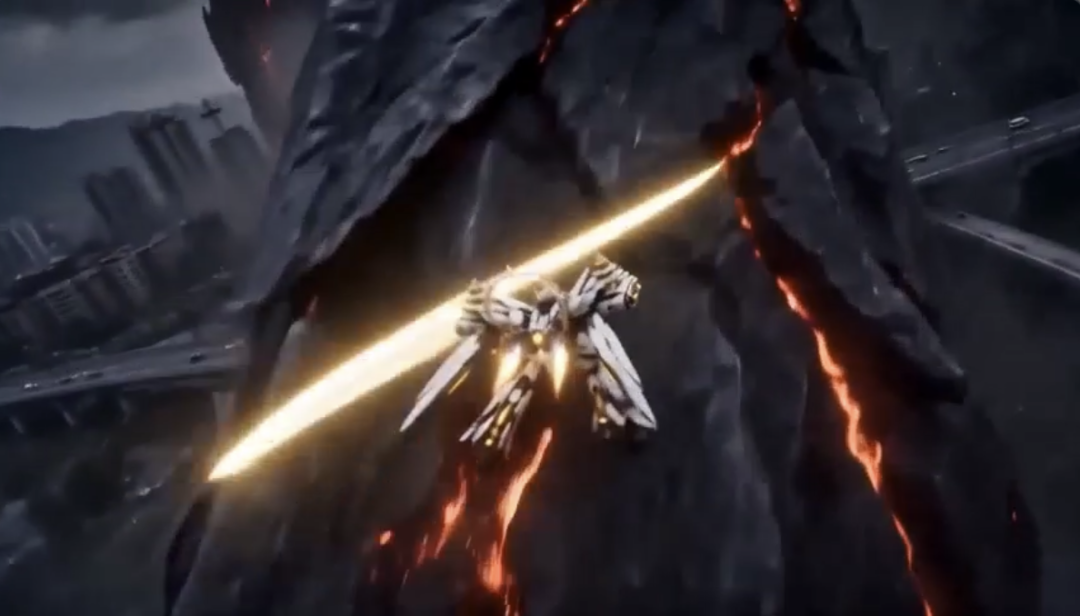
>(Selected from the “discarded” clip of the Bilibili short film “Pacific Rim River”)
In Clip 2, a samurai fights a zombie. Although the sword swing lasts only a few seconds, almost every viewer feels that the sword connected—the zombie’s armor is simply too tough, so the attack caused no damage.
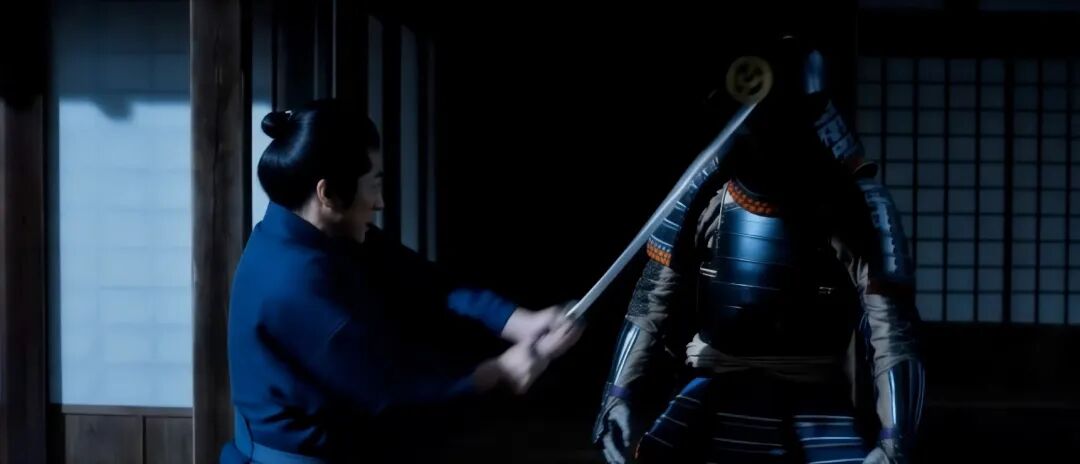
>(Selected from Tutu Vision’s original Bilibili short film “Asura’s Rain”)
Here is the question:
If neither attack causes damage, why does one look like swinging at empty air while the other has a clear sense of impact?
Impact ≠ special effects
When many AI filmmakers first try making action scenes, they instinctively assume that impact means adding special effects. As a result, sparks, blade flashes, and particles fly everywhere.
However, more special effects do not necessarily mean a stronger sense of impact.
In Clip 1, light effects appear constantly, but the monster shows no reaction: no pause, no displacement, no shift in balance, and not even the camera is affected.
So the viewer’s brain automatically concludes:
That attack did not connect.
Therefore, layering on these effects is ineffective.
The key to impact is the “impact frame”
Action scenes with a genuine sense of impact are usually arranged like this:
Wind-up → Contact → Feedback → Recovery
Contact and feedback are what transmit the force of the hit and create its effect. These are the “impact frames” we need to pay special attention to inserting during production.
An impact frame usually exists for only a very brief instant, sometimes just one frame. But that single frame makes the viewer’s brain conclude:
It connected.
How impact frames create the effect of a hit:
1. Contrast between stillness and motion
Static objects appear sharp, while moving objects appear blurred. Therefore, if the attacking side is sharp and the receiving side is blurred, viewers will feel that the hit connected 🎯
For example:
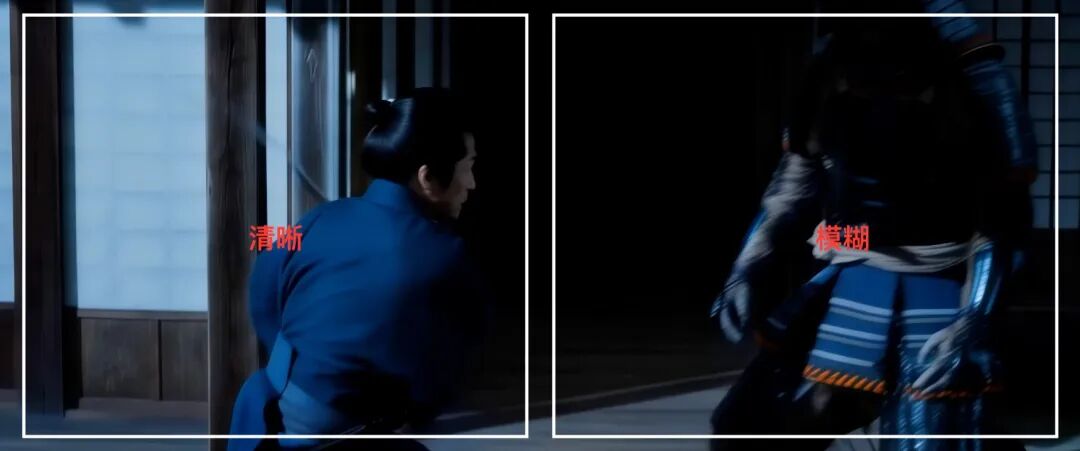
>(Screenshot from the Bilibili short film “Asura’s Rain”)
This kind of moment does not need to last long. If it lasts too long, it will look fake. It should be brief, precise, and resemble the instant when a body suddenly absorbs force in real life.
2. Camera shake
Force is reciprocal. When an attack occurs, both the attacking and receiving sides will shake. Adding camera shake at the moment of contact creates a sense of collision.
For example:
(Case provided by Caotai Banzi, a member of the Dreamer community)
In addition to the two points above, intense flashes, special effects, music synchronized to the cuts, and voice-volume balance can all serve as supporting techniques to layer the impact effect.
How do you write prompts for impact frames?
At this point, many people may ask: Can I simply write “insert an impact frame, deliver a powerful hit, and shake the image intensely” in the prompt?
The answer is: That is not enough.
These words describe results, not the process.
Truly effective impact prompts begin by thinking through and describing the following questions:
What exactly happens at contact? Where is the contact point?
What is the action chain of the entire attack?
Which parts of the image are blurred, and which are sharp?
How can the image be designed to effectively enhance the sense of force in the action—for example, through visible air distortion or slow motion showing a character being thrown?
What is the body’s response after the hit? Does the receiving side briefly pause or lag before falling, spraying blood, or visibly deforming?
How does the center of gravity change? Does the body tilt or topple?
What sound effects can be used in the scene—the blade cutting through the air, voice volume, friction, breathing? What should their volume balance be? Which should be the loudest? Should a sound suddenly cut off?
Using “Asura’s Rain” as an example
(Selected from Tutu Vision’s original Bilibili short film “Asura’s Rain”)
We can break down the protagonist’s final defeat of the zombie warrior into three shots.
Shot 1: The hit connects
The protagonist’s blade reaches the gap at the zombie warrior’s neck. Once the blade is fully in position, the protagonist’s arm and shoulder visibly pause as if they have “hit resistance.”
Shot 2: Pause after impact
After being hit, the zombie warrior stops. Its body remains pitched forward but cannot continue advancing.
Shot 3: Full-body loss of balance
After the pause, a medium shot lets the viewer see the zombie warrior’s center of gravity shift. The weight of its armor pulls its body down to the side.
Reusable prompts for action scenes
The prompts for every fight scene are different, so there is no action-scene prompt that can be reused directly. However, the theory behind creating a sense of impact is universal.
Therefore, you can have AI design the action-scene storyboard first, then fine-tune it according to your own visuals.
Copy the prompt below:
Please design a storyboard prompt for an AI video with a strong sense of impact based on my plot. Requirements:
Do not simply write “powerful attack” or “intense collision.” Instead, break down the complete action chain: preparation, exertion, key contact, pause after impact, full-body loss of balance, and recovery or falling.
Clearly specify where the contact point is, whether it is obscured, which parts are sharp and which are blurred at the moment of impact, whether an extremely brief camera shake is needed, how the receiving body pauses, lags, and loses balance, and how its center of gravity changes.
Create the sense of impact through contrast between stillness and motion, brief camera shake, pauses after impact, overlapping shots, and abrupt sound cutoffs. Slow motion may appear only in the brief aftershock following the opportunity and completed contact; do not slow down the entire exertion process.
Use no more than two overlapping shots. Every repetition must provide new information. Do not use three consecutive flashes or cut randomly.
For sound design, do not use background music, drumbeats, or emotional scoring. Use only realistic on-location sound effects. Sound effects must be louder than dialogue, and the key contact sound must not be covered by the exertion sound.-
Once AI has completed the storyboard prompt, rethink some of the questions above, visualize the scene in your mind, and fine-tune it.
In closing
Many people think the core of an action scene is the action.
Actually, it is not.
The core of an action scene is:
Making the audience believe that the hit really happened, while resolving or reversing the suspense established at the start of the fight to create a satisfying payoff.
What determines all of this is often not ten seconds of action.
It is that single frame the naked eye can barely detect.